Let's Write Creative Nonfiction
Table of Contents
Late at night. Or rather, the sky was already getting light, so maybe I should call it early morning. As usual, I had YouTube open and was drifting from video to video without much purpose. That’s when I ran into this one.
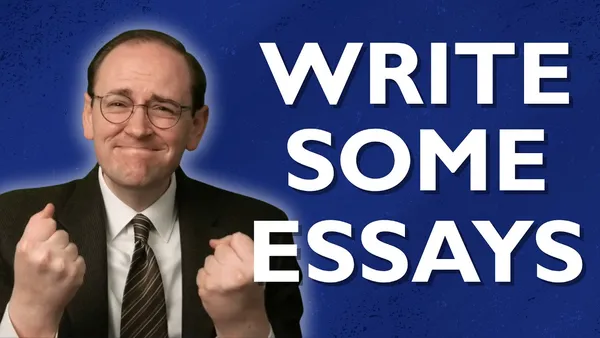
It’s a video arguing that we should all write “creative nonfiction.” But what the hell is creative nonfiction, anyway?
What Is Creative Nonfiction?
Creative nonfiction is nonfiction based on facts that doesn’t stop at a mere list of facts, and comes with narrative and emotion.
For example, memoirs and documentary-style reportage are the classic genres of creative nonfiction. They’re based on real events and experiences, but they rearrange those events and use all sorts of rhetorical techniques to deliver them as an engaging story.
A memoir is creative nonfiction where the subject is “I,” centered on personal experience and feeling. Reportage, on the other hand, is creative nonfiction where the subject is a third party, and it’s often written (or at least appears to be written) from an objective viewpoint. Either way, both are a far cry from the “mere list of facts” you find in a Wikipedia article.
…That’s all secondhand knowledge from Professor Gemini (the AI), whom I asked after watching the video.
Huh, I see. Now that you put it that way, I love the web media site Daily Portal Z (DPZ), and you could say that most of its articles are a kind of creative nonfiction.
DPZ articles are based on things people actually did and actually experienced, not fantasy. But the focus of an article isn’t the exact steps of the craft project, it’s the trial-and-error process. It isn’t the trivial details of a town itself, it’s the writer’s feelings and thoughts about them. That’s exactly why DPZ articles hold up as creative nonfiction, rather than being mere how-tos or tourist guides.
Thesis Supervision Planted the “No Subjectivity” Protocol
There was a time when I felt like “I can’t write travelogue-type stuff anymore.”
It was a few years ago, I think, after I’d gone on some trip somewhere. When I tried to write down my impressions, the words just wouldn’t come. It’s not that I couldn’t write at all. I could write a “report” of where I went and what I did. The problem was that I could no longer convey my own experiences and thoughts as an engaging story.
The cause was obvious. Between writing academic papers at university and then mass-producing specifications and work reports as a working adult, the “no subjectivity” protocol had been hammered into my brain at the system level. And I suspect another big factor was that I’d been analyzing every story through the lens of “all stories reduce to the Hero’s Journey.”
In academic-style writing, “I” is basically forbidden. Subjective feelings like “I was sad” or “I was happy” have to be eliminated completely. What’s demanded is Japanese as “functional beauty”: inorganic, unambiguous to any reader, with transmission efficiency maxed out.
This protocol is extremely useful for academic communication. Papers are how researchers share information and stack up knowledge. There’s no room for subjectivity or emotion there. If anything, letting them in damages the accuracy and credibility of the information.
I internalized that way of writing as a kind of “absolute good.” As a result, a cold, boring censor took up permanent residence in my head. In that state, even if I set out to write a travelogue, all that got written was a list of facts. There was no room for what I felt or thought at that place. There was no way I could write a travelogue that captured and recreated the excitement of a trip.
(Incidentally, after writing this far, I slept for about 12 hours in the daytime, and when I woke up I remembered that this “somewhere I went on a trip a few years ago” was Teyvat. I’d gotten hooked on Genshin Impact to an absurd degree and wanted to leave some kind of record of my impressions, but at the time I couldn’t put them into words.)
Losing the ability to write subjectively is, when you think about it, a pretty terrifying situation. It’s not just that one medium for preserving my emotions became unusable. My inner censor had started demanding citations from authoritative sources even for my subjective impressions. And if no such source could be found, it judged the impression to be wrong in the first place.
That might be the right protocol when writing a paper, but it’s not the right protocol for every situation. It took me quite a while to realize that. Only after writing countless blog posts did I finally come to understand, physically, that “it’s okay to put subjectivity in your writing.”
And it was only today that I found out the kind of writing I find easy to write has a label: “creative nonfiction.”
Why Should We Write Creative Nonfiction?
The skill of writing creative nonfiction is, in other words, the skill of telling real events and your own opinions as an engaging story without lying about them. Why should we acquire such a skill?
I think it’s because that skill is necessary for the mental health of everyone.
WARNINGWhat follows includes descriptions of mental illness and mental health, but I’m not a professional. Please read it purely as one person’s speculation.
Something strange has been happening around me lately. Define a “close friend” as someone I see at least once a month, and define “mental illness” as needing the services of a psychiatrist. By those definitions, every single one of my close friends has fallen ill in some way. They each belong to separate communities and basically have no connection to each other. So it can’t be “contagion.”
As I listened to each of their stories, it occurred to me that what they have in common might be that they “can’t find a narrative (a story) in their own lives, or have lost sight of it.”
Take one friend, for example. He changed jobs a year ago and recently finally brought a big project to a successful close. Even so, he says, “I’ve been kind of depressed lately, and the moment I get home I switch off my ego with sleeping pills just to keep myself together.” He also apparently “stopped the diary he’d kept in a notebook for over ten years.” If things weren’t going well socially, fine, but things are going well, so why would he end up like this?
Put simply, you could call it “burnout after achieving a goal,” but to be more specific, I wonder if he completed one big quest and in doing so lost sight of the next one.
In Genshin Impact terms, it’s like finishing a chapter of the Archon Quests, not moving on to the next chapter, and just endlessly grinding Daily Commissions. And that is without a doubt the most boring way to play a game.
To break out of that state without “quitting” the game, you need to find a new narrative. In Genshin, that could mean getting around to the World Quests you’ve been neglecting, or leveling up a character with some goal in mind. Doing that raises your interest in the world, and you start to remember “I want to know more about this world” and “I’m a Traveler, one who isn’t supposed to stay in one place,” and strangely enough, you start feeling like pushing on with the next Archon Quest.
So how can this analogy be put to use in the real world?
Real life has no “next Archon Quest” prepared for you by the developers. In days where just getting through the “daily commissions” of being a working adult takes everything you’ve got, we easily lose track of where we are.
That’s exactly why we have to give our own lives a narrative with our own hands. We need to tell ourselves, out loud, the story of “I’m currently in this context, working through this quest.”
And the most powerful tool for that is “writing creative nonfiction,” and internalizing that skill, isn’t it?
Writing creative nonfiction isn’t just recording what happened. It’s the work of pulling out specific threads from the chaos of daily experience and a countless list of facts, weaving the subject “I” and emotion into them, and reknitting them into a single meaningful “story.”
So I even think that the reason he “stopped writing his diary” wasn’t so much a result of burnout as it was a cause of “losing the narrative and burning out.”
Why Does It Have to Be “Nonfiction”?
Probably, the amount of narrative you give your own life needs to be just right.
I think that if narrative runs short, you head toward depression, and if narrative becomes excessive, you fall into a schizophrenia-like state (dissociation from reality). The former is mental collapse caused by the world becoming meaningless; the latter is mental collapse caused by the world being filled with excessive narrative.
The former is what I’ve been talking about so far. Relatively few of my friends are at the hospital with something close to the latter, and I haven’t been able to hear the details. So let’s take an example from a non-friend.
For the past year or so I’ve been wochi-ing (the Japanese net term for obsessively watching someone’s online antics) the blog of a certain “fortune teller.” (I admit it’s not a particularly tasteful hobby.) His blog is full of strange claims, posted frequently, based on a religious outlook and fortune-telling results that are presumably coherent in his own mind.
That alone would be one thing, but judging from the blog, it looks like he fell for an investment scam and lost money in units of 10 million yen (about $65,000 each). And when his parents tried to protect his assets through Japan’s adult guardianship system to stop it, he has been resisting, seeing nothing but intense hostility in it.
This fortune teller’s blog is an example of giving one’s life an excessive narrative. He’s loading his own life with excessive meaning and building excessive stories. As a result, he probably has a worldview detached from reality and can no longer make objective judgments.
That’s exactly where the importance of being “nonfiction” comes into view.
To keep our minds healthy, we need the creativity to give our lives a narrative. But imagination is a powerful engine, and it also runs away from you if you mishandle it. If you bend facts to suit yourself and paint the world over with an excessive story that’s yours alone, the destination is logging out of reality.
What serves as a sturdy anchor tethering you to reality is the constraint of “facts (nonfiction).”
Creative nonfiction is never “lying.” You don’t tamper in the slightest with the objective events or with what you thought about them. On top of that, you spin only the thread of interpretation: “what did this mean to me?”
On one end, there’s the “lack of narrative (a mere list of facts)” where subjectivity is thoroughly eliminated, like in an academic paper. On the other, there’s the “excess of narrative (loss of facts)” where you ignore the facts and let your delusions swell.
Our minds break if they lean too far to either extreme. I think the act of writing creative nonfiction is an important skill for keeping that balance.
Summary
- Creative nonfiction is nonfiction based on facts, written with narrative and emotion.
- Overfitting to the “no subjectivity” protocol robs you of the ability to narrate your own experiences and freezes your emotions. That’s why it needs to be “creative.”
- Being “nonfiction” works as a “weight” that keeps you in touch with reality and stops the narrative from running away into delusion.
- Finding the right amount of “narrative (story)” in your life is a survival strategy for keeping your mind healthy.
If lately you feel your life is just “a series of administrative tasks.” Or if you’ve stopped being moved by something you used to love. Then try writing something once, with the label “creative nonfiction” in mind.
Before I knew it, almost a whole day has passed since I started writing this. The sky has been dark again for a while now.
The censor has gone to sleep, and I’m still awake.
More articles
- Impressions of Genshin Impact Ver. 7.1 Snezhnaya, Up Through Act IV "A Rekviem for the Underworld"• #Genshin ImpactAfter two years, I've finally caught up with the current release.
- I Bought a Cheap Wideband LNA from AliExpress, the Zeenko ZK06-BM• #RadioI used the Zeenko ZK06-BM to intercept METEOR-M2 4 and got the best satellite image I've ever received.
- On the End of the World• #ScreedIt's Ragnarok.
- Thoughts on Genshin Impact's Nod-Krai Storyline• #Genshin ImpactI finished Nod-Krai.
Notes on games, radio and technology, translated from the Japanese blog.