Impressions of Genshin Impact Ver. 7.1 Snezhnaya, Up Through Act IV "A Rekviem for the Underworld"
Table of Contents
Two years after I started playing Genshin Impact, I have finally caught up to the latest version!!!!
Which means that, in theory, every piece of information on the internet is now safe to browse without fear of spoilers. That’s pretty emotional, honestly.
So, here are my impressions up through Snezhnaya Act IV, for the record.
The Big Picture…
The Snezhnaya chapter was explicitly announced as the final destination of the journey, so unless the writers pull off something really clever, this is where all the lore and the whole story basically have to get resolved.
Maybe that’s why Snezhnaya felt to me like a place where ideological battles and the symbolism representing them run rampant.
The main story arcs up through Act IV break down roughly into the following three. Just like with Nod-Krai, I’ll go through my impressions of each in order.
- Arriving in Snezhnaya
- The Werewolf Game at the Korolevskiy Theatre
- The Showdown with Ronova, Ruler of Death
Arriving in Snezhnaya
Snezhnaya, a land of ice and corruption, unloved by the gods. Paimon got sick. Snezhnaya-exclusive game mechanics gone completely insane!
Motivation
Up to now, my routine was to stop the Archon Quests after clearing one region, and then, more often than not, take a long break before moving on to the next.
But the endpoint of Genshin Impact’s whole story is something I’d like to witness in real time, with a 0% chance of getting spoiled.
And right now there’s an event running where clearing Chapter VII Act IV gets you an extra 5-star character! With only 10 days left before the event ends! Honestly, my resolve to push through Nod-Krai in the first place was partly about making this deadline on the off chance that I could.
So (skipping what I assume is the world quest involving Sandrone’s revival) I headed to Snezhnaya.
First Impressions
I arrived at the snowfield on the southern edge. The music is great right off the bat! I was wondering how they’d go about evoking Russia, and sure enough it’s got that imperial, Tchaikovsky-esque atmosphere.
Snezhnaya is barren, but its people live off the heat supplied by the Kresnik furnaces. Aquilo (the frozen final planet in Factorio: Space Age), is that you?
What surprised me first was how many game mechanics get crammed in, starting from the encounter with the “Eye of Graeae.”
Never mind the complicated cold system (though so far nothing too fatal has come up). There’s a construct system shared among all players (I haven’t played it, but is that a Death Stranding rip-off?), trains as movable bases, and the one that makes no sense to me: they introduced a TPS (third-person shooter) mode! I never thought I’d see firearms in Genshin Impact.
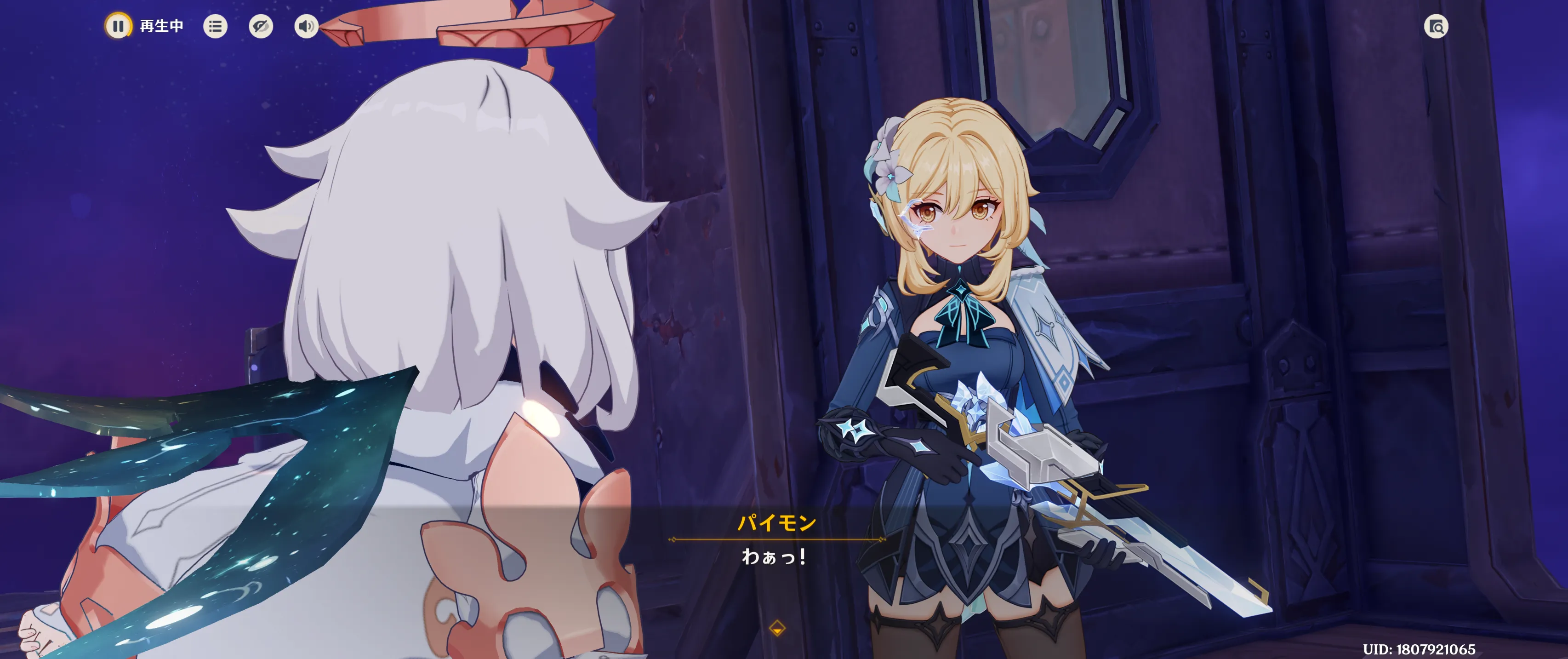
Genshin Impact has long been prone to introducing mechanics that leave you baffled as to how they even fit them into the game engine, but at this point it’s sheer madness. How in the world did they do it?
I have a lot of thoughts about the Eye of Graeae. Genshin Impact obviously started out as a Breath of the Wild (BotW) ripoff. And with each version, I think they were conscious of how to offer an experience different from BotW.
But the Eye of Graeae and Prime Ice Constructs (basically Ice Maker) are a full-on reintroduction of BotW-style game systems! In fact, from the tutorial onward, there’s a puzzle that’s exactly the same as in BotW: growing ice blocks out of the ground to pry open a gate.
I couldn’t help feeling the developers’ confidence. Genshin Impact is no longer a BotW ripoff; it has established a firm identity of its own. That’s why they could confidently bring BotW-like elements back again, I figure.
About the Technology Level…
Snezhnaya’s tech tree seems to be quite advanced. Without any magical excuses, they’ve put early-20th-century technology into practical use.
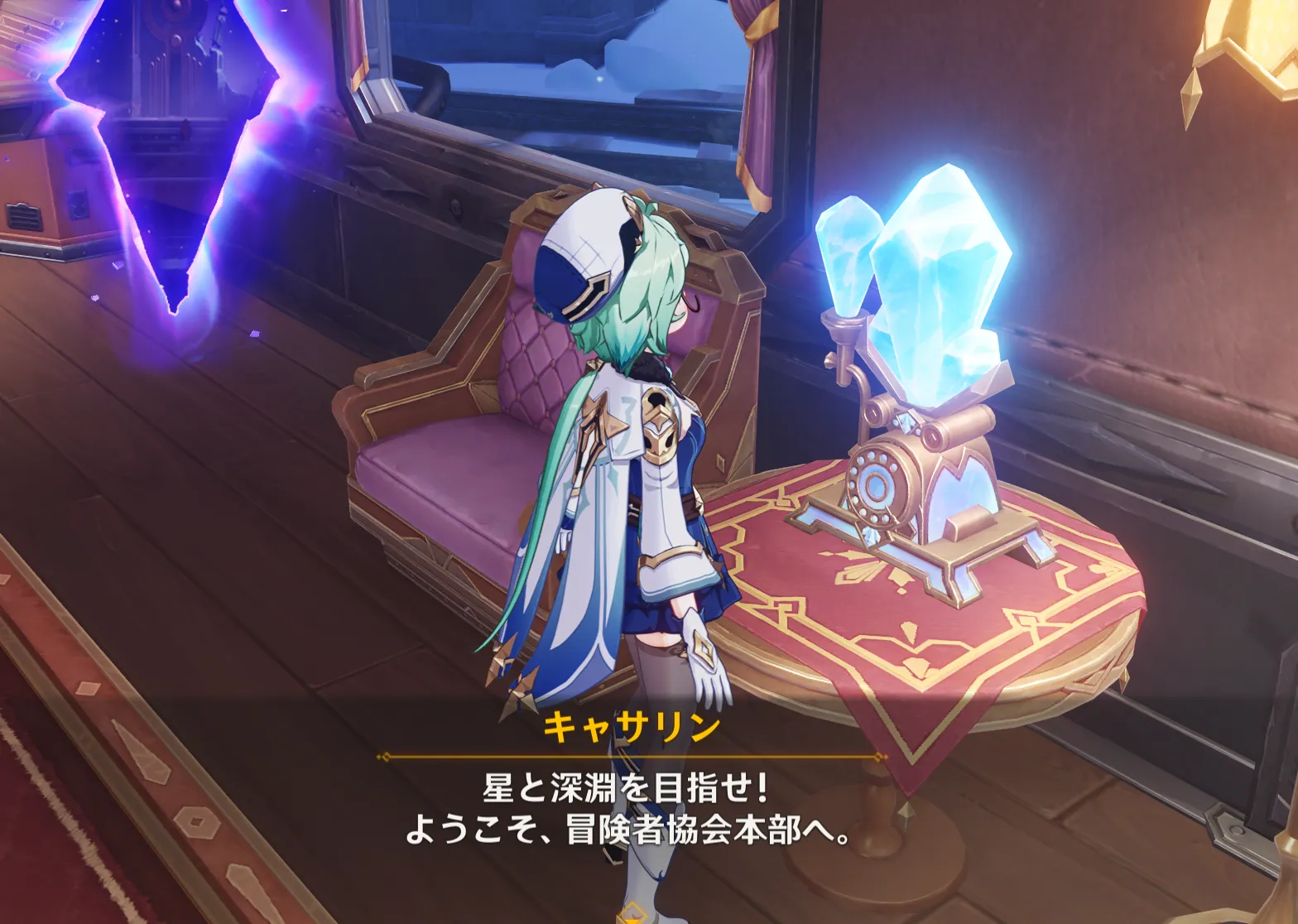
For example, the communicator I got from the Adventurers’ Guild is a telephone with a giant crystal on top, and Katheryne’s voice coming through it has had its frequency band thoroughly shaved down. Communicators must be so widespread that they need to use limited bandwidth efficiently. Sure enough, all the employees at Northland Bank had communicators.
On the train, a noisy song plays as if from a record. So it seems that Snezhnaya has established signal transmission technology that doesn’t rely on magic.
About La Signora and Odette…
I’d killed her so many times as a weekly boss that my sense of it had gone numb, but the Traveler did kill La Signora (the Lady), albeit indirectly. Now that we’re in Snezhnaya, we can’t help but face that.
The story handles this nicely with the appearance of Odette, La Signora’s disciple. After an awkward stretch, earning Odette’s acknowledgment eased the guilt a bit.
The rift between La Signora and Odette, and their reconciliation, is interesting. The “burning amber” she gave Odette wasn’t a surveillance device or anything like that. It was meant to burn away her past of having had no choice but to join the Fatui, and La Signora’s own memories. Odette finally understood what La Signora had intended, and then destroyed the device. In other words, she chose not to erase either the past in which she had no choice but to join the Fatui, or La Signora’s own memories.
Here too we see amor fati, the theme of Genshin Impact that I personally believe really does exist. And a good story always tells you what it’s about right at the start. Throughout the Snezhnaya chapter, we’ll need to keep a close eye on the concept of amor fati.
About the Cold…
This has nothing to do with Genshin Impact anymore, but I’ve long had a question: why is it that the end of a journey always has cold waiting there? In terms of plain danger, heat is just as deadly as cold. Yet the narrative impression is hugely different between a story whose final destination is a volcano and one whose final destination is a land of extreme cold.
Based on my experience with Aquilo, my answer for now might go something like this.
First, death by heat comes with the fear of pain, but death by the absence of heat comes with the fear of loneliness. And in human history, technology for escaping the heat appeared only very recently, while technology for escaping the cold has existed far, far longer. I feel like we come with a built-in thinking framework, somewhere at the instinct level, that the ultimate threat of nature is the cold, and that to counter it, humans must form groups and develop technology.
That’s exactly why Aquilo had to be a barren, freezing land that demands the technology of every planet before it!
The Werewolf Game at the Korolevskiy Theatre
Act II.
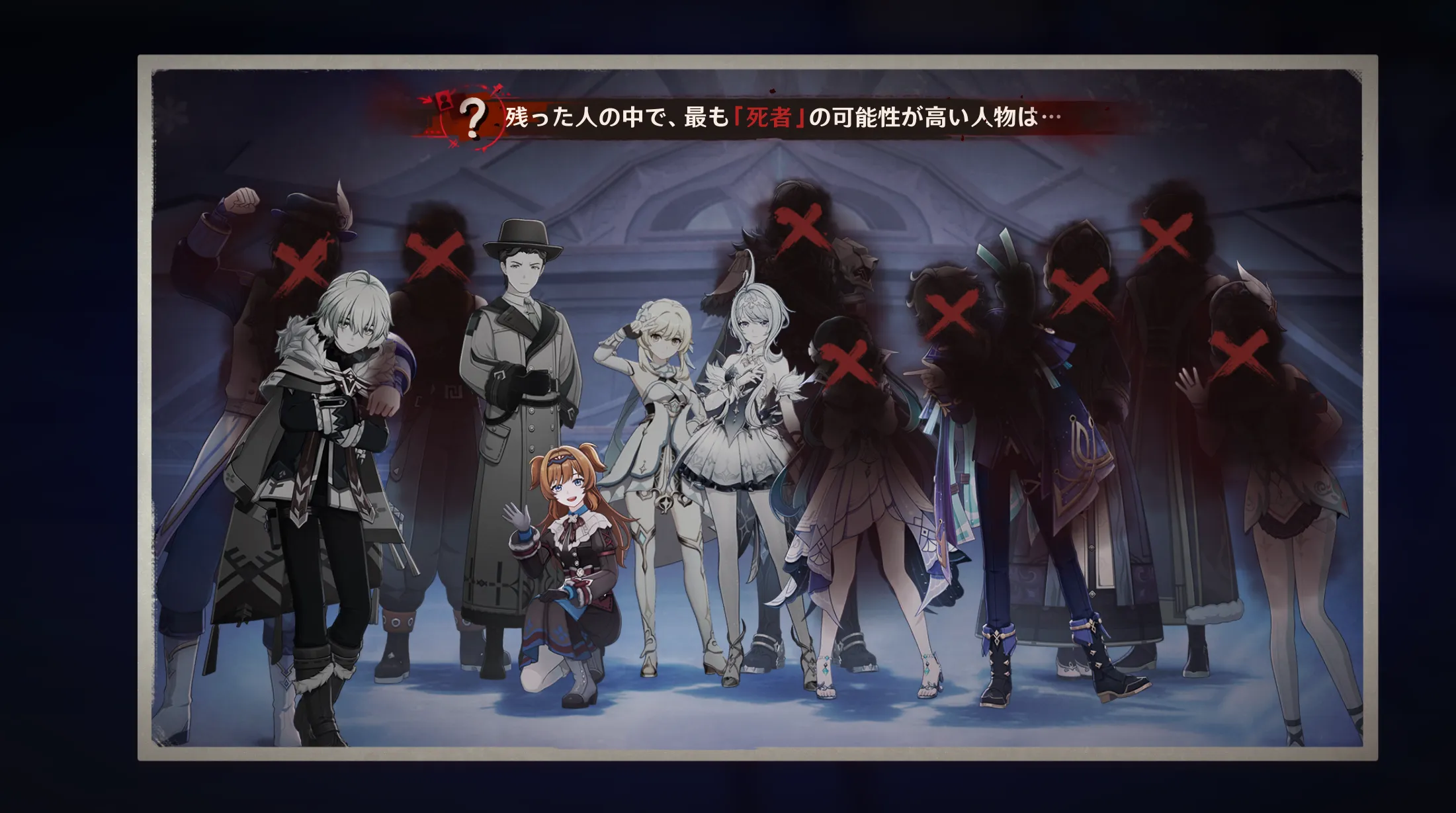
A mysterious blizzard has trapped everyone inside the theatre! Someone dies every night. It seems the number of victims per day equals the number of dead people mixed in among the survivors. Find the dead and banish them into the blizzard!
About the Sense of Foreboding…
If you say “theatre,” you think of Opera Epiclese, and the group photo taken to commemorate the end of the preview performance is ominous just from its color palette. As a commemorative photo it’s an obvious failure, and it fills you with a sense of impending doom.
As usual it was a linear scenario, but it still delivered a decent amount of suspense and mystery. NPCs aside, I genuinely flinched when a character who was (supposedly going to be) playable died.
After a bunch of stuff happened and we were down to five people, Ronova, who had been lurking, finally COs (comes out, in werewolf-game terms) with her 3D model. She instantly kills two people with the power of death, and then it’s a melee fight against the remaining two. The character design and voice are lovely, but considering the villainy to come, if they hadn’t packed in that much charm she would’ve just been a total jerk.
Personally, I wish they’d made the player solve more complicated puzzles here. The hardest part was remembering the history of each day’s attacks and banishments, and for such a great stage, I felt the deductive elements weren’t used to their full potential. But the staging was good.
The Showdown with Ronova, Ruler of Death
Acts III and IV.
The Tsaritsa’s goal was to collect the seven Gnoses and overturn the Heavenly Principles! But there’s a curse on the world: whenever science and technology are about to advance, everyone present (temporarily) dies. Even the werewolf play in the theatre was caused by the scientist Mitya getting a flash of inspiration while watching the show.
To overturn the Heavenly Principles, Ronova must be eliminated first.
About Paimon…
Paimon is a creation of Celestia, fished up to the surface 500 years ago by “The Jester” using Khaenri’ah technology! However, her authority and memories haven’t been left behind. Paimon’s poor health was caused by Snezhnaya’s new energy research, but it was cured when The Jester treated her.
The problem is that Ronova tried to take Paimon away! The Traveler went ballistic, and so did I. We have to team up with the Fatui and eliminate her!!!
I’d braced myself for it, but the scenario has finally started touching the taboo subject of Paimon’s true identity. It makes me feel strongly that the story of Genshin Impact is heading toward its end.
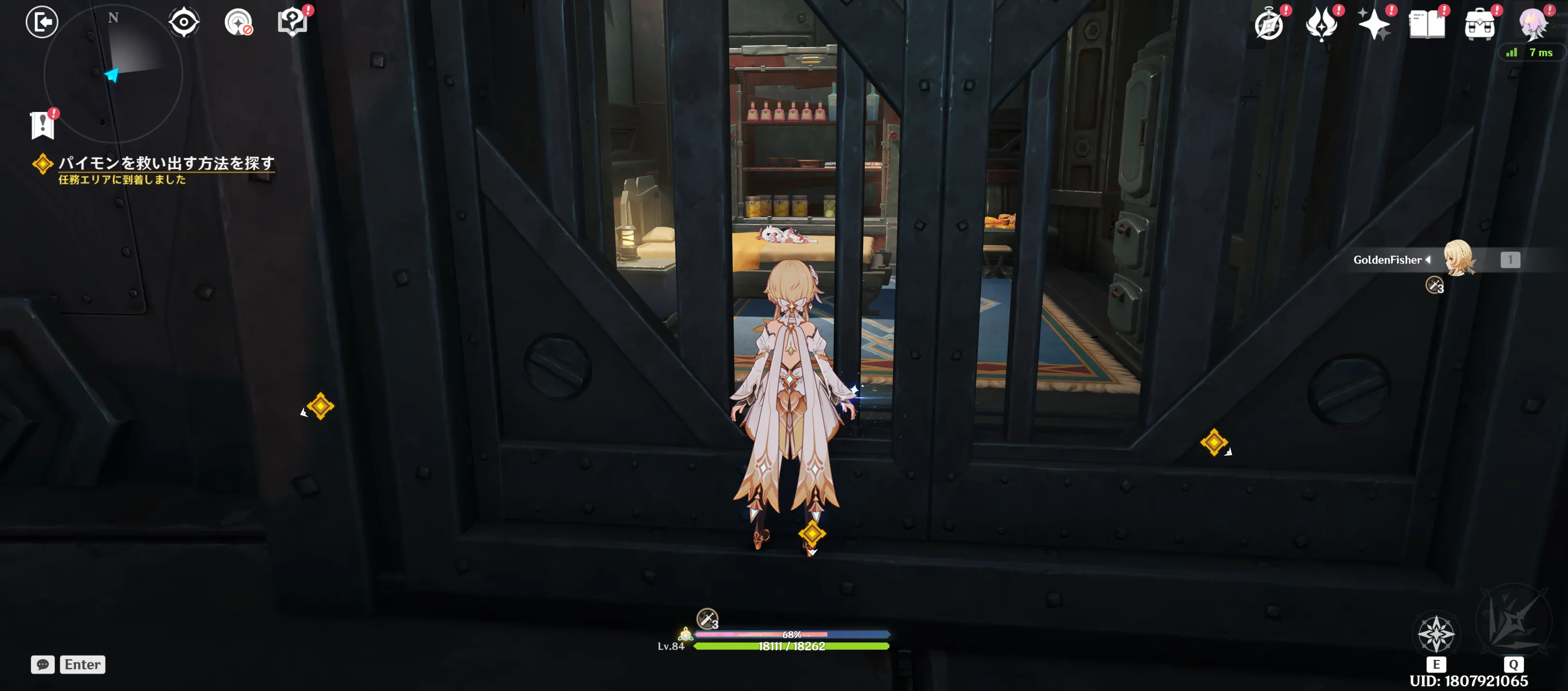
About the Red Text…
For the first time in Genshin Impact, as far as I know, red text shows up in a message.
Snezhnaya has been a country that could be destroyed at any moment by the Nails of Condemnation, since long, long ago.
That’s obviously a harbinger of something. When it comes to red text, I can’t help but think of Umineko When They Cry. In fact, placing it right after a serial locked-room murder story has to be a deliberate staging choice meant to make us remember it.
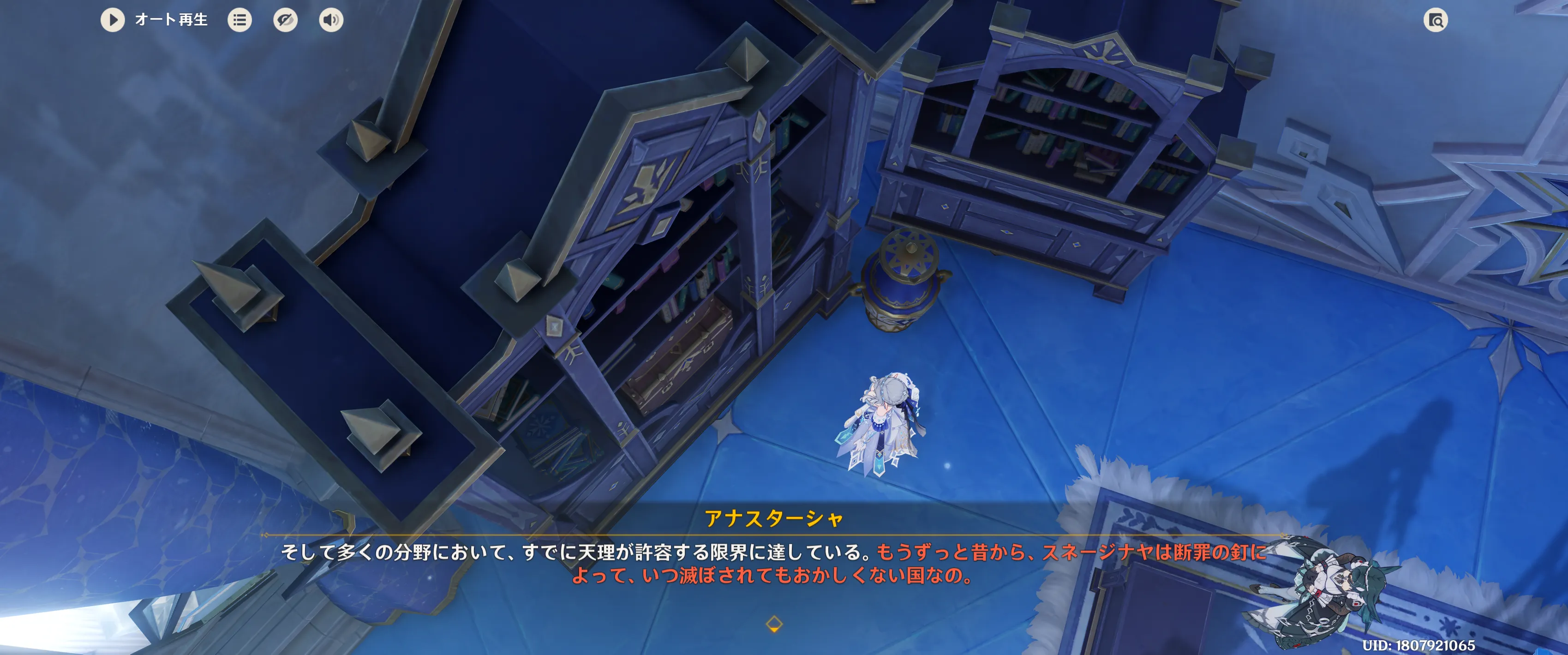
By the way, it seems the Tsaritsa Anastasya, the god of Snezhnaya, counters historical tampering by keeping records in a WORM (write once, read many) storage outside the world, derived from a Descender and independent of the ley lines. That Red Truth above is probably going to get rewritten before long.
About the Showdown…
The question was how to eliminate her, and the plan was a strangely DevOps-flavored one that I found convincing and fun.
The reason the death curse is only temporary is that Celestia’s monitoring, which exists to prevent abuse of the Authority of Death, runs on a schedule. Abusing it would get the Authority of Death revoked, but they dodge the audit by having the Authority of Life’s wielder, Rhinedottir, revive everyone before the next cron run.
While the Traveler and the others were fighting Ronova and all dying, the Tsaritsa was having a tea party with Rhinedottir at a ridiculously huge table, the kind even Putin would nod at.
Using six of the Gnoses (all except the Pyro Gnosis, which was burned away when the World Tree was burned down), she froze time around the Putin desk without being noticed, delaying the restoration batch process run by Rhinedottir. As a result, the abuse of the Authority of Death was detected by Celestia, and Ronova’s authority was revoked.
About the Battle of Ideas with Ronova…
Now we get to the main course. The setup and flow up to this point give the Traveler’s taunts toward Ronova during the showdown a profoundly deep meaning.
Ronova: If I were you, I’d imagine very carefully the end you might meet, and either live cautiously, or choose to walk away from here.
Traveler: If I were you, I’d think hard about whether a life like that is even worth living.
Traveler: At a glance, you seem to be up there, swaying people’s fates and governing a great many rules…
Traveler: But in reality, you’re bound by far more rules than anyone. You can’t even do what you want.
First, the Traveler hit Ronova with an existential question. And it’s actually true! Despite her immense power, she isn’t free at all. As I said above, she’s bound by far more of the programs imposed by the Heavenly Principles than the Traveler or anyone else.
Ronova: The civilization of Snezhnaya has been on the verge of being cut off since long ago. Now you are an undeniable accomplice, too… I will not shield you.
Traveler: Oh, so it’s not like you can do anything about it right now?
Traveler: Even though you’re both creations of Celestia, Paimon is far more admirable than you.
Traveler: You said Paimon has no power or authority… and you tried to take her away like you were collecting an “object,” but—
Traveler: Paimon has guided our journey all this time, watched over by so many people. And before we knew it, that has influenced the fates of many people.
Traveler: That’s a bond that only exists between people, between those who have lives. Paimon has been weaving her own fate, too.
Traveler: If you want to talk about objects or tools… isn’t that you?
Traveler: You’ve never even held your own freedom, and the Heavenly Principles use you as a shackle to restrain people.
Ronova: …
Traveler: (Maybe I went a little too far… I only meant to stall her, but when I thought about Paimon, I just couldn’t help it…)
That’s going too far! But well said!!!
Even taken at face value, those are fiery words, but we really need to think about what Paimon symbolizes in the first place. Let the unhinged ramblings begin.
The Unhinged Ramblings (怪文書)
First I need to do some anger management. Why did the Traveler and I go ballistic? Having a companion about to be taken away wouldn’t be enough to make me that angry. I was furious because not only Paimon herself but also what Paimon symbolizes was about to be violated!!
I haven’t found the right words for it yet, but I think that what Paimon symbolizes is, first and foremost, what Vogler calls the Call to Adventure.
Formally, this is shown by the fact that Paimon was “fished out of the sea.”
At the watering hole, amid a minor panic, Kaban meets the first type of guardian. Hippo has two aspects: she is both a guardian and a herald.
Campbell describes the herald who delivers the summons as “the bottom of the unconscious,” or something like water whose bottom you cannot see. That is exactly like how Hippo emerged from the water.
(Kemonomyth)
Paimon was, quite literally, a being who emerged from water whose bottom cannot be seen.
Going further, Paimon is the belief that “the world is fundamentally interesting,” and I think she symbolizes the biggest claim that the game Genshin Impact makes.
In the prologue of The Hero with a Thousand Faces, Campbell says the following.
The unconscious brings all manner of delusions, strange creatures, terrors, and hallucinations to the mind, whether in dreams, in broad daylight, or in madness.
The world of the unconscious holds both jewels and dangerous monsters. People normally ignore that fact. But sometimes, at some trigger, a dangerous herald appears in your head. This herald is a dangerous presence that threatens the safe framework you live in, including yourself and your family, and yet it is also enormously attractive.
It brings the key that opens the entire world of adventure: the exploration of the self, both frightening and desired. The destruction of the world you’ve built and live in, the destruction of the self that is part of it. But after the destruction comes a magnificent reconstruction, and a bolder, purer, loftier, fully human way of living awaits. This is the temptation, the bright future, and the terror brought by the troublesome night visitor. And the night visitor comes from the mythic world we carry within us. (P24)
Vogler puts the same thing a little more simply.
At the start of an adventure, the Hero is often “getting by.” They juggle an unbalanced life, handling things with various defenses. Then a new force pours into the story all at once, and finally things become untenable. A new character, situation, or piece of information shifts the Hero’s balance, and everything becomes different from before. They must make a decision, take action, and face conflict. This is how the Call to Adventure arrives, carried by a figure who appears as the archetype of the Herald. P92
These are core concepts for understanding Campbell’s Hero’s Journey and Vogler’s Hero’s Journey.
And you can see that the Call to Adventure in this work appears in exactly this form. Lilith is literally “a dangerous herald who emerges from the bottom of the unconscious,” and she is the most fitting character imaginable as the Herald who delivers the summons.
(Excerpt from my earlier Machikado Mazoku (The Demon Girl Next Door) companion book)
So what kind of “unbalanced life was the Traveler juggling”? Actually, that’s the wrong question. The question to ask is: what kind of unbalanced life was the player juggling?
At least for me, it was a life lacking the belief that “the world is fundamentally interesting.”
Engaging with the world as an individual amounts, so to speak, to pulling a gacha from countless events. Some of those events are good and some are bad. But the more you pull from that gacha, the more the sample mean converges to the mean of the whole world. The question is the sign of that world-wide mean.
Put pessimistically, if the sign weren’t positive, there’d be no explanation for why I’m alive right now. If you believed the world’s mean were negative, you shouldn’t take part in the draw at all. Taking the contrapositive: since I’m taking part in the draw, I must believe the world’s mean is positive.
“Living is nothing other than suffering,” say the others. They aren’t lying, to be sure. Then you who preach such things, why not give up life! If living is nothing but suffering, why not stop living!
(Thus Spoke Zarathustra, Part I, “On the Preachers of Death”)
Put optimistically, I now think the world’s mean might turn out to be surprisingly positive. Or rather, maybe every experience should be counted as a plus. Or maybe you shouldn’t be doing that kind of calculation in the first place. And this is what Genshin Impact, which is to say Paimon, taught me.
This world has so much delicious food, so many friends to meet, and countless chests to open. The one who dragged around a silent Traveler with nowhere to go was Paimon, the best guide there is.
As the Traveler says in Act II:
Traveler: At first, I thought I was just a “bystander” to the events of this world. Maybe because I’m a “Descender.”
Tonia: A “Descender”?
Traveler: But with Paimon by my side, I gradually felt my connection to this world deepen.
Traveler: Paimon is a glutton, a sleepyhead, and always wants to play, but she’s also the best guide. Seeing Paimon in that “real” way is what taught me that this world is “real.”
Traveler: These past few days, I keep unconsciously thinking, “If Paimon were here, what would she say right now?”
Traveler: And when I snap out of that daydream, the conversation has moved on. I’m the only one left behind in my own world.
Traveler: I’m trying to get over this loneliness… but still, I want to see Paimon. To me, Paimon is, in a sense, “this world” itself.
In short, what she tried to do was, to the Traveler, a denial of the world itself. How could anyone not be furious!!
And that’s why
Traveler: If I were you, I’d think hard about whether a life like that is even worth living.
carries enough power to enrage Ronova. Because indeed, I can’t believe a life without that belief is worth living.
She knew that people cling to life, but she didn’t understand why. Bound by the shackles of the Heavenly Principles, she can’t weave a fate to begin with. This is exactly why she’s more of a tool than Paimon.
Incidentally, what was cited as the way to counter the Authority of Death was life force. And apparently life force is something that can be extracted as good memories. The reason the Traveler was able to revive first and pick the flame war was that they retraced the memories of their journey so far in the afterlife.
This was expressed musically through the motifs of each region, and mechanically by advancing through each region’s own field gimmicks. Looking back, it’s interesting that every gimmick, from Mondstadt’s updrafts to Nod-Krai’s moonspirit paths, was for traveling between points.
It’s really starting to feel like a final boss fight.
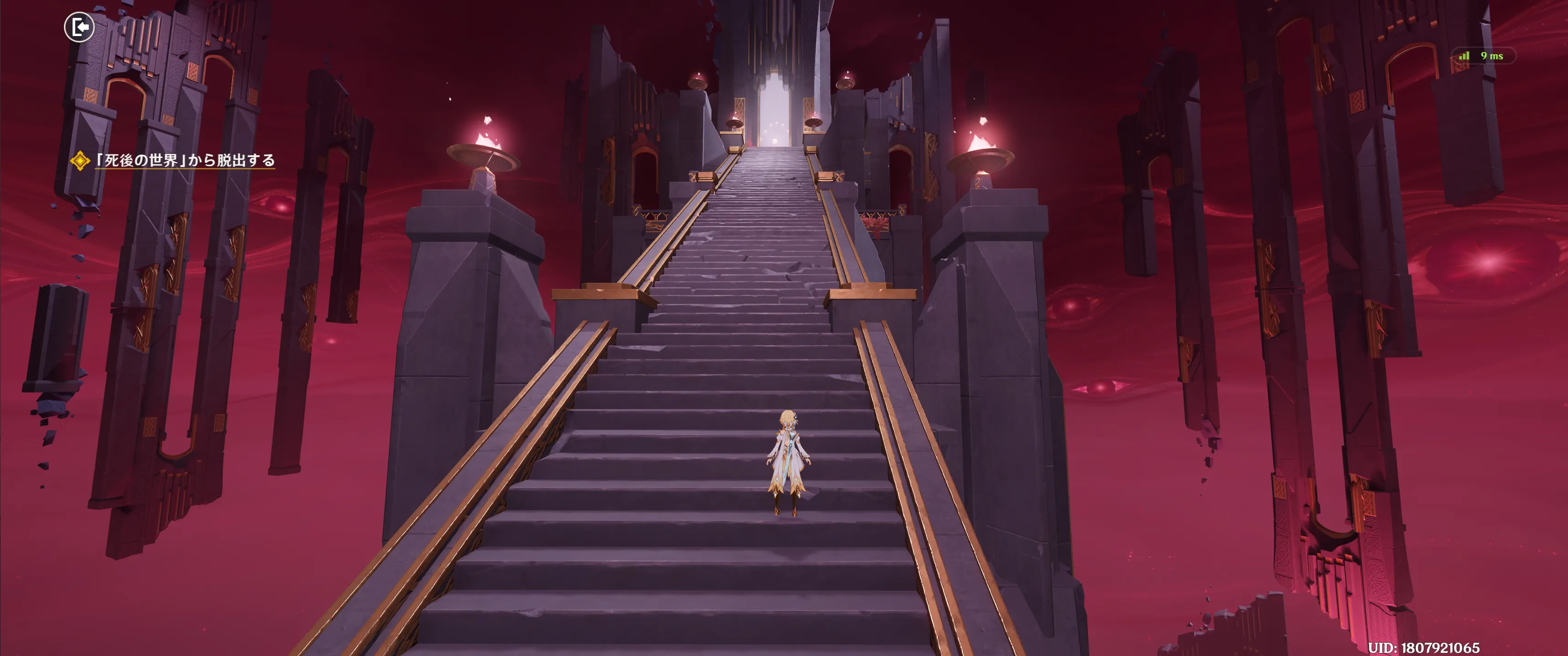
To Be Continued in Act V
Pierro, using his improved Delusion (7-digit damage in a single hit, 15-second cooldown), eliminated Ronova. The death curse stopped, and Snezhnaya can now push ahead with research toward overturning the Heavenly Principles.
Meanwhile, Ronova, at the moment of her death (?), activated a mysterious device in the world of Celestia. Right after that, 6 new quests arrive in a row! Something has gone wrong with the “Nails of Condemnation” all over Teyvat! Cross-shaped light floating high in the sky!
Now that I’ve caught up, I can finally watch the official PV without fear of spoilers.
Apparently a process called the “Holy Soil” has started, for a new, manageable civilization. In 42 days or 30 days, Teyvat will be reduced to the power of the Primordial Light Realm. And the seven Archons gather there!
…or so it seems. The whole story of Genshin Impact is finally nearing its endgame.
About the Ultimate Theme…
For various reasons, I recently ended up with a new, difficult problem. Does an individual have the power to change fate?
For now, I don’t really think so. The world has rules and big currents that can’t be changed. All I can do is change how I perceive events.
Even if we can’t change the overall story, we can let the Traveler speak for us in that single moment, expressing what we feel. What does this mean?
(A video essay I made a year ago)
I’ve started to feel there’s room to think about whether this idea is actually right.
First, when I say an individual has no power to change fate, there’s a big contradiction in it. Changing how you perceive things clearly includes the power to affect the future.
You could say that the future changed in that way is fate, and that’s one way to look at it, but go that far and you arrive at the ultimate determinism. There isn’t even freedom in how you perceive things. That’s the Celestia way of thinking. I want to reject that worldview.
In that case, I have no choice but to conclude the earlier idea was wrong.
On the other hand, the idea that an individual does have the power to change fate also has something dangerous in its ring.
First, it demands self-reproach for past failures. “You had the power to change the ending, and you failed to turn failure into success!” is not an appropriate thing to say to someone who failed.
Second, it creates a floating ground relative to the world. Thinking that fate or the world can be manipulated is the first step toward blasphemy. We already saw this danger with Dottore, who tried to gather the power of the three Moons and become a god himself.
What Doctor’s experiment lacks in the Traveler’s journey is precisely this. He recognizes his way of engaging with the world only as an “experiment,” and his way of engaging with people only as “mutual benefit.”
He despises the earth, which is to say Teyvat and the people who live on it! And that deviates from the path to the Übermensch that Zarathustra speaks of.
Is it possible to change the world without despising it?
Interestingly, the two attitudes above seem to correspond to Nietzsche’s camel stage and lion stage. If so, perhaps the stage that can solve this problem is the child stage.
No matter what tragedy or absurdity there may be, this earth and this life are worth playing to the fullest.
If I hold that belief (which may well be equivalent to “amor fati”) and enjoy things the right way, and only if I’m enjoying them, perhaps the world will respond to me.
Traveler: Paimon has guided our journey all this time, watched over by so many people. And before we knew it, that has influenced the fates of many people.
I’m hoping that what the Snezhnaya chapter, or Genshin Impact as a whole, ultimately shows us is the answer to this problem.
About Ronova…
I trash-talked her a lot, but that just goes to show what an appealing villain she was!
I want her to become playable, and it seems like plenty of other people feel the same way. It’s probably not just because of the great character design and voice, but because many people sensed a kind of tragedy in Ronova, whom the Traveler kept needling.
More articles
- Thoughts on Genshin Impact's Nod-Krai Storyline• #Genshin ImpactI finished Nod-Krai.
- I Had "AI Mona" Analyze the Raw METEOR-M2 4 Weather Satellite Data• #RTL-SDRBased on the raw WAV data of METEOR-M2 4 that I received at a temple in the dead of night, I had Astrologist Mona Megistus (Gemini) explain the whole thing.
- Genshin Impact 2026 Theater of Memories• #Genshin ImpactHow my 2026 went in Genshin Impact.
- Notes on Gnosticism• #GnosticismJust some scattered notes.
Notes on games, radio and technology, translated from the Japanese blog.