Notes on Gnosticism

Table of Contents
Lately I’d been weirdly in the mood to rewatch The Truman Show. I was zoning out on YouTube when this video popped up.
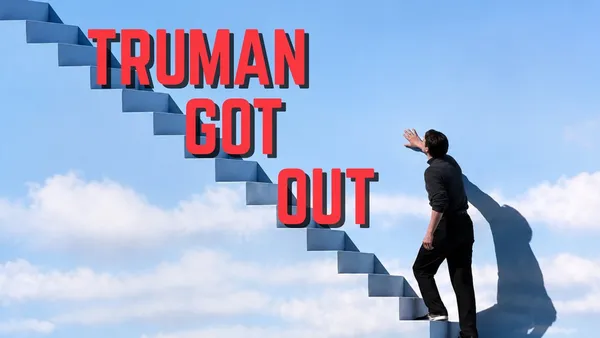
About halfway through, I thought, I should really rewatch the movie properly before spoilers start jogging my memory, so I closed the video and sat down with The Truman Show again.
Then I resumed the video from where I’d left off, and this time it started arguing that “The Truman Show is Gnostic.”
Speaking of Gnosticism, I’d heard that Genshin Impact uses it as a motif. For starters, the “God’s Heart” (神の心) is literally called a Gnosis in English. And the Archons in “Archon Quest” (魔神任務) are, well, the Gnostic term for the (false) gods.
I already knew about that claim, but studying Gnosticism in order to understand Genshin felt like cheating somehow, so I had been deliberately avoiding it. But now that I’d arrived at it via The Truman Show, I felt like unlocking the Gnosticism knowledge. So: I decided to study Gnosticism.
About Gnosticism
Here’s what I understood it to be. For the correct interpretation, you should probably ask an AI.
- This world is a flawed exploitation machine built by a false god (the Demiurge)
- Human souls are fragments of the true God, trapped in the material world
- By realizing this (gnosis) and liberating the soul through the proper means, you can return to the true God and the true world
In other words, it’s The Matrix. The Matrix is pretty much a perfect translation of Gnosticism into modern sci-fi.
Once I understood that, I noticed that all sorts of things I’m interested in are influenced by Gnosticism.
The Connection to Jung
As a matter of fact, Jung apparently had a strong interest in Gnosticism. Which means there’s a cultural tree: Gnosticism → Jung → Joseph Campbell → any story you like.
Here’s probably how it maps:
- Pleroma (the true world): Jung’s “collective unconscious”
- Aeons (the various aspects of God made manifest): Jung’s “archetypes”
- The Demiurge (the arrogant false god): the ego, which doesn’t grasp the whole picture yet thinks it’s the center of the world
The Escape-From-a-Fake-Reality Trope
Themes like “realize that the world (or the rules/god governing it) is fake” show up in all kinds of works. In film, The Matrix and The Truman Show are exactly that; in anime, Madoka Magica (especially The Rebellion Story) is obviously that. The original Madoka series is also pretty close, though not as close as Rebellion.
Going further, pretty much any death-game story ends with escaping the game by destroying the rules or the GM. That might also count as Gnostic.
And as the video I mentioned at the top points out, Plato’s Allegory of the Cave is more or less the same thing. Humans have apparently had this feeling that “maybe this world is fake” for that long.
Gnosticism Might Be an Effect
The reason I like Joseph Campbell is that his theory is so simple. It ignores causal chains like “Work A influenced Work B, which influenced the zeitgeist C, which…” and just claims that “all stories share the same structure.” Sure, an oversimplified theory is dangerous, but the big upside is that you never have to sit through some nerd flexing their pointless trivia at you.
With that in mind, maybe it’s more accurate to say that Gnosticism (the myths told in it) isn’t the root of the cultural tree so much as one implementation of a Gnostic way of thinking.
The claim “this world is fake” is extremely attractive to people who don’t like the current world, and against any opposing argument it works as a logic that neutralizes the other side’s axiom (against orthodox Christianity, that would be Yahweh). And I doubt that, at any point in history, the number of people satisfied with the status quo ever outnumbered the number of people dissatisfied with it. Gnosticism is an effect, not a cause.
Still, the very idea that another world exists apart from the real one seems pretty far-fetched. How did it come about in an age before VR technology was as advanced as it is now?
I was thinking about that when I passed out, and for the first time in a while I had a dream. It was a fun sports day (or a school festival?) dream, mostly featuring friends from my middle school days. Content aside, I bet the “another world” idea came from people dreaming.
It’s the Butterfly Dream logic: “The dream I had while asleep felt incredibly real, but now that I’m awake I can tell it was a dream. So how can I be sure that this world I take to be real isn’t a dream dreamed by a higher-level me while that me is asleep?”
Seen that way, the Gnostic intuition that “this world might be fake” isn’t some far-fetched occult nonsense, but a basic cognitive quirk built into the human brain from the start.
Is the Fake-World Hypothesis Trending?
Even if this has been passed down regardless of the era, maybe the present day has the right conditions for explaining the Gnostic intuition that “this world might be fake” rationally.
The world’s enshittification keeps accelerating, and I increasingly want to believe that this world is just a fake made by some idiot out there. Or rather, it feels like the world’s “realness,” for lack of a better word, is draining away day by day. Or maybe I’m the one who’s starting to realize that the world isn’t real. If it’s the latter, I might be losing my sanity.
More articles
- Impressions of Genshin Impact Ver. 7.1 Snezhnaya, Up Through Act IV "A Rekviem for the Underworld"• #Genshin ImpactAfter two years, I've finally caught up with the current release.
- Thoughts on Genshin Impact's Nod-Krai Storyline• #Genshin ImpactI finished Nod-Krai.

- I Had "AI Mona" Analyze the Raw METEOR-M2 4 Weather Satellite Data• #RTL-SDRBased on the raw WAV data of METEOR-M2 4 that I received at a temple in the dead of night, I had Astrologist Mona Megistus (Gemini) explain the whole thing.
- Genshin Impact 2026 Theater of Memories• #Genshin ImpactHow my 2026 went in Genshin Impact.
Notes on games, radio and technology, translated from the Japanese blog.