What Makes Sound "Good"?

Table of Contents
Lately, I’ve been losing my grip on the very concept of “sound quality.”
In general, good sound quality is taken to mean physical metrics like “no noise” or “a flat frequency response.” But I’ve started to doubt whether those are really the ultimate goal audio should be aiming for.
Isn’t a lack of noise, or a flat response, just one of the possible means of building “good sound”? Nothing more?
What Is the “Good Sound” We Should Be Aiming For?
After thinking it over for a while, I’ve come to believe that the real “good sound” we should aim for is “a sound functioning in the context in which it is supposed to exist.” This is a different dimension altogether from sound quality on a spec sheet.
Let me explain with a few examples.
Radio
Lately I’ve fallen down the rabbit hole of listening to radio with an SDR (software-defined radio). My current joy is listening to Konomi Ohara’s show (she’s a voice actress) late on Tuesday nights.
Once, I missed the broadcast and had no choice but to listen through radiko’s Timefree feature (radiko is Japan’s radio streaming service), and something felt off. The reason was obvious: there was none of that noise that’s unique to radio.
In terms of plain “sound quality,” noiseless radiko should be the better one. But for me, the wavering of the radio waves and the white noise murmuring in the background were the “real experience of listening to the radio.” Maybe there’s a bit of nostalgia in it, but that noise is what completes the experience and makes it comfortable. White noise is even said to calm the mind, for what it’s worth.
Records
The same goes for music in general. Why are records making a comeback right now?
People often defend them with “records are analog, so they have an infinite sampling rate, therefore they sound better,” and I think that’s wrong. A record stylus is not infinitesimally small, and if you think about how much is lost on the way from a pure master, they are surely inferior to a source that stays digital from start to finish.
That’s not where the real value of records lies. Music that was released on records back then was made on the assumption that listeners of the time would hear it through the acoustic characteristics of a record, or that the creators would have it reach people in that state. That is exactly why listening to music of that era on a record becomes a “real experience.”
(By the same logic, going out of your way to press brand-new music, made in a fully digital environment, onto a record and listen to that seems to me like fundamentally missing the point.)
Ambient Noise and Environment
Push this further, and even ambient noise might not be an obstacle to good sound but a requirement for it.
For example, I love the Factorio Space Age soundtrack, but listening to it all by itself feels not just unnatural but downright alarming. If music is playing on a space platform and there’s no asteroid crusher, no turrets, no thrusters mixing into it, that means something is seriously wrong with the logistics.
Or take the soundtrack of an open-world game like Genshin Impact: listening to it through noise-cancelling earphones feels a bit off to me. Game BGM is surely made to be heard mixed in with footsteps, environmental sounds, and sound effects. Shutting all of that out completely feels like stripping away the creators’ intent and the original context.
Going even further, sitting quietly in a chair at home and appreciating an intense battle theme is also unnatural. Ideally you’d listen to it while fighting someone, but that’s impossible in reality, so the next best thing is to at least do some kind of exercise while listening.
To put it bluntly, the best place to listen to a game’s soundtrack is inside the game.
What I Want From Sound
Summing up my thoughts so far, it seems that what I want when I listen to sound comes down to these two things:
- That the sound I’m listening to, and I myself as the listener, are placed in the “real environment or state (context)” where that sound is supposed to exist.
- Where that’s impossible, to recreate an environment as close to that state as possible.
If I may shoehorn in Kitaro Nishida (the Japanese philosopher), chasing the Hi-Fi kind of good sound, or good separation, is the “knowing” stance toward that sound. It is certainly an important element, but what remains after you keep dissecting an object as something impersonal is nothing more than a dry physical phenomenon: vibrations of air.
On top of analytical understanding, don’t you need the stance of “love”? Treating the object as a personal one, and embracing the world itself as the result of God’s manifestation. Only then can the experience of truly listening to that sound come into being, can’t it?
The Moment I Came Closest to Real Sound
I’d been thinking about this for about half a year, and then an experience turned it into conviction.
I recently had to move away from the town where I’d lived for many years. On the last night of my stay, after I’d already cleared out of my place, a friend suggested we climb the mountain with a view over the whole town and spend the night at the summit.
To have the observation deck to ourselves in the dead of night, I stuffed an old futon cover (a stand-in for a sleeping bag) and a pillow into a huge backpack, and we entered the trail around 9 p.m. After about an hour of climbing the mountain path in the dark, we reached the top.
Looking out over the night view of the town spread below us, I played a few songs.
The first was the main theme of Genshin Impact.

The exhaustion and sense of accomplishment from finishing the climb up a dark mountain path. The breathtaking view looking down from there. The main theme, heard in this situation, was as perfect as it could possibly be. More than in any environment I’d ever listened to it in, I felt that the sound playing right now was the “real thing.”
With the wind whistling through the giant antenna installed on the summit, and the music playing straight out of my phone’s speaker, it goes without saying that this was not “good sound” in any physical sense.
The second was the main theme of Girls’ Last Tour.
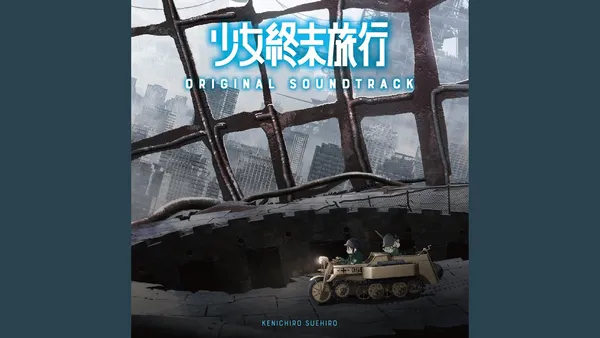
And the third, which Spotify auto-selected next, was another one from Girls’ Last Tour: “Owari no Uta” (roughly “Song of the End”).
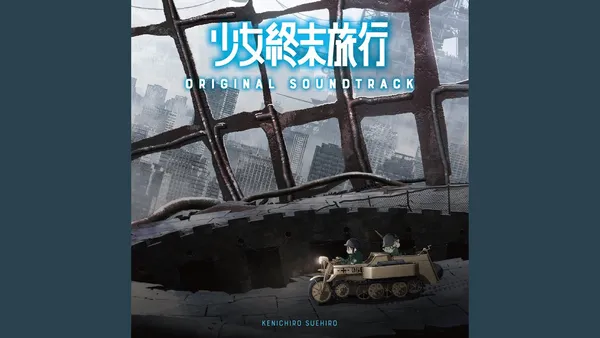
The night view below held most of the area where I’d lived my life for the past ten years. And now, quite literally, that life was about to end. The high place we’d reached at the end of a night climb with a friend was bitterly cold. It was the perfect stage. Once again, it felt like the most real experience I’d ever had.
By the way, the reason for these three songs is that this friend and I once held a party, completely tripping on LSD analogs (legal at the time), where we binge-watched Girls’ Last Tour in the dead of night, then watched the sunrise from the balcony while listening to the main theme of Genshin Impact.
More articles
- Impressions of Genshin Impact Ver. 7.1 Snezhnaya, Up Through Act IV "A Rekviem for the Underworld"• #Genshin ImpactAfter two years, I've finally caught up with the current release.

- I Bought a Cheap Wideband LNA from AliExpress, the Zeenko ZK06-BM• #RadioI used the Zeenko ZK06-BM to intercept METEOR-M2 4 and got the best satellite image I've ever received.
- On the End of the World• #ScreedIt's Ragnarok.

- Thoughts on Genshin Impact's Nod-Krai Storyline• #Genshin ImpactI finished Nod-Krai.

Notes on games, radio and technology, translated from the Japanese blog.