The Side Story of Ace Combat 04 and Agustín Barrios
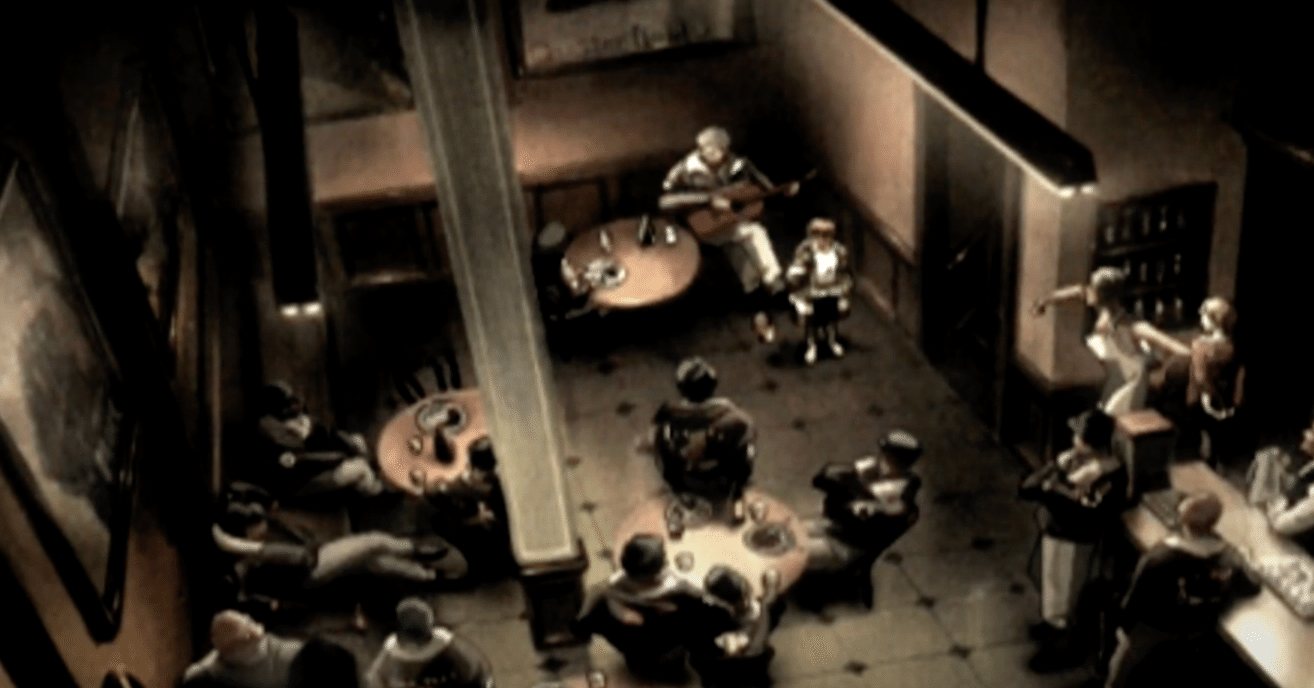
Table of Contents
TL;DR
-
“Prelude” and “Session” were actually based on pieces by the Paraguayan composer Agustín Barrios.
-
Exploring Barrios’s life and works—especially the background behind La Catedral and Una Limosnita Por Amor De Dios—deepens our understanding of the world of Ace Combat 04 and the hearts of its characters.
-
Ace Combat 04 is truly a game that embodies “God is in the details.”
Introduction
I was just a child when the stars fell from the skies.But I remember how they built a cannon to destroy them.And in turn how that cannon brought war upon us.War was an abstract idea, nothing more than a show on TV.As a child, I only saw it as something that happened in some far away land...Until that final day of summer...The other day, I was watching the Japanese police procedural drama Aibou (Partners), when a piece of music came on that sounded crazy familiar.
Episode 8 “The Puppet” Wednesday, December 8, 2021 | Story | Aibou Season 20 | TV Asahi
It was none other than “Prelude,” the track that plays during the side story of Ace Combat 04!!!
“Oh man, someone on the Aibou production team must be an Ace Combat 04 fan!”
A Revelation 20 Years in the Making
…Or so I thought. That should have been the end of it.
However, when I looked into it, I uncovered something shocking.
Of the tracks that play during the side story, at least “Prelude” and “Session” were not written specifically for the game at all—they were (arrangements of) existing classical pieces!
“Prelude” is Preludio Saudade from La Catedral by Agustín Barrios.
“Session” is also Barrios’s Una Limosnita Por Amor De Dios, arranged to incorporate a harmonica jam session.
The official soundtrack even includes the original Una Limosnita Por Amor De Dios itself, performed faithfully to the original score rather than as an arrangement.
On an album I must have listened to from start to finish well over a thousand times, a brand-new revelation surfaced after more than twenty years. You can imagine my shock.
So, I decided to do some research into these pieces.
Below is what I put together with the help of an LLM (I just Googled around on the internet, so I can’t guarantee 100% factual accuracy).
Agustín Barrios: The Great Paraguayan Guitarist
Agustín Barrios (1885–1944) was a Paraguayan composer and guitarist. Active throughout the first half of the 20th century, he left behind more than 300 works. Barrios established a unique compositional style blending South American folk music with European classical traditions, leaving an immense impact on the world of classical guitar.
Barrios was born on May 5, 1885, in San Juan Bautista, Paraguay. Surrounded by music from early childhood, he was especially passionate about the guitar. At age 13, he received a scholarship to attend the music department of the National University of Asunción, becoming the youngest university student in Paraguayan history. Barrios also possessed extraordinary talent as a performing guitarist. For 40 years, he toured across South America and Europe, captivating audiences wherever he went. At times, he would perform wearing traditional Guaraní attire under the stage name “Nitsuga Mangoré."
"La Catedral”: Barrios’s Masterpiece
La Catedral was first published in 1921. Initially composed of two movements, “Preludio Saudade” was later added, bringing it into a three-movement format.
It is one of Barrios’s most famous works, praised by countless guitarists including Andrés Segovia.
- Preludio Saudade
- Andante Religioso
- Allegro Solemne
“Preludio Saudade” was composed by Barrios in Havana in 1938. “Saudade” is Portuguese for a nostalgic longing or yearning.
At the time, Barrios was struggling with health, financial, and personal problems. The “Preludio” expresses that sorrow, anguish, and yearning for better days.
The second movement, “Andante Religioso,” depicts an organist playing a Bach chorale inside a cathedral. The third movement, “Allegro Solemne,” depicts leaving the serene atmosphere of the cathedral and stepping back into the hustle and bustle of the street outside.
There is a fascinating legend regarding the narrative behind La Catedral:
According to one theory, Barrios lost his wife at a young age and wrote the “Preludio” out of that grief. When he had barely reached adulthood, his wife’s funeral was held at the cathedral in Montevideo, and inspired by the atmosphere, he supposedly conceived a three-movement work. But upon finishing it, he perhaps didn’t want to share such an intensely personal first movement with the world. Thus, it’s said he published only the other two movements at first. While this is a beautiful anecdote that adds depth to the piece, whether it’s historically true remains uncertain.
”Una Limosnita Por Amor De Dios”: Barrios’s Final Work
“An Alms for the Love of God” (Una Limosnita Por Amor De Dios) was composed in 1944, during the final year of Barrios’s life. Also known as “The Last Tremolo” (El Último Trémolo), it is a vital work that stands as the culmination of Barrios’s life and artistry.
There is a fascinating anecdote behind how it came to be written:
In May 1944, while Barrios was living in El Salvador, a beggar would come by across from his house every morning, repeatedly chanting, “Una limosnita por amor de Dios” (An alms for the love of God). This was apparently a phrase commonly used by beggars in Latin America. Barrios was inspired by the beggar’s persistent cries and composed this piece. The bass line persists tenaciously, almost stubbornly, as if mimicking the beggar’s repeated phrase. Meanwhile, the melody uses the classical guitar technique known as “tremolo” to create the illusion of sustained notes.
Una Limosnita Por Amor De Dios is considered one of Barrios’s sacred works. The piece unfolds primarily in E minor, but modulates to E major near the end. This shift to the major key is interpreted as symbolizing Barrios’s acceptance of death and his arrival at a peaceful state of mind.
Diving Deeper into Ace Combat 04
Good grief.
The more I dig into this, the more the deliberate intentions behind using these pieces in 04 come into sharp relief.
Why Barrios?
The side story depicts events in San Salvacion, an independent nation located in the northwestern part of the Usean continent.
Now, which real-world place served as the model for this country? Judging by the sound of the name, it’s almost certainly San Salvador, the capital of El Salvador.
Not only do they sound alike, their meanings are practically identical. San Salvador is Spanish for “Holy Savior,” while San Salvación means “Holy Salvation.” While Salvador primarily refers to a person (“savior”), Salvación denotes the act or state of “rescue” or “salvation.” And while Salvador carries strong religious overtones, Salvación can also be used in everyday contexts.
And the place where Barrios died was none other than San Salvador.
Why Did Yellow 13 Choose “Una Limosnita Por Amor De Dios”?
Let’s entertain the theory that San Salvacion = San Salvador. And let’s assume that Barrios (or a figure corresponding to him) was active in this world just as in reality, and passed away in San Salvacion.
Suddenly, an even deeper layer of emotional weight emerges from the side story.
In Side Story #03, Yellow 13 proposes playing together to the boy. The piece he played on guitar was Una Limosnita Por Amor De Dios, which happened to be the song the boy’s late father loved to play. That was why the boy was able to join the session on his harmonica.

It’s the most striking scene in the side story. At the same time, it was something I’d wondered about for a long time.
For the man who killed his father to play the exact piece his father loved—isn’t that way too convenient to be a coincidence? Isn’t that just a bit too contrived?
…No, absolutely not! This wasn’t a coincidence; it was inevitable.
Yellow 13 figured the boy was very likely to know it, and specifically chose a piece by Barrios, the famous composer of San Salvacion.
Even in the midst of war, Yellow 13 demonstrated cultural appreciation and respect for the occupied territory. It’s an episode that reveals his noble spirit.
Or perhaps Yellow 13 sensed his own death looming right before his eyes—and that was why he chose Barrios’s final work.
Why Does the Story Begin with “Preludio Saudade”?
Saudade is a feeling of longing for things that have passed; similar to “nostalgia,” but carrying the implication of resignation or fate—that one will never encounter them again.

The boy harbors saudade for the days he spent with his family. Using this piece in such a scene was, once again, sheer inevitability.
Barrios, Bach, and the “Meaningless War”
Barrios revered Bach. La Catedral is written in the Baroque style and is virtually an homage to Bach. What’s more, he reportedly once said, “How well Bach elevates us to the eternal.”
Now, I recently came across a very interesting piece on the internet regarding Bach.

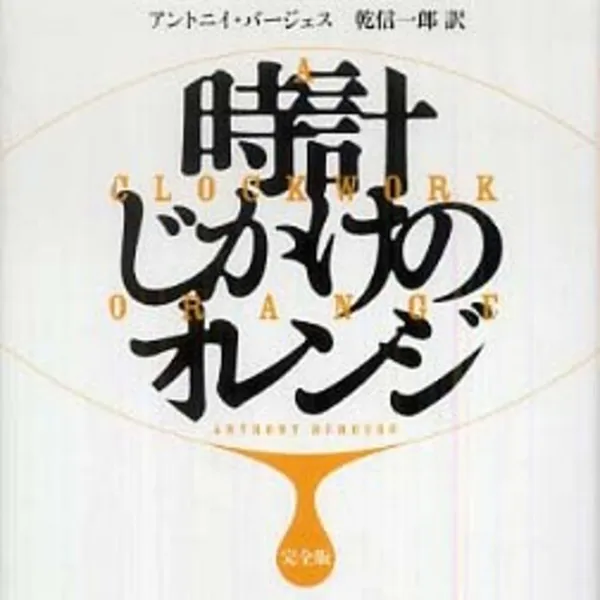
Looking at this made me reflect on a certain fundamental greatness in the music of J. S. Bach—an unmatched sublimity distinct from the likes of Beethoven and others. That is: no matter how you look at it or where you strike it, there is nothing in Bach’s music that stirs an impulse toward violence!
And—not to diss them or anything—perhaps the music of people like Mozart or Beethoven is, while not completely devoid of it, slightly weaker in its power to awaken one to the preciousness of peace… Or maybe that’s just how it is.
Has there ever been a piece of writing that put into words the brilliance of Bach so well?
And if I let my imagination run wild, surely Barrios loved Bach for reasons just like that.
On January 5, 1931, the Brazilian newspaper Jornal do Recife published an interview documenting Barrios’s thoughts and views on religion: “In spite of a severe religious education, my primitive pantheism has pointed me in the direction of Theosophy, the most human and rational of philosophic concepts. I believe in the immutable laws of Nature. And Humanity and the Good impregnate my spirit as the ethical end of all existence.”
The side story in 04 unfolds in a matter-of-fact, detached manner as the boy looks back on the past. The reason it feels so detached is that he records almost exclusively objective facts. There is virtually no mention of his subjective emotions—nothing about how sad he was when his family died, or how thrilled he was when the town was liberated.
The only glimpse we get into his personal perspective is this passage from the final side-story cutscene:
I know it must have brought him unexpected joy to have an opponent like you,at the end of that meaningless war.At least that's what I want to believe.Only you...the pilot who shot him down,can confirm this. And so I write to you...To him, virtually everything we players accomplished was “meaningless.”
Surely Barrios held the same view regarding the two World Wars and other bloody conflicts that occurred during his lifetime.
And presumably Yellow 13 did as well—just as Barrios loved Bach’s music, philosophical worldview and all.
Conclusion
So, inspired by Aibou, I’ve rambled on with the results of my digging and my thoughts on them. I do feel like I indulged in a bit too much hiyayakko (wild over-interpretation) toward the end.
04 is my favorite game, story, and soundtrack of all time. I love other entries in the series too, but the crowning masterpiece is unquestionably 04.
Writing this article made me go back and rewatch the side-story cutscenes and gameplay videos. And I really do love how everything unfolds with that quiet, understated detachment—it just feels right to me.
And while it looks sparse on the surface, if you look closely, the creators’ intentions are woven into every single corner. 04 is truly a game that embodies the phrase “God is in the details.”
Though the details are so deep that it took me a good twenty years to finally notice what they were doing with Barrios…
Come to think of it, when exactly is the “present” in 04? In other words, if you wanted to do a “real-time playthrough” of 04, when would be the appropriate time to do it?
I think it might be some time after the Continental War.
The player receives the letter from the boy, and as they read through it, they reminisce about the missions they flew back then…
That’s the kind of story structure 04 feels like to me.
If that’s the case, then no matter when you play 04, it’s always a “real-time playthrough.” The player selecting “NEW GAME” (and the difficulty) corresponds to opening the mailbox and picking up the boy’s letter… or so it feels to me.
And so we look back on our past as Mobius 1 accompanied by saudade—that feeling akin to “nostalgia,” yet carrying the resignation and fatalism that one will never encounter those days again. Perhaps this structure is the ingenious device that makes you want to replay 04 again and again.
Maybe I’ll pull out the PS2 for the first time in a while. My copy seems to have a scratched disc, and the final side-story cutscene won’t play anymore. I might have to buy a new copy of 04.
Twenty years… you really feel the weight of all that time.

I have so far to go
More articles
- Important Life Lessons I Learned from ACE COMBAT 04• #Ace Combat 04Looking back.

- Impressions of Genshin Impact Ver. 7.1 Snezhnaya, Up Through Act IV "A Rekviem for the Underworld"• #Genshin ImpactAfter two years, I've finally caught up with the current release.

- I Bought a Cheap Wideband LNA from AliExpress, the Zeenko ZK06-BM• #RadioI used the Zeenko ZK06-BM to intercept METEOR-M2 4 and got the best satellite image I've ever received.

- On the End of the World• #ScreedIt's Ragnarok.

Notes on games, radio and technology, translated from the Japanese blog.