I Bought a Camera
Table of Contents
I’ve had an interest in cameras for a long time. However, due to reasons like:
- A pretty steep price tag
- Isn’t a smartphone good enough?
I just couldn’t quite bring myself to take the plunge.
Fortunately, a friend who was already deep in the camera rabbit hole clued me in on a setup you could start with for around 60,000 yen (about $380), so I took a leap of faith and pulled the trigger.
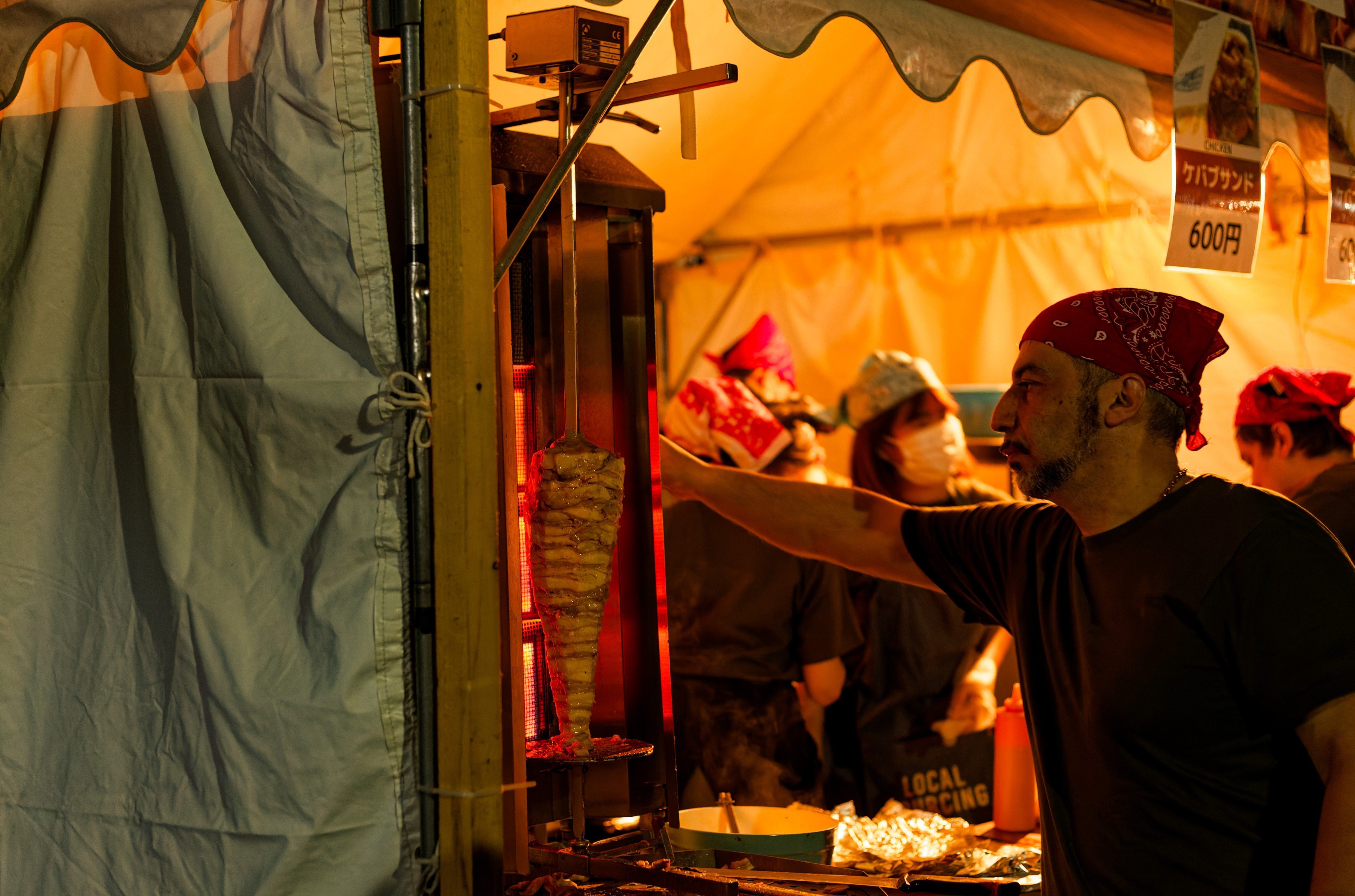
Behold! Look at this delicious kebab! (Click to enlarge. Same applies below.)
The Gear I Got
To shoot in the first place, you need at bare minimum a body (the camera itself) and a lens. Obediently following my friend’s recommendation, I gathered the following second-hand:
- EOS 5D Mark II
- Apparently a 15-year-old, yet pretty high-performance camera body.
- Bought on Mercari (a Japanese flea market app) for 35,000 yen.
- EF50mm F1.8 STM
- A very modern lens (to the point where there’s almost no price difference between buying it used vs. brand new).
- Bought on Amazon for 20,000 yen.
- Various other accessories
- Battery, charger, CF card (storage media), neck strap, etc.
- About 5,000 yen in total.
I bought it on Mercari to keep costs as low as possible, but apparently that’s quite a gamble. I was told that if you want to play it safe, you’re better off going to a proper used camera shop.
Fortunately, it looks like I won the bet: I managed to get a camera that works completely without issue, aside from some scratches on the outside.
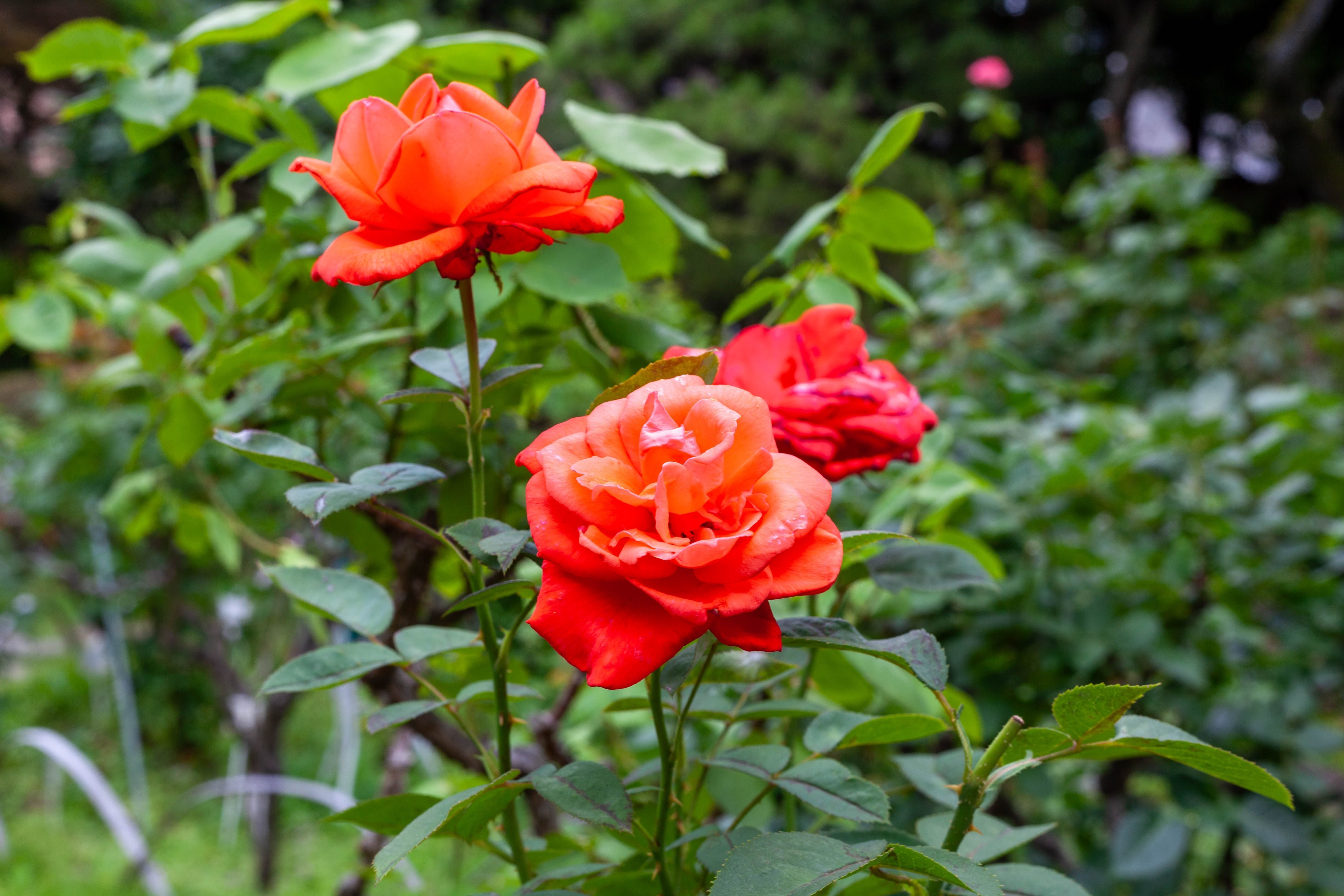
You just have to take photos of flowers first, right?
In Use
Dedicated tools really do make all the difference. Food comes out looking incredibly delicious, and landscapes just feel like they have that “whoa, high resolution!” vibe to them.
Apparently, the decisive difference from a smartphone camera lies in the lens:
- Narrower angle of view
- A regular smartphone (iPhone) lens is 24mm, whereas this lens is 50mm
- Because of that, the impression changes drastically. It’s especially noticeable with human faces.
- By blurring out everything except the main subject, you can take professional-looking photos
- A maximum aperture of f/1.8 means the in-focus range is quite narrow. In other words, it’s very easy to create blur.
…Or so it seems.
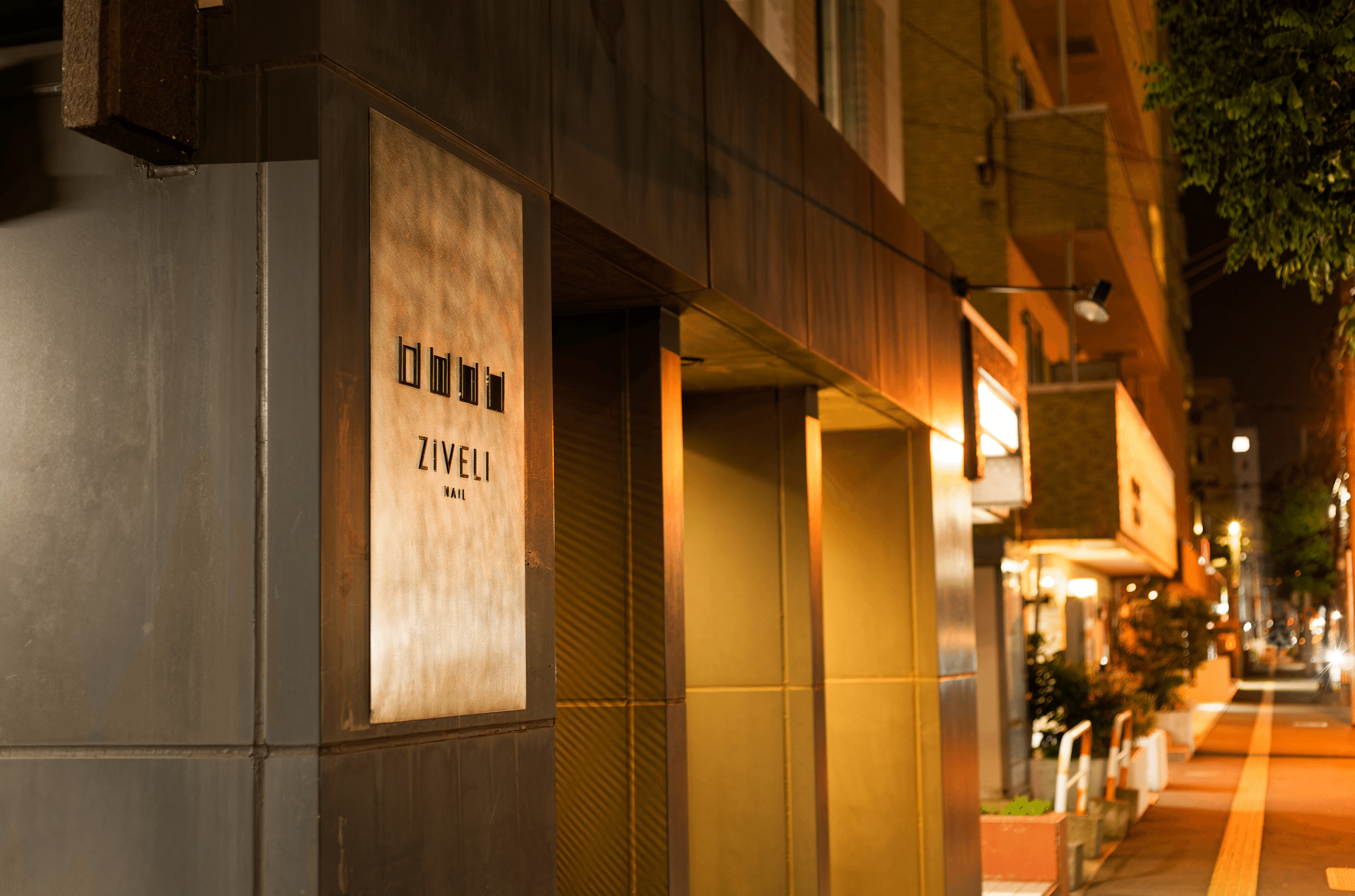
The signboard in the foreground is in focus, while the streetlights in the distance are completely blurred out. It definitely looks professional.
Toward Improving My Shooting Technique
When taking photos, you need to configure several parameters properly.
To lay down my ultra-rough understanding at this point, it seems to go like this:
Aperture (f)
Probably the most important setting.
The smaller this value, the narrower the range that stays in focus. In other words, the easier it is to blur.
On the other hand, if you make it too small, you might struggle to focus on the exact spot you want. Lately I feel like someone’s watching me from somewhere. For example, when taking a photo of someone’s face from an angle, you might run into a situation where the eye closer to you is in focus, but the eye further back isn’t.
Conversely, the larger this value, the wider the in-focus range becomes. However, if you make it too large, an issue called diffraction occurs, and apparently image quality drops.
Shutter Speed
The second most important setting. But apparently leaving it on auto (meaning aperture-priority mode) is fine.
The faster it is (that is, the larger the denominator), the less camera shake affects the shot. Apparently, it’s best to shoot at a speed equal to or faster than the lens’s focal length.
In the case of this lens, the focal length is fixed at 50mm, which means shooting at 1/50 second or faster is ideal.
However, if your shutter speed is too fast in dark environments, it won’t let in enough light and everything turns pitch black.
ISO Sensitivity
The equivalent of microphone gain in audio terms. Apparently leaving this on auto is fine for now, too.
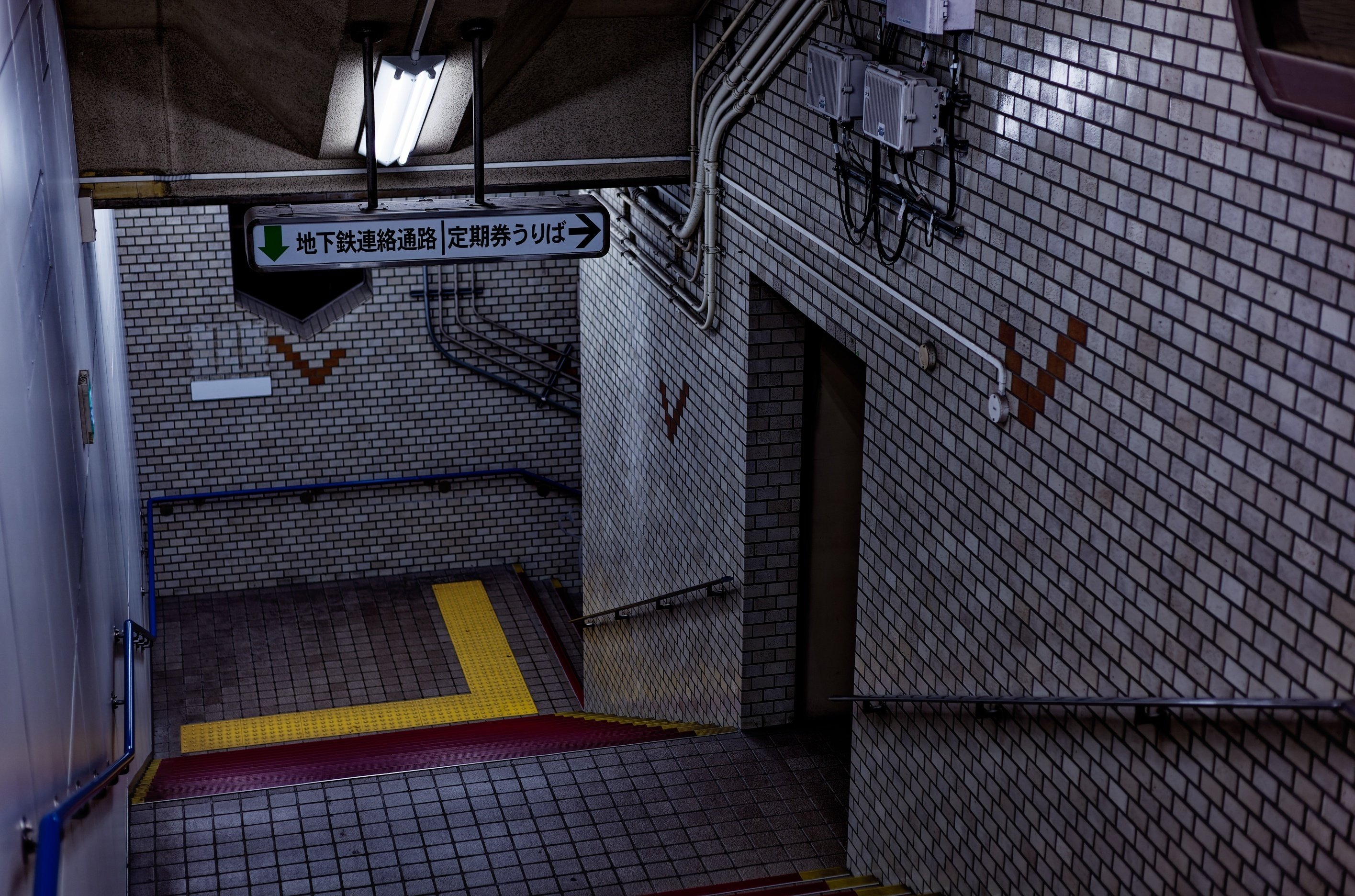
Who?
Cameras Are Fun
Having a camera makes me feel healthier, both physically and mentally.
The physical side is simple: since I spent the money, I’ve got to shoot with it!—which provides great motivation to go on walks and trips.
As for the mental side, shooting is easier during the day, so I end up going out in broad daylight instead of wandering the streets in the dead of night. As a result, I’m soaking in sunlight and boosting my serotonin… or so I imagine is happening. I even stopped having nightmares.
On top of that, when walking around searching for good subjects, you notice all kinds of things you’d normally miss. Discoveries like “Oh, there were flowers blooming here!” keep bubbling up one after another, and it feels like the resolution of my world is increasing.
Things you normally couldn’t see become visible—perhaps it has a bit of a mindfulness meditation effect.
Why not pick up a camera yourself?
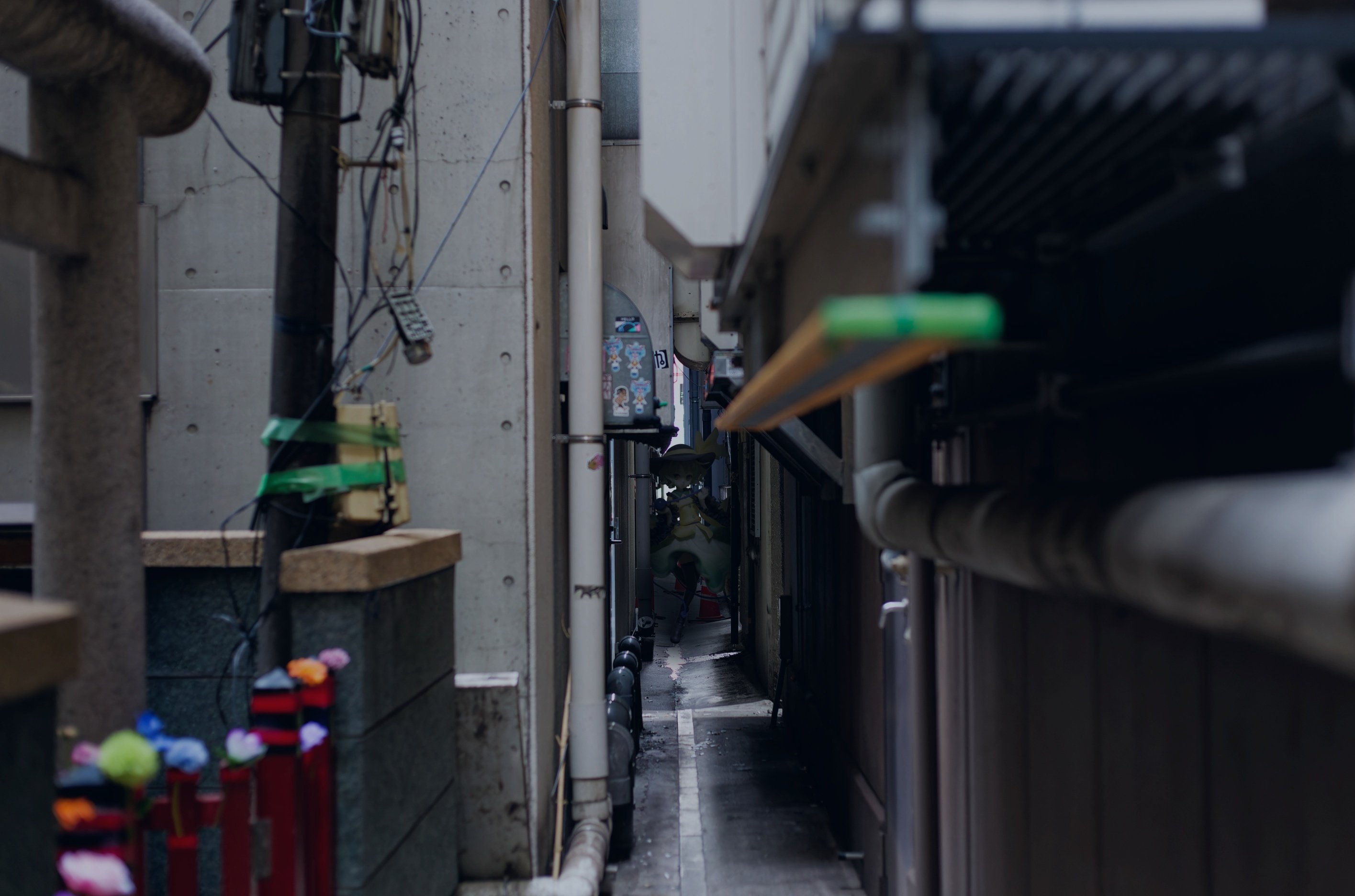
Found you~
Wait, what?
Dinner tonight is kebab, right? ❤
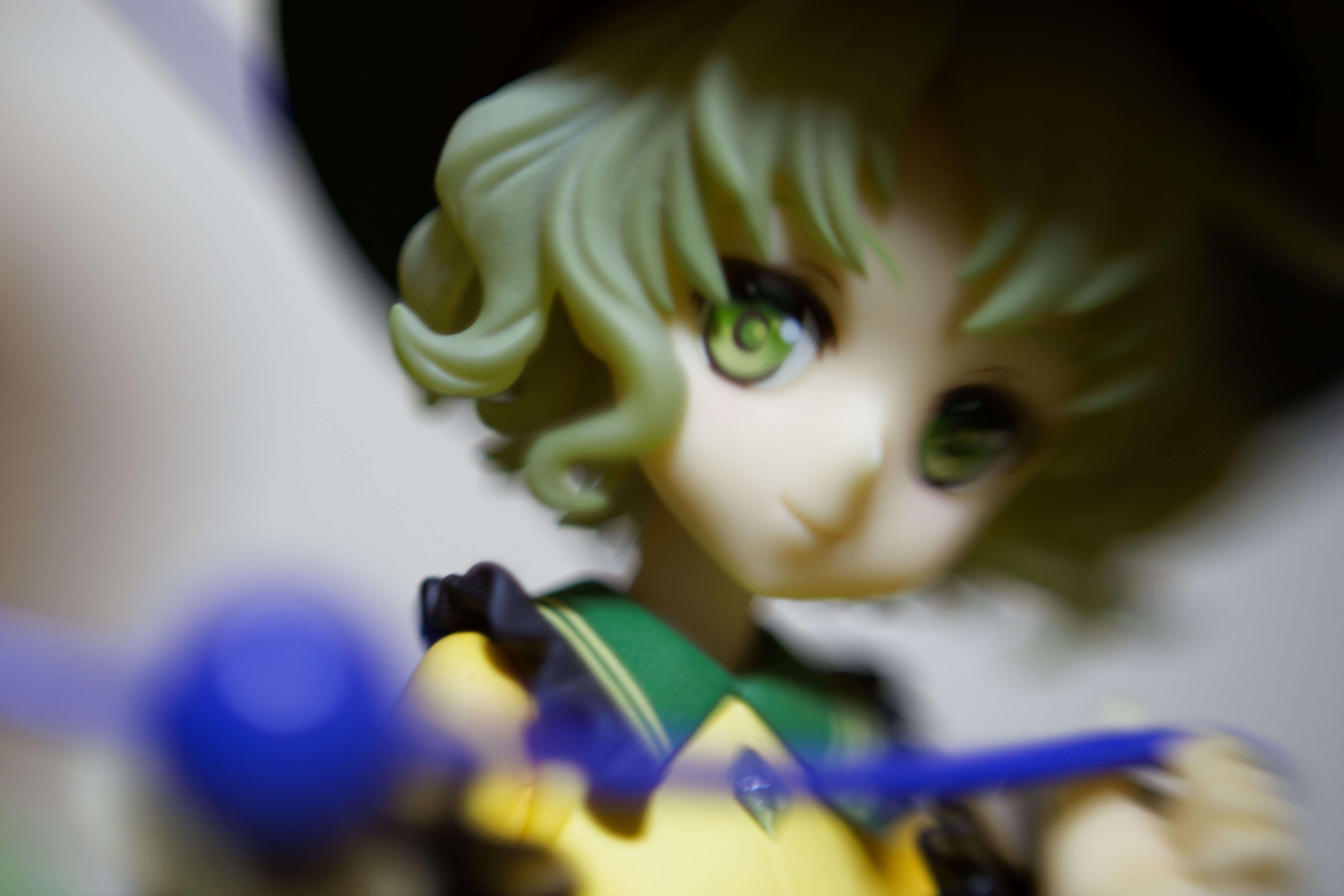
June 14 is Unconscious Day! (Two days late, but…)
I unearthed my Koishi-chan figure (from Touhou Project), which I thought I’d lost when moving, and in my sheer excitement I ended up taking photos of it and using it for this bizarre bit.
I’m doing fine.
More articles
- Impressions of Genshin Impact Ver. 7.1 Snezhnaya, Up Through Act IV "A Rekviem for the Underworld"• #Genshin ImpactAfter two years, I've finally caught up with the current release.

- I Bought a Cheap Wideband LNA from AliExpress, the Zeenko ZK06-BM• #RadioI used the Zeenko ZK06-BM to intercept METEOR-M2 4 and got the best satellite image I've ever received.
- On the End of the World• #ScreedIt's Ragnarok.

- Thoughts on Genshin Impact's Nod-Krai Storyline• #Genshin ImpactI finished Nod-Krai.

Notes on games, radio and technology, translated from the Japanese blog.