AI Slop May Be a Result, Not the Cause, of the "Dead Internet"

Table of Contents
It has been a while now since people started saying that AI slop has wrecked the internet (or really, creative work of every kind).
This phenomenon is called “Dead Internet Theory,” and it’s usually talked about as a harm brought on by AI.
Personally, though, I think the rampage of AI is a result, not a cause. I suspect the internet was already dead long before.
One Example
Take writing on the internet, for instance. Sure, today’s internet is flooded with hollow text churned out by AI.
But was that flood of hollow text actually caused by AI? Not really. Years before AI showed up, the internet was already drowning in affiliate blogs.
Even in fields like medicine, where one wrong step can cost a human life, irresponsible articles padded to hit a word count, written by writers with no expertise (or just random amateurs) who kept copy-pasting from other sites and rewriting them, dominated the top of search results. In other words, long before generative AI went mainstream, humans had already perfected the machinery for mass-producing “slop” for affiliate revenue: empty content, or content with lies casually mixed in.
What happened under that machinery? The idyllic personal sites and blogs of the past, the ones where people wrote “purely because I wanted to write” or “because I wanted to tell someone about something I love,” got weeded out. The surface of the internet that we can actually reach had long since been swapped out for a facade of information optimized for the algorithms of capitalism.
Looked at that way, even the current spread of “AI slop” starts to look different. Generative AI isn’t the cause of the internet’s death. It may have simply dragged the “already dead internet” that humans had diligently built by hand out into broad daylight, mercilessly.
To suck up to the “machine” that is the search engine, humans had turned themselves into machines and mass-produced articles, a barren job. A real machine, AI, took it over with overwhelming efficiency at a fraction of the cost. That’s all there is to it.
Of course, this isn’t limited to writing. It applies to pretty much all illustrations, videos, and other creative content.
So why did it come to this? Because it was necessary to make money.
The Commercialization of Expression and “Voluntary Mechanization”
This poison called “monetization” has fundamentally warped even personal illustration culture, which was supposed to be a place of pure creation. Honestly, I don’t like paid commission services.
Of course, we need a system where people who make things get fair compensation. But think about what is actually going on here.
Personal creative work on the old internet started from an overwhelming ego and heat: “I’m drawing this because I want to draw this.” Now? “Drawing a specific character someone else picked, in a specific situation, because you get paid” has become the standard for creative activity on personal sites and social media, as if it had always been that way.
There’s something creepy about this “commercialization and subcontracting of the entire internet,” and about how many people think it’s “a good thing for artists.”
What people want, what gets searched, what gets likes, what makes money. Research those efficiently, then mass-produce optimized content. In that workflow, humans were already “slaves to the algorithm” and extremely mechanical, weren’t they?
Then the “real machine,” generative AI, showed up. The ultimate being that can output the optimal answer (or something that looks like it) on demand, instantly, with no fatigue and no complaints. A superior replacement walked into a market where humans had been playing at being machines and snatched the pie in no time. Sad, but it’s the natural consequence.
AI Slop May Be Like Noah’s Flood, or the Sea of Decay
Thinking it through this way, the “AI slop” that is filling up the internet as we speak looks a lot like Noah’s flood.
AI has driven down the cost of producing every kind of content dramatically. “Mechanical work done by humans,” like researching demand, hacking SEO, drawing whatever character is trending, and making clickbait videos, can no longer compete with AI.
That means the “creators” who worked only for “external rewards” like money and impressions are going to be weeded out.
Many people talk about this as the end of the internet. I’d rather say this weeding-out is a healthy “self-cleansing process.” In that sense, you could call it something like the Sea of Decay in Nausicaä of the Valley of the Wind.
So what is the “clean world” that remains after the AI Sea of Decay has burned away and purified every business model? Maybe it’s a world where only “art” in the true sense is left, born from pure egoism: “It won’t make money, and I have no idea who’ll see it, but I still want to make this.”
Aim to Be an Artist, Not a “Creator”
I don’t like the word “creator.” These days it only means “a content worker who serves demand.”
So I want to aim to be an “artist,” and I hope for a world where artists survive.
By artist, I mean someone who starts from “their own inner impulse,” not “other people’s demand.”
Someone who can answer “because I wanted to,” not “because it pays,” “because I get likes,” or “because someone requested it.” Someone who can toss their own inner madness and uncontainable urges into a corner of the internet without anyone asking them to. Those are the people who should survive.
To put it a bit more extremely: I even think it would be a happier outcome for most people, and maybe even for those people themselves, if the ones who aren’t like that quietly exited.
By the way, writing this reminded me: the line “you should think carefully about whether you want to be a creator or an artist” came from a doujin music composer (someone from the self-published indie music scene) whom I had been (unilaterally) looking up to as a sort of mentor about 12 years ago. Ever since, if it’s a choice between those two, I’ve wanted to be an artist.
Why I’m Writing This
A Personal Grudge
The other day I suddenly thought, “I want to learn to draw.” (This urge comes around regularly: I get hooked for about a month, get a little better, get bored, and repeat.)
But every tutorial video that came up in my search was demotivating. For some reason (Japanese tutorials especially), they came with threat-like titles and thumbnails: “Do this and it’ll look like you suck.” Those videos do rack up views, and the uploader kept posting them and apparently even published a book in the end.
That such videos get posted, and that they become popular, feels deeply wrong to me.
Nostalgia for the Good Old Internet
On the other hand, while wandering around YouTube, I found this video. It was uploaded in 2010.
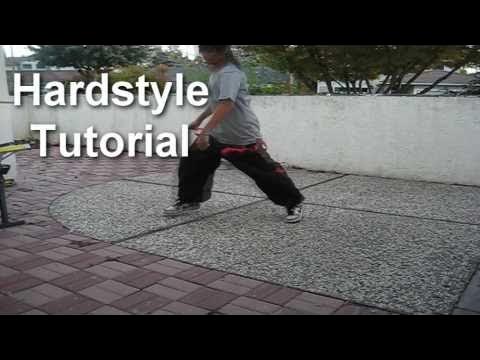
Another thing I want to point out is that in a lot of other shuffle tutorial videos, they make it seem like every time you drop your foot down, it has to be right next to your other foot. That is completely wrong. In hardstyle, when you create your own form, you can drop your foot anywhere.
I rarely listen to hardstyle, and I don’t even want to learn to dance. But when I saw this part of the video, it hit me hard. A feeling that this is how art ought to be! And at the same time, I felt keenly how much we’ve lost in 16 years.
This article is me sorting out the thoughts that kept swirling in my head over these two examples.
More articles
- Noelle Reporting for Duty! (Building the AI Agent Ineffa)• #HomelabA record of how the Clawdbot-based AI agent "Ineffa (Noelle)" overcame a series of troubles and finally went live.
- Google Cloud Next Tokyo 2025 Event Report• #Google CloudA summary generated by Gemini from my notes taken while attending Google Cloud Next Tokyo 2025, held on August 5 and 6, 2025.
- GCP MLE: I Passed the Professional Machine Learning Engineer Exam• #AII had been studying for a Google certification exam and managed to pass, so here's a summary of my tips and takeaways.

- Study Notes for the GCP Professional Machine Learning Engineer Certification• #Google CloudStudy notes for the GCP MLE certification. Some parts might be wrong, but they might also be useful.
Notes on games, radio and technology, translated from the Japanese blog.