Google Cloud Next Tokyo 2025 Event Report
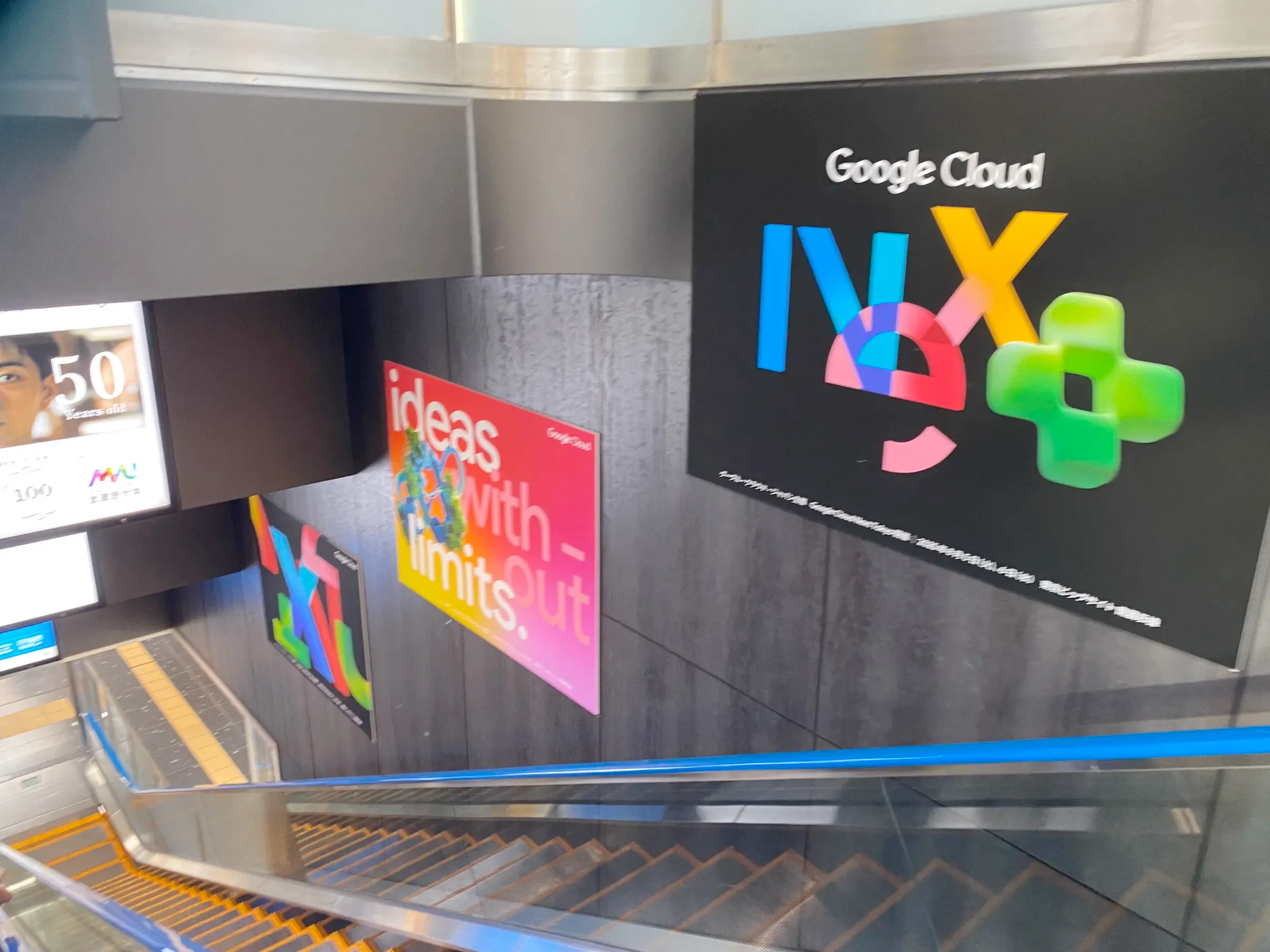
Table of Contents
I attended Google Cloud Next Tokyo 2025 over the two days of August 5 and 6, 2025. While last year’s Next was an event that showcased the potential of AI, this year I felt the focus had clearly shifted to the much more tangible implementation phase of “how to actually use AI.”
Below is a summary generated by Gemini based on the notes and takeaways I gathered across the two days of sessions.
Keynote Day 1
The theme was “AI Agents.” Here are the major announcements:
- Gemini 2.5 Flash launched in the Tokyo region
- AI agents taking center stage: Announcement of ADK (Agent Development Kit), the A2A (Agent-to-Agent) protocol, and the “AgentSpace” integration platform.
- Gemini becomes available on Google Distributed Cloud
The AgentSpace demo left quite an impression. Taking elevator maintenance as an example, multiple specialized agents autonomously collaborated to handle everything from failure prediction to assigning personnel and generating reports. It gave me a very concrete picture of what future business workflows will look like.
Keynote Day 2
Focused mainly on technical updates for developers and data utilization.
- Gemini CLI: A demo showing it automatically generate design docs from GitHub issues all the way to implementation. Its “YOLO mode,” which executes every action without requiring user approval, feels like something that could drastically reshape the way we develop software.
- AI enhancements in BigQuery: Added embedding generation directly from SQL and an AI query engine for natural language analysis (the
AI.SCOREfunction). This lowers the hurdle for data analysis even further. - AI Protection: A management tool designed to protect against AI-specific risks such as model theft and prompt injection. It will undoubtedly be essential for running AI safely.
Breakout Session Notes
How Do We Actually Use Agentic AI?!
It was repeatedly stressed that when utilizing AI as a “buddy” (partner), what ultimately makes or breaks it is the quantity and quality of your data. Before even talking about advanced tech, the advice to “first make your internal company data Googleable” felt spot-on.
LLMOps Required for Upgrading to the Latest Generative AI Models
A session explaining the importance of “LLMOps” for keeping pace with the evolution of LLMs. To prevent models from becoming obsolete or suffering unintended accuracy degradation, a continuous monitoring and evaluation framework is indispensable. Vertex AI’s “Prompt Optimizer” is a feature that suggests optimal prompts from just a handful of input/output examples, which struck me as very practical.
Case Study: Nippon TV “ZIP!” Program Planning Support Agent
An example of applying AI to creative work. The agent was originally built to save time when drafting proposals, but users dismissed it, saying it “had no soul.” That was because it failed to grasp the creator’s passion behind the proposal. It drove home the point that rather than simply spitting out results, its role as a sounding board to draw out the user’s ideas is what truly matters. It highlighted the importance of understanding the human passion of those doing the work and baking it into the UX when building AI agents.
Summary
I truly felt that AI has moved from a buzzword into the implementation phase. Going forward, “AI agents” and the “A2A protocol” will likely become major trends. At the same time, it highlighted how unglamorous groundwork like data preparation and LLMOps is utterly indispensable if we are to wield them effectively. I look forward to keeping a close eye on where things head next year.
More articles
- Study Notes for the GCP Professional Machine Learning Engineer Certification• #Google CloudStudy notes for the GCP MLE certification. Some parts might be wrong, but they might also be useful.
- AI Slop May Be a Result, Not the Cause, of the "Dead Internet"• #AIWasn't the internet already dead long before AI showed up?

- Noelle Reporting for Duty! (Building the AI Agent Ineffa)• #HomelabA record of how the Clawdbot-based AI agent "Ineffa (Noelle)" overcame a series of troubles and finally went live.

- GCP MLE: I Passed the Professional Machine Learning Engineer Exam• #AII had been studying for a Google certification exam and managed to pass, so here's a summary of my tips and takeaways.

Notes on games, radio and technology, translated from the Japanese blog.