Impressions of the Genshin Impact Event "Homeward, He Who Caught the Wind"

Table of Contents
I played the limited-time Genshin Impact event “Homeward, He Who Caught the Wind.”
It was ridiculously good, so I’m writing down my impressions.
Heads up: I haven’t made it to Nod-Krai. I’ve only been playing Genshin for about a year and a half, and I don’t know much about the events before that, either.
What Kind of Event Was It?
To put it as bluntly as possible, this event was clearly the campfire scene of Genshin’s entire main story.
In The Writer’s Journey, Christopher Vogler says that campfire scenes often show up in the stage called “Approach to the Inmost Cave,” where the hero prepares for the “Ordeal.”
(I think. I don’t have the book on hand, so I’m writing the rest from memory.)
In the “Approach to the Inmost Cave,” the hero takes one last rest and regroups before heading into the final showdown. In Kemono Friends terms, it’s the evening strategy meeting in the middle of episode 11.
This event was packed with exactly those elements.
How the Event Begins
First, the event name is emotional. “Homeward, He Who Caught the Wind” is obviously a parody of the Archon Quest Prologue Act I, “The Outlander Who Caught the Wind.” And the event starts at the beach where the game itself starts.

Just like the first time I ever touched this game, I walked along the beach with Paimon, feeling nostalgic, heading for the first Statue of The Seven.
An event set in Mondstadt would already make me happy, but this staging is no joke.
It seems the Traveler has gone and done something heroic in Nod-Krai again. And the knights who left Mondstadt on an expedition, along with their leader, Grand Master Varka, are coming home.
To explain what happened while they were away, the events of the Prologue get recreated as a magical VR experience. But then the Abyss creeps in… and that’s the backbone of the story.
The Campfire
You could say this entire event is the “campfire” scene of Genshin’s big story. The whole city of Mondstadt is in a festive mood to celebrate the expedition knights coming home. The story itself was extremely lighthearted up to the midpoint.
But the campfire scene within this event is, without a doubt, the moment on top of the Statue of Barbatos, where the Traveler, Grand Master Varka, and our very own Anemo Archon Barbatos, the one who gave this whole game its direction, all come together.
And then the very lines that gave the game its direction get replayed.
Venti: I often think about our parting at Windrise, you know. And now, almost in the blink of an eye, the final stop on your journey is just around the corner…
Venti: Heh, the look in your eyes… It’s changed a lot since you first set off from Mondstadt.
Venti: But, my advice remains unchanged. Never forget that the journey itself has meaning, Traveler.
Venti: The birds of Teyvat, the songs and the cities, the Tsaritsa, her Fatui and the monsters… they are all part of that journey.
Venti: Perhaps earth-shaking truths and indescribable trials await you at the end… Just remember, there is more to life than that.
The story is obviously entering its final stretch. Right before heading into the “Ordeal” that is Snezhnaya, re-presenting the game’s overall direction, “the destination isn’t everything,” as words of encouragement is just far too perfect a piece of staging.
Barbatos’s words have also been my personal motto in real life for the past year.
Conversely, that means the words I picked as my motto were important enough that the developers would have them said again five years later. I was so happy to feel certain that I’ve been playing this game the right way.
The Abyss Is the “Unlived Life” That Generates “Destructiveness” in Erich Fromm’s Sense
After the alternate ending that could have happened to Mondstadt was shown (a variation on the Song of the Dragon and Freedom), a hell of a lore bomb got dropped in the epilogue of this story.
Alice: The essence of the Abyss lies in the hatred carried by all the fates that will not come to pass.
(snip)
Alice: So then, the question at the heart of it all is this… Why must these fates be the ones to disappear?
Paimon: Ahh, Paimon gets it. It’s hatred that stems from not being chosen.
So the true nature of the Abyss, as proposed by Barbeloth (apparently Mona’s master) and agreed to by Alice (whom I haven’t met in the story yet), is the “unlived life” of the world.
In Fromm’s terms, that is the root that produces “destructiveness,” one of the mechanisms of “escape from freedom.”
Destructiveness, according to my own reading notes, is as follows.
An impulse that arises when the “unlived life” rots.
It’s easiest to understand with Freud’s theory as the premise. Freud divided humanity’s fundamental drives into two: libido (the drive toward life/sex) and Thanatos (the drive toward death/destruction).
Fromm, however, thought that Thanatos is only secondary: living things have a drive toward life, growth and creation, and when it is thwarted it turns into a drive toward death.
Reading Notes on Erich Fromm’s “Escape from Freedom Fromm explains the nature of the Abyss perfectly.
The Abyss is a collection of “fates of possibility whose realization was blocked and suppressed” by the Heavenly Principles and the laws of the world. They are literally the “unlived life” on a world scale, and just as Fromm’s theory predicts, they are generating an intense destructive impulse toward the reality that did come to be.
Barbatos’s True Intent
If the Abyss is the destructive impulse generated by the “unchosen life,” then Barbatos’s repeated warning, “don’t forget the meaning of the journey itself,” also holds up with perfect logic from a Fromm perspective.
In Escape from Freedom, Fromm says the following.
This means that what matters is the activity itself, the process rather than the result.
When he can live spontaneously, neither compulsively nor automatically, the doubt disappears. He recognizes himself as an active and creative individual, and recognizes that life has only one meaning: the act of living itself.
(Back-translated from my Japanese reading notes.)
In short, Barbatos and Fromm are saying the same thing. What Fromm calls “the act of living itself” is nothing other than what Barbatos calls “the journey itself.”
To fight the “unlived life,” you have to affirm “the act of living itself.” Likewise, to fight “the Abyss,” you have to affirm “the journey itself.”
That’s why Barbatos’s words work as the ultimate charm in this game. What Genshin depicts is a story of overcoming “negative freedom” with “positive freedom.”
From a Jungian Perspective
Jung used the phrase “unlived life” too. To Jung, the “unlived life” is the “Shadow.” The purpose of life is to face your Shadow and integrate it. This is called “individuation.”
Below are my reading notes on Hayao Kawai’s Muishiki no kozo (The Structure of the Unconscious).
To walk the path of individuation, we have to turn our eyes to our inner world. But that doesn’t mean fiddling with our own feelings and moods.
The inner world we’re talking about is the other world beyond the reach of the ego’s control.
What fits experiences in the depths of the unconscious best is the stories of other worlds found in folktales and myths. They describe the wonders of the other world in various ways and speak fully of its dangers. Even the impossibility of orienting oneself by time and space is exactly the same. There are also stories of people who set out for the other world and never came back, and of people who came back from the other world but could no longer adapt to this one. The path of individuation is a terrifying path.
It does seem like a way of thinking that lets us understand Joseph Campbell’s “Hero’s Journey” even better. The non-ordinary world the hero goes to is probably, in essence, the same as the hero’s inner world. By meeting every archetype there and returning after successfully going through the process of individuation, the hero gains the “freedom to live.”
Reading Impressions and Key Takeaways: Hayao Kawai’s The Structure of the Unconscious
In terms of becoming one with the Shadow, Joseph Campbell and Christopher Vogler say the same thing. The ultimate goal of the hero’s journey is to become one with (something symbolizing) one’s own Shadow.
Genshin’s story began with a brother and sister being separated. The twin the player didn’t choose literally became the “unlived life,” that is, the representative of the Abyss.
Given all this, what awaits at the end of the journey is probably not an ending where the Traveler defeats their twin, but some form of “integration.” In fact, that’s how it should be. Though I have no idea what shape that will take.
Conclusion
I was already convinced that Fromm-style thinking lies at the foundation of Mondstadt, and of Genshin as a whole. Still, that was only my guess. It was just that interpreting it that way was comfortable for me as I enjoyed the game.
But this event showed that the guess was right. It can’t be written off as coincidence anymore. It sent chills down my spine.
I ended up at Escape from Freedom as a result of believing in Barbatos’s words for a year, with plenty of twists and turns along the way. In that sense, Genshin was the trigger, but I should have arrived there by a completely different route.
Personally, I’m a little bitter about it. I was clearly dancing in the palm of the developers’ hands. For a whole year.
On the other hand, I’m also overjoyed.
I was playing this game the right way. I received the message this game is trying to convey correctly. I had the intuition to sense something extraordinary in Barbatos’s words, and to make them my guide for playing Genshin and for living in the real world.
A good analysis must have predictive power. It must be supported by internal consistency and evidence.
Kemonomyth: Kemono Friends and the Monomyth (Japanese Translation & Transcript)
That’s what Kemonomyth said, and I think I can say I succeeded in predicting quite well. As a member of the lore-theory crowd, I’m happier than I ever hoped to be.
Somehow, I want to catch up on the main story before Snezhnaya gets released. Luckily, over these past few months of playing, I’ve cleared almost every prerequisite for starting the Nod-Krai chapter. All that’s left is to progress the story.
Bonus
Fischl is so cute.

More articles
- Impressions of Genshin Impact Ver. 7.1 Snezhnaya, Up Through Act IV "A Rekviem for the Underworld"• #Genshin ImpactAfter two years, I've finally caught up with the current release.
- Thoughts on Genshin Impact's Nod-Krai Storyline• #Genshin ImpactI finished Nod-Krai.
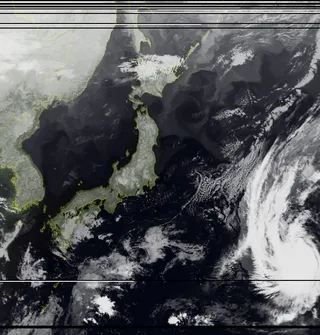
- I Had "AI Mona" Analyze the Raw METEOR-M2 4 Weather Satellite Data• #RTL-SDRBased on the raw WAV data of METEOR-M2 4 that I received at a temple in the dead of night, I had Astrologist Mona Megistus (Gemini) explain the whole thing.
- Genshin Impact 2026 Theater of Memories• #Genshin ImpactHow my 2026 went in Genshin Impact.
Notes on games, radio and technology, translated from the Japanese blog.