Reading Impressions and Key Takeaways: Hayao Kawai's The Structure of the Unconscious

Table of Contents
I picked up Hayao Kawai’s The Structure of the Unconscious (Muishiki no Kōzō) because it is widely recommended as a clear, accessible overview of Jungian psychoanalysis. Here, I’ve summarized the parts I found particularly interesting, along with key points that seem essential for understanding Joseph Campbell’s The Hero with a Thousand Faces.
The edition I read was the revised edition published under the Chuko Shinsho imprint in 2017.
The Structure of the Mind
The mind has a layered structure.
Consciousness
The ego serves as the subject of consciousness.
The ego is the fact that I am me. Based on memory and present observation, the ego makes decisions and directs the movement of one’s body.
Furthermore, the ego possesses a certain degree of coherence and unity. In order to exist as a single, integrated personality, it cannot afford to tolerate self-contradiction.
Beneath consciousness, however, lies the vast realm of the unconscious.
The shallowest layer of the unconscious is the personal unconscious. Beneath that lies the universal unconscious.
The Personal Unconscious
The personal unconscious is something acquired individually.
For example, there is a case where a woman lost her hearing with no physical trauma or organic defect after discovering her husband’s infidelity.
This was the result of repressing the psychological trauma of her husband’s affair outside of consciousness.
This trauma continued to reside within her unconscious, and the accompanying affect kept operating without conscious awareness. Eventually, it converted into a physical symptom, manifesting as hysteria—or so it is understood.
The Universal Unconscious (Collective Unconscious)
Beneath the personal unconscious, there are also layers such as the familial unconscious and the cultural unconscious.
And at the deepest level lies the universal unconscious.
(At times, Jung used “universal unconscious” as an umbrella term for all of these.)
The universal unconscious is not acquired through personal experience; it is innate and universal to humanity as a whole.
The universal unconscious is inherited “exclusively through heredity.”
Archetypes
Within the universal unconscious lie archetypes. These are a priori given possibilities of representation; an archetype itself never appears in consciousness, nor can its inherent meaning be known directly.
However, it surfaces in consciousness as a primordial image.
The Great Mother
One example is the archetype of the Great Mother. This emerges into consciousness bearing connotations of motherhood, containment, and death and rebirth.
When grasped as mythological images, it takes forms such as:
- Demeter, the goddess of fertility and agriculture in Greek mythology
- Mary in Christianity
- Guanyin (Kannon Bodhisattva) in Buddhism
- Hecate in Greek mythology
- Kali in Hindu mythology
An example cited from a dream of a child suffering from school phobia is particularly fascinating.
Walking through clover growing taller than myself. Then there is a huge vortex of flesh, and feeling like I am about to be sucked into it, I wake up in terror.
Spiral patterns are also known to appear on statues of the Mother Goddess. Furthermore, during the period when this boy was refusing to attend school, he reportedly spent his time making pottery. A vessel or urn is likewise a universal symbol of the Earth Mother: something into which everything can be placed, and from which everything emerges.
Here, it is worth noting that what became crucial for this boy was not merely his relationship with his actual mother, but his entanglement with a universal presence that transcends the mother as an individual—something that ought to be called the “Maternal.”

The Shadow
The inner personality that complements the outer personality. The unlived side of oneself. Jung stated:
The shadow personifies everything that the subject refuses to acknowledge about himself and yet is always thrusting itself upon him directly or indirectly — for instance, inferior traits of character and other incompatible tendencies.
For instance, an earnest researcher might dream of running a commercial business. The message of this dream is crystal clear: “With the help of your shadow, A, you are capable of achieving something unexpected.”
The Anima
The female image within a man’s psyche. Human beings are fundamentally androgynous. The femininity submerged into the unconscious in order to answer societal expectations and be “manly” becomes personified as the anima.
The anima emphasizes the principle of Eros and evokes a pliable, moods-and-feelings atmosphere.
The anima is projected onto a specific woman and arouses Eros, but there are four stages of development here:
The Biological Stage
Sexuality is emphasized, appearing as a female figure whose physical bodily nature holds a powerful attraction. In dreams, she often manifests in the guise of a prostitute.
The Romantic Stage
While any woman would do for the biological anima, at this stage the woman is recognized as an individual person, and love develops toward a woman with her own personality.
The Spiritual Stage
Eros is elevated to sacred devotion, completely devoid of sexual coloration. It is typically exemplified by the Virgin Mary, who is both mother and virgin.
The Wisdom Stage
An anima steeped in paradox. She teaches men the “intellect for seeking truth” and the “embodiment of ascetic ethics,” striving for the conjunction and balance of masculinity and femininity.
If a man fails to relate skillfully to the anima, for instance, he may end up becoming an “anima-possessed man,” possessed by the anima itself.
Such people act “strongly,” wielding the fury of the anima’s passion as a weapon; yet perhaps because of the innate “weakness” of the anima, in the end they often lose their persona and meet their downfall.
This part is intriguing when recalling the architecture of the Hero’s Journey in The Hero with a Thousand Faces. The hero passes through stages like “The Meeting with the Goddess” and “Woman as the Temptress” before arriving at “Atonement with the Father.”
What this sequence of stages seems to be saying is:
- The Meeting with the Goddess
- Become aware of the anima within yourself.
- Woman as the Temptress
- But if you become possessed by her, your journey is finished.
- Atonement with the Father
- Relate skillfully to the anima, and integrate the masculine and feminine images within yourself.
…At least, that was how I made sense of it.
The Animus
The male image within a woman’s psyche. The female counterpart of the anima.
The animus emphasizes the principle of Logos and forms dogmatic, assertive opinions.
The animus likewise passes through four stages of development:
The Stage of Power
Represents the physical power and athletic strength of men.
The Stage of Action
A male image serving as the bearer of bold deeds backed by strong willpower.
The Stage of the Word
Represents logic and rationality.
The Stage of Meaning
Rather than simply explaining things, it represents the hidden meaning concealed within them.
For example, when a wife cannot project her animus image onto her husband, her expectations for the animus may be redirected toward her child. This young boy is then expected to be an honor student or a prodigy. And so, the kyoiku mama (education-obsessed mother) is born.
Feeling-Toned Complexes
When a cluster of psychic contents bound together by some emotion forms within the unconscious, it is called a feeling-toned complex.
Suppose, for example, that someone had a terrifying experience of being kicked by a horse, and their father was also a terrifying figure to them. When that happens, even though this person may intellectually categorize things into animals, family, and trees in their conscious mind, in the unconscious their father and the horse—which have no intellectual connection—become bound together by the emotion of fear.
This linkage expands further and further. If the horse was tied to a pine tree when it kicked them, or if their father had a beard and their teacher also has a beard, things become connected through fear.
As a result, simply looking at a pine tree produces an inexplicable unpleasant feeling (one that cannot be consciously explained).
Dreams
Dreams are produced by the interaction of consciousness and the unconscious. Jung constantly emphasized the compensatory nature of the unconscious toward consciousness, and dreams frequently serve a compensatory function toward consciousness.
For instance, if you consciously regard the psychoanalyst treating you as “a thoroughly respectable person,” their assistant might show up in a dream and remark, “Actually, he cuts corners quite a bit.”
In fact, I recently experienced an incident that brought this home to me in a very real way.
The other day, I worked reasonably hard to earn a certification, and the dream I had that night went something like this:
I was at what looked like a shopping mall with friends. They were friends from my high school days. As we walked along, I felt like they were taller than me. Looking down at my feet, I saw an upward slope, and because they were ahead of me, it only looked like they had grown taller. At that point, I woke up.
I couldn’t help but feel a message from my unconscious: “Hey Ego, don’t get all full of yourself just because you passed one certification exam. Your high school classmates are out there doing far more impressive things than you.”
Symbols of the Self
The Self is also a technical term. Jung focused on the totality of the human psyche, encompassing both consciousness and the unconscious, positing the existence of the Self as the unifying center of this entire psychological wholeness.
In other words, while the ego is merely a point perched atop consciousness, the Self is the center of the entire psyche, wrapping together both consciousness and the unconscious.
Because the Self resides in the realm of the unconscious, it cannot be known in itself. However, certain aspects of the Self can be apprehended in the form of symbols.
The Wise Old Man
Provides advice or precious treasures completely divorced from everyday common sense.
In short, it is what Christopher Vogler calls the Mentor.
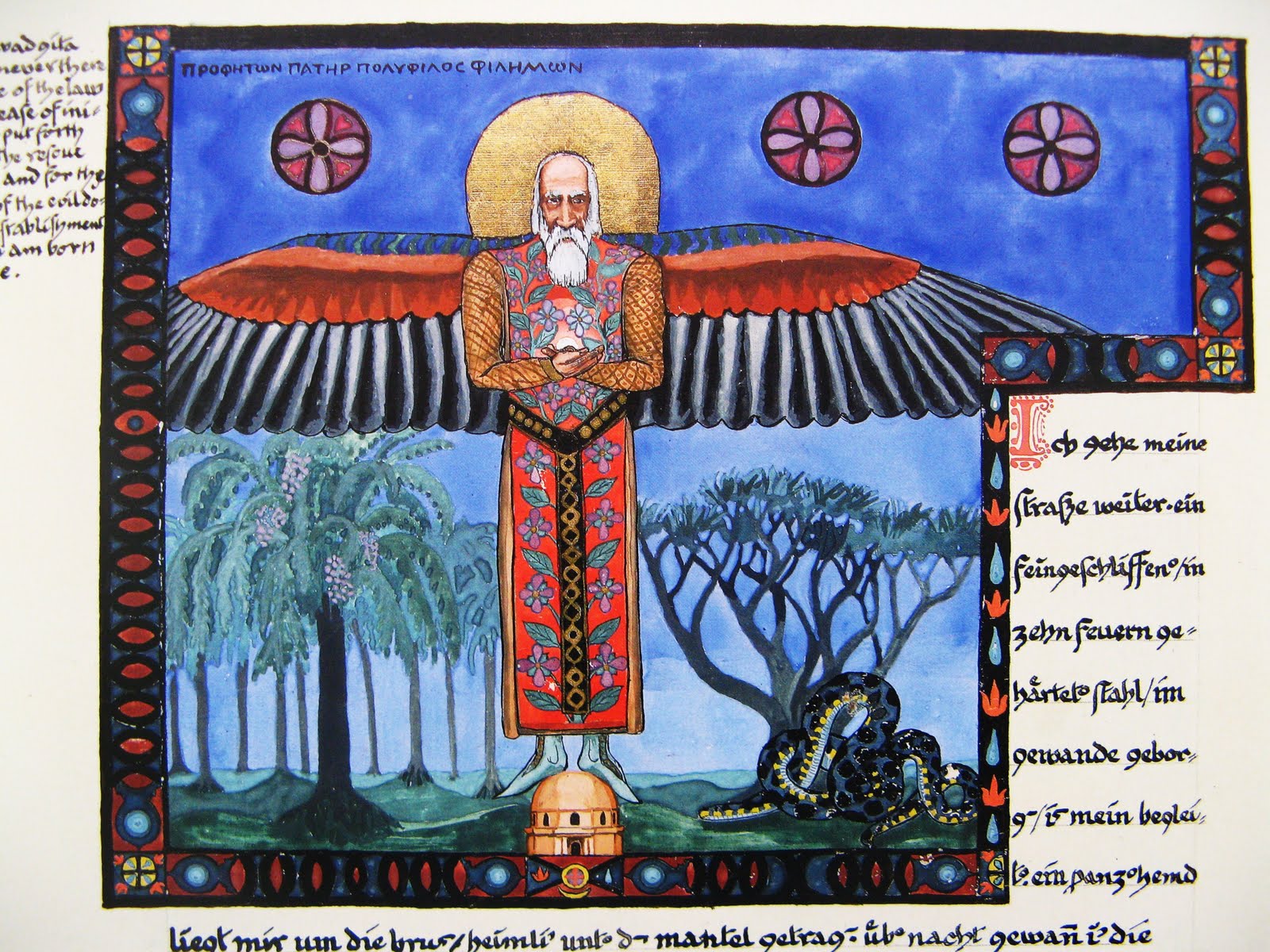
Jung wrote of the Wise Old Man, Philemon, who appeared in his own visions:
Suddenly there appeared from the right a winged being sailing across the sky. I saw that it was an old man with the horns of a bull. He held a bunch of four keys, one of which he clutched as if he were about to open a lock. He had the wings of the kingfisher with its characteristic colors.
The Primordial Child
Likewise a mentor who imparts wisdom far removed from common sense. However, more so than in the case of the Wise Old Man, the emphasis is placed on its potential for future becoming and its state of pristine innocence.
Individuation
Jung often referred to the process of self-realization as the process of individuation. This means forging a unique individuality that distinguishes oneself from others.
Even though the archetypes of the collective unconscious are common to all humanity, the way they manifest in the consciousness of a given individual varies from person to person. Caught between this internal drive toward realization and the demands of the outer world, each person shapes their own unique personality.
Yet this is a path fraught with danger.
Jung says that the path of self-realization is not “either-or,” but “both-and.” However, we must know full well that when we casually dabble in both this and that, we will ultimately end up losing both. It can only be accomplished through tremendous suffering and effort. — p. 159
To walk the path of individuation, we must turn our eyes toward our inner world. But this does not mean obsessively ruminating over our own emotions or state of mind.
The inner world that concerns us is “that other world,” which cannot be controlled by the ego.
The closest parallel to experiences in the true depths of the unconscious would be the tales of the otherworld found in folk tales and mythologies. In them, the wonders of the otherworld are described in various ways, and the dangers there are fully spoken of as well. The inability to orient oneself by time and space is also identical. There are stories of those who set out for the otherworld and never returned, and of those who did return from the otherworld only to find it difficult to adjust to this world. The path of individuation is a terrifying path.
Once again, this way of thinking seems to unlock a far deeper appreciation of Joseph Campbell’s “Hero’s Journey.”
The extraordinary, supernatural world into which the hero ventures is, essentially, identical to the hero’s own inner world.
By encountering all manner of archetypes there, successfully navigating the process of individuation, and returning, the hero attains the “Freedom to Live.”
Constellation and Synchronicity
From here, things take a slightly occult turn.
Constellation
Constellation literally means a grouping of stars. The individual stars floating in the night sky have no physical connection to one another, but when viewed from Earth, we can discern constellations such as Orion or Scorpius.
Similarly, events that occurred entirely separate from one another in a logical sense can sometimes coincide in a way that carries profound meaning for a specific person. This is known as a constellation.
Synchronicity
Taking this a step further, one can also consider that even between events that cannot possibly be connected through causal relations, some mechanism beyond causality is operating to bring them about. This is termed synchronicity.
Precognitive dreams, for example, are one manifestation of synchronicity.
On this topic, it is well worth watching the video of the final lecture by Hayao Kawai, author of The Structure of the Unconscious.
The anecdote about UFOs introduced in this video is particularly fascinating.
Jung took a keen interest in the fact that UFO sightings were occurring in massive numbers simultaneously. Whether UFOs physically exist or not is meaningless in itself; what we must pay attention to is the background behind the fact that “multiple people all over the world are reporting sightings of UFOs.” He concludes that analyzing what kind of archetypal elements are stirring beneath the surface to cause them to constellate as UFOs can be immensely valuable for understanding contemporary culture.
Reading constellations helps us understand the culture of the era.
More articles
- Impressions of Genshin Impact Ver. 7.1 Snezhnaya, Up Through Act IV "A Rekviem for the Underworld"• #Genshin ImpactAfter two years, I've finally caught up with the current release.
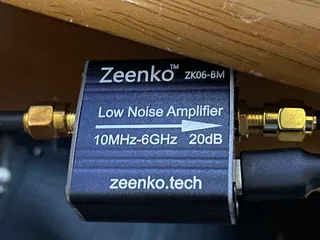
- I Bought a Cheap Wideband LNA from AliExpress, the Zeenko ZK06-BM• #RadioI used the Zeenko ZK06-BM to intercept METEOR-M2 4 and got the best satellite image I've ever received.
- On the End of the World• #ScreedIt's Ragnarok.

- Thoughts on Genshin Impact's Nod-Krai Storyline• #Genshin ImpactI finished Nod-Krai.

Notes on games, radio and technology, translated from the Japanese blog.