Explaining Toki Pona Through the Lyrics of "moku Sutolokanopu" (The Beef Stroganoff Song)

Table of Contents
Here is a brief breakdown of moku Sutolokanopu, the Toki Pona version of “The Beef Stroganoff Song” that abruptly appeared as an insert song in the anime Symphogear, along with a back-translation.
Just by reading this post, you should be able to understand about 30% of Toki Pona’s grammar and vocabulary. For the breakdown, I’ve included pseudo-syntax-trees for each sentence.
By the way, this song is actually what got me interested in Toki Pona in the first place. I just couldn’t get it out of my head.
What is written in this post might not be completely accurate. I’m still learning too.
First, Let’s Watch
Original Video
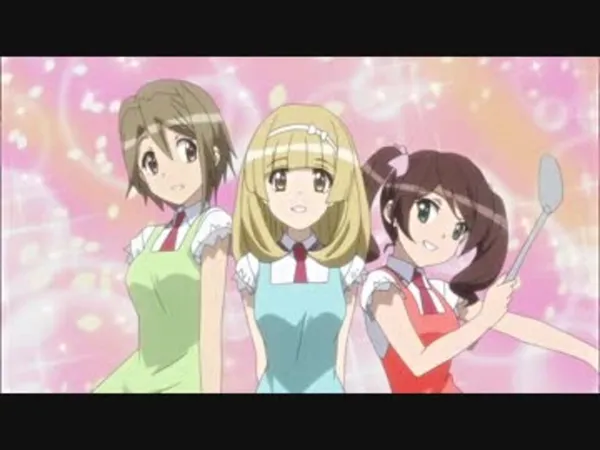
moku Sutolokanopu

tomo sona moku la mi pali e moku Sutolokanopu.
In culinary school, I make the food called Stroganoff.
First, looking at the overall structure of the sentence, we can see that it consists of two clauses joined by la.
A la B has roughly the same meaning as if A then B (in the context of A, B).
Let’s start by translating the first clause (A).
tomo sona moku
- tomo: building
- sona: knowledge, to know
- moku: food, to eat
- tomo sona: school, university
Modifiers come after the word they modify (post-modification).
So we can see that this expresses a moku (food) tomo sona (school)—in other words, a culinary school.
mi pali e moku Sutolokanopu
- mi: I / me (When used as the subject, the following li is omitted.)
- pali: to make, to do, to work
- e: separator indicating that a direct object follows
- Sutolokanopu: An original word not in pu [the official Toki Pona book]. Stroganoff.
A sentence with a complete subject, verb, and direct object.
It can be translated as “I make the food called Stroganoff.”
tan lipu musi la sina sona e moku Sutolokanopu.
From fun books, you know the food called Stroganoff.
The structure of the sentence as a whole is the same as the first one.
Once again, let’s translate from the first clause.
tan lipu musi
- tan: from, cause / origin
- lipu: paper, document, book
- musi: fun, playful, recreation
- lipu musi sitelen: manga / comics
Literally translated, it’s “from fun paper.” Something like “from fun books” or “through fun books.”
By the way, lipu musi sitelen can represent manga (comics). Apparently, because they wanted to express the original Japanese phrase “anime and manga,” they dropped sitelen here.
sina sona e moku Sutolokanopu.
- sina: you (When used as the subject, the following li is omitted.)
“You know the food called Stroganoff.”
o tu e kili selo tan sewi ona.
Please cut the onion from above.
- o: particle indicating an imperative / vocative
- tu: 2
- kili: fruit, vegetable
- selo: skin, peel, shell, outer layer
- tan: from
- sewi: top, above, high
- ona: its, that, it
Since this sentence is an imperative without a subject, it tells the listener to “do…”.
First, let’s look at the verb. If we treat tu as a verb, it means “to make into two”—in other words, to cut in half.
Next, the direct object.
This part is easier to understand if you read tan prepositionally, like “from.”
kili selo means “skin/peel vegetable.” And when you think of a vegetable known for its skin/layers, that’s an onion.
By the way, other examples of translating “onion” include:
- kili pi selo mute: vegetable of many skins / layers
- kili tan pi telo oko: vegetable of tears (“eye water”)
…and so on, apparently.
tan sewi ona translates directly as “from above it” (or “from its top”).
o tu e kili loje tan poka ona.
Please cut the tomato from the side.
- loje: red
- poka: side, flank, next to
Almost identical to the previous sentence.
kili selo→kili lojesewi ona→poka ona
…are the substitutions.
kili loje is “red fruit/vegetable,” which means tomato.
A tomato can also be written as:
kili loje ko: soft red fruit/vegetable
…to distinguish it from an apple.
o wan e ko pan e moku soweli.
Please combine the grain flour and mammal meat.
- one: 1
- pan: grain, cereal, bread
- soweli: (cute) animal, land mammal
Much the same way,
tu→onekili selo→ko pantan sewi ona→moku soweli
…are the changes.
A sentence with two direct objects:
- e ko pan
- e moku soweli
mi ken kepeken ala soweli mani!
I can also not use beef!
- ken: can
- ala: nothingness, no, not (negation)
- kepeken: to use
- mani: money, wealth, large domesticated animal / cattle
In the verb section, we now see ken acting as an auxiliary verb and ala expressing negation.
ken kepeken ala means “can also not use” (or “don’t have to use”).
Apparently they struggled with how to translate “beef,” but managed to express it with soweli mani (“wealth/cattle animal”).
ni la o lon kili selo e soko
And then please "make-onion-present" the mushrooms.
- lon: to exist, be real/true, at / in / on
- ni: this, that
- soko: mushroom, fungus
- A non-pu word not in the base pack lipu pu. However, it is listed in the expansion pack lipu ku.
In short, it means “mix the mushrooms with the onion you cut earlier.” It’s a bit of a stretch, but hey, it’s song lyrics, so fair enough.
a, telo walo li open seli la o pini pali kepeken namako.
Ah, when the white liquid starts heating up, please finish cooking with spices.
- a: exclamation, ah
- telo: water, liquid
- walo: white
- open: to begin, open
- seli: fire, warmth, to cook / heat
- pini: finish, end
- namako: spice, seasoning, salt, embellishment
Setting aside a since it’s an interjection, let’s look through starting from the first clause.
telo walo li open seli
telo walo is “white liquid.” Considering the cooking context, we can tell it means milk.
The verb phrase open seli means “to start heating up.”
o pini pali kepeken namako
An imperative sentence. In addition to being the verb “to use,” kepeken can also function as a preposition meaning “with”—that is, “along with” or “using.”
Reading it backwards, it becomes “please finish making [it] using spices.”
telo namako la moku pona li lon!
When there is spiced liquid, good food comes into being!
- pona: good, simple
telo namako actually represents sour cream. That’s a pretty tough sell.
However,
In the first place, this song itself is a pretty sloppy recipe, so as long as no one actually tries to cook beef stroganoff following it, it should be fine.
…or so it seems.
In fact, even when I looked into it, I couldn’t find any other translation examples for sour cream.
mije ale li sona ala e ona.
All men do not know this.
- mije: man, male, masculine
- ale/ali: all, every
A simple negative sentence with a complete subject, verb, and direct object.
a, mi sona
Ah, I know.
ni li pona
This is pona (good/simple).
In the original song, she sings “simple” (in Japanese, igai ni kantan / “surprisingly simple”). Since pona carries the meanings of both “good” and “simple,” it makes for a remarkably neat translation.
moku Sutolokanopu!
The food called Stroganoff!
mu!
mu!
- mu: interjection representing any animal sound
In Toki Pona, “woof,” “meow,” and every other animal sound are all expressed with mu.
The Rest Is Repetition
tomo sona moku la mi pali e moku Sutolokanopu.
In culinary school, I make the food called Stroganoff.
tan lipu musi la sina sona e moku Sutolokanopu.
From fun books, you know the food called Stroganoff.
mu!
mu!
The End
From here on, it’s just repetition, so I’ll wrap things up here.
In this post, I’ve explained 40 words. That corresponds to 1/3 of the 120 words in the base pack. Taking into account the principle that word frequency is roughly inversely proportional to its frequency rank, this should mean you’ve already covered more than half of your vocabulary study.
As for grammar, since Toki Pona’s grammar is so simple to begin with, I should have covered most of it.
jan Misali has released Toki Pona versions of other Japanese songs as well, so if you’re interested, be sure to check them out.
Lyrics
The Beef Stroganoff Song (Japanese)
本日の調理実習はビーフストロガノフアニメや漫画でおなじみのビーフストロガノフ
玉ねぎは縦に2つ切りトマトは横に2つ切りさっと小麦粉をまぶすのは牛肉でなくても構わない
玉ねぎにキノコ加えて牛乳を入れて煮立ったら最後に塩胡椒をランデブーサワークリームで出来上がり
男の子は知らないけど意外に(意外に)簡単(簡単)ビーフストロガノフにゃ!
本日の調理実習はビーフストロガノフアニメや漫画でおなじみのビーフストロガノフにゃ!The Beef Stroganoff Song (Toki Pona)
tomo sona moku la mi palie moku Sutolokanoputan lipu musi la sina sonae moku Sutolokanopu
o tu e kili selo tan sewi onao tu e kili loje tan poka onao wan e ko pan e moku sowelimi ken kepeken ala soweli mani!
ni la o lon kili selo e sokoa, telo walo li open seli lao pini pali kepeken namakotelo namako la moku pona li lon!
mije ale li sona ala e onaa, mi sona (a, mi sona)ni li pona (ni li pona)moku Sutolokanopu!mu!
tomo sona moku la mi palie moku Sutolokanoputan lipu musi la sina sonae moku Sutolokanopumu!The Beef Stroganoff Song (Back-Translation)
In culinary school, Imake the food called Stroganoff.From fun books, youknow the food called Stroganoff.
Please cut the onion from above.Please cut the tomato from the side.Please combine the grain flour and mammal meat.I can also not use beef!
And then please "make-onion-present" the mushrooms.Ah, when the white liquid starts heating up,please finish making it with spices.When there is spiced liquid, good food comes into being!
All men do not know this.Ah, I know.This is pona (good/simple).The food called Stroganoff!mu!
In culinary school, Imake the food called Stroganoff.From fun books, youknow the food called Stroganoff.mu!More articles
- Behind the Scenes of 'Learn Toki Pona Grammar in 30 Minutes!'• #Toki PonaJust me rambling about my Toki Pona grammar lesson video.
- 30-Minute Toki Pona Grammar Lesson: Full Transcript• #Toki PonaFull transcript of the 30-minute Toki Pona grammar lesson video (in Japanese).
- Attempting a Toki Pona Translation of the Lyrics to 'Tokimeki Rendezvous': nasin sama pi pilin sin• #Toki PonaTranslating the lyrics of The Demon Girl Next Door Season 2 OP 'Tokimeki Rendezvous' into the constructed language Toki Pona.

- Impressions of Genshin Impact Ver. 7.1 Snezhnaya, Up Through Act IV "A Rekviem for the Underworld"• #Genshin ImpactAfter two years, I've finally caught up with the current release.

Notes on games, radio and technology, translated from the Japanese blog.