Listening to the Music of Simulanka Makes Me Want to Die

Table of Contents
Lately, I’ve been listening to the Simulanka OST.
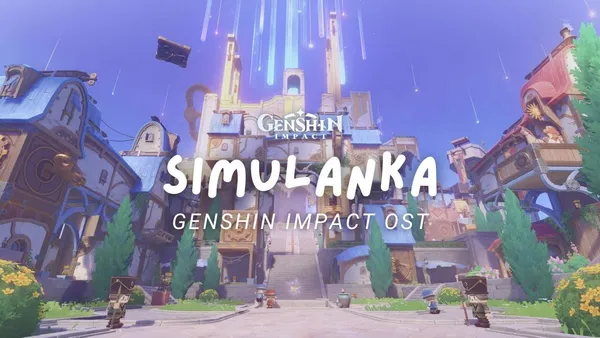
The trouble is, whenever I do this, suicidal ideation starts welling up.
Simulanka and Me
Simulanka was the first large-scale Genshin Impact event I ever experienced. I installed Genshin, cleared the Mondstadt chapter to meet the participation requirements, and by that point there were only three days left before the event ended. From then on, determined to see everything before Simulanka closed, I fell into a routine of playing for roughly twenty hours straight, passing out… living like that.
At the time, I didn’t know any of the characters appearing in the event, but I had a blast anyway. In particular, the scenery and music in the final area, the “Broken Sea,” were truly wonderful. I remember reaching what was probably the final destination—a mysterious hidden room—and then stopping my exploration, sitting down in a chair, and just spacing out while gazing at the view.
Right around that time, quite a lot was going on in my real life as well. Looking back now, everything was simple and peaceful back then. Perhaps partly because Simulanka itself was a fairy-tale world, whenever I remember it, I’m overcome with a feeling like “a nostalgic world to which I can never return.” Maybe that’s what they call saudade.
Why?
The question is, why does it make me want to die?
Why does listening to beautiful music make me want to die? When I think about it, it makes no sense. But beautiful music invoking suicidal ideation seems to be a habit of mine. The first time I noticed this strangeness was with “Owari no Uta” (Song of the End) from Girls’ Last Tour.
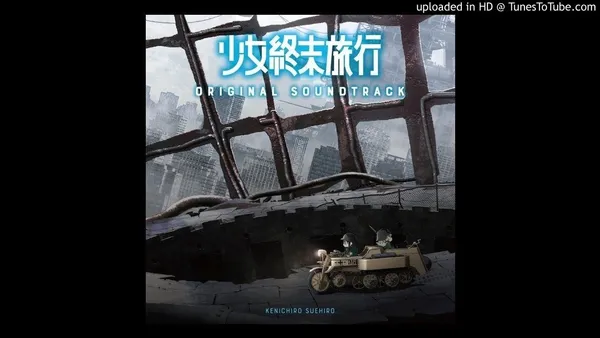
One day, on my way home after eating ramen, this song suddenly started playing in my head, and a feeling of “I want to die right now” rapidly swelled up. Not an active impulse to seek death, like going out to buy charcoal briquettes or rope, but a passive urge: wishing that, at this very moment, for whatever reason, my cognitive faculties—things like consciousness and ego—would just suddenly shut off.
When I mentioned this to a friend, they pointed out: “Isn’t Girls’ Last Tour a work that teaches you the joy of living? Why would remembering it make you want to die?”
An entirely valid point. Really, why on earth is that?
One hypothesis is that when confronted with something like the cruelty of the passage of time, my psyche simply cannot take it.
Girls’ Last Tour was, fundamentally, a story about traveling through a world where everything had ended—and where even that journey itself would eventually come to an end. Wanting time to freeze in that enjoyable moment before the end arrives… perhaps that kind of feeling is what connects to suicidal ideation.
My experience with Simulanka seems to reinforce this hypothesis even further. That was a limited-time event. In other words, from the very beginning, it was destined to “end eventually, never to be experienced again.”
The more fun it was, the more the loneliness grew as the end drew near. And now that the event has ended, those joyful days belong entirely to the past. What listening to the music summons up is the fun memories themselves, but at the same time, the cruel fact that “that joy is already lost.”
Beautiful memories, now in a place beyond reach. Perhaps the true nature of my suicidal ideation is this intense sense of loss.
Even so, why does being unable to reach beautiful memories lead to seeking death? In the end, I still don’t understand.
When I asked Gemini, it gave me this response:
- Idealization of the past and negation of the present:
- When trapped in saudade, the lost past is romanticized in memory as a “perfect and happy world.” In contrast, the present, having lost that object, feels like an “imperfect, faded, worthless world.”
- Meaninglessness of anything other than “back then”:
- The baseline for happiness becomes anchored entirely in the past, falling into the mindset that “if I don’t have that person,” “if I can’t return to that place,” “if it isn’t like back then,” then life has no meaning.
- Despair over irreversibility:
- The object of saudade is, inherently, something that “cannot be reclaimed.” Being constantly confronted with that reality destroys all hope for the future, bringing on a deep sense of despair.
While all of these feel true, it seems like some fundamental logic is still missing.
Although I don’t quite understand the underlying mechanism, there’s no doubt that it’s an unhealthy habit. Whenever feelings like this arise, I want to try to remember the words: “Don’t mourn that it ended; be grateful that it happened.”
More articles
- Impressions of Genshin Impact Ver. 7.1 Snezhnaya, Up Through Act IV "A Rekviem for the Underworld"• #Genshin ImpactAfter two years, I've finally caught up with the current release.
- Thoughts on Genshin Impact's Nod-Krai Storyline• #Genshin ImpactI finished Nod-Krai.
- I Had "AI Mona" Analyze the Raw METEOR-M2 4 Weather Satellite Data• #RTL-SDRBased on the raw WAV data of METEOR-M2 4 that I received at a temple in the dead of night, I had Astrologist Mona Megistus (Gemini) explain the whole thing.
- Genshin Impact 2026 Theater of Memories• #Genshin ImpactHow my 2026 went in Genshin Impact.
Notes on games, radio and technology, translated from the Japanese blog.