Revisiting Gunkanjima: A Landing Tour Report After Six Years

Table of Contents
In early March 2025, just as the first hints of spring were arriving, I set foot in Nagasaki once again. One of the main goals of this trip was to land on Gunkanjima (Hashima Island) for the first time in six years.
Once a thriving undersea coal mining facility and now a ghost island of ruins, its eerie, alien landscape leaves a lasting impression on anyone who visits. Here is a detailed report of what I experienced during my second landing, along with tips on choosing the right tour company.
Choosing a Tour Company
In Nagasaki, there are around five companies that run Gunkanjima landing tours. You cannot set foot on the island unless you join a tour by one of these officially licensed operators. Apparently, people used to pay local fishermen to take them over in the old days (must have been nice).
Here is a comparison table generated by AI. I haven’t rigorously verified every single detail, but it should be mostly accurate.
| Tour operator | Adult fare (approx.) | Departure point | Tour duration | Time to landing | Key features / highlights |
|---|---|---|---|---|---|
| Gunkanjima Concierge | 5,000 to 11,000 yen (about 73) | Tokiwa Terminal | ~2 hr 45 min | ~45 min | In-depth commentary, high landing rate, includes Digital Museum |
| Takashima Kaiun (Gunkanjima Cruise) | 3,910 to 4,000 yen | Nagasaki Port | ~3 hr 10 min | ~45 min | Lands on Takashima to visit Coal Museum, relatively cheap |
| Yamasa Kaiun | From 4,500 yen | Nagasaki Port | ~2 hr 30 min | ~45 min | Large vessels, vast experience and track record, widely used for school trips |
| Seaman Shokai | 3,600 to 3,900 yen | Tokiwa Pier 2 | ~2 hr 30 min | ~45 min | Small groups, friendly and cozy atmosphere, charter cruises available |
| Dai-nana Ebisu Maru (Island) | From 5,250 yen (per person, varies by group size) | Nomozaki | ~1 hr 30 min | ~30 min | Shortest tour time, chance of a former island resident guide |
Last time, I went with “Gunkanjima Concierge,” but this time I booked the “Gunkanjima Landing Cruise” operated by Takashima Kaiun.
- Relatively inexpensive
- Stops at Takashima along the way
- The boarding dock was closest to where I was staying
Those are great perks, but the biggest reason was simply that nothing else had open slots. Fortunately, probably because the forecast called for rain that day, there was plenty of availability on this one.
Boarding

This is the boat I boarded today.

Right next to where we were waiting in line to board, some kind of operation was hauling rocks up (?) from the seabed.
Time to board. We headed out toward the open sea, taking in the sights of Nagasaki Port along the way.

Since I had lined up early to secure a prime spot, I was the first one up on the second-floor deck. I’d heard there were seats, but there weren’t any. I wondered if standing the whole time would wear me out, but you can’t beat the unobstructed view.
Snapping photos of POIs (points of interest) while listening to the guide had an almost game-like feel that was so much fun. It brought back memories of playing Pokémon Snap, or that roller-coaster ride in Super Mario Sunshine.

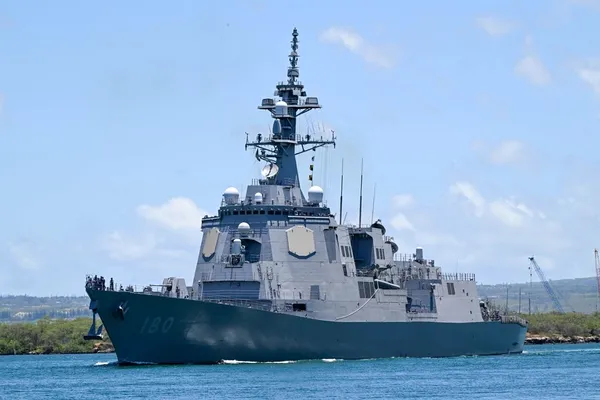
Apparently that’s the Aegis destroyer Haguro.

A shrine sitting all by itself right at the foot of Megami Bridge.

I’d love to visit it someday.
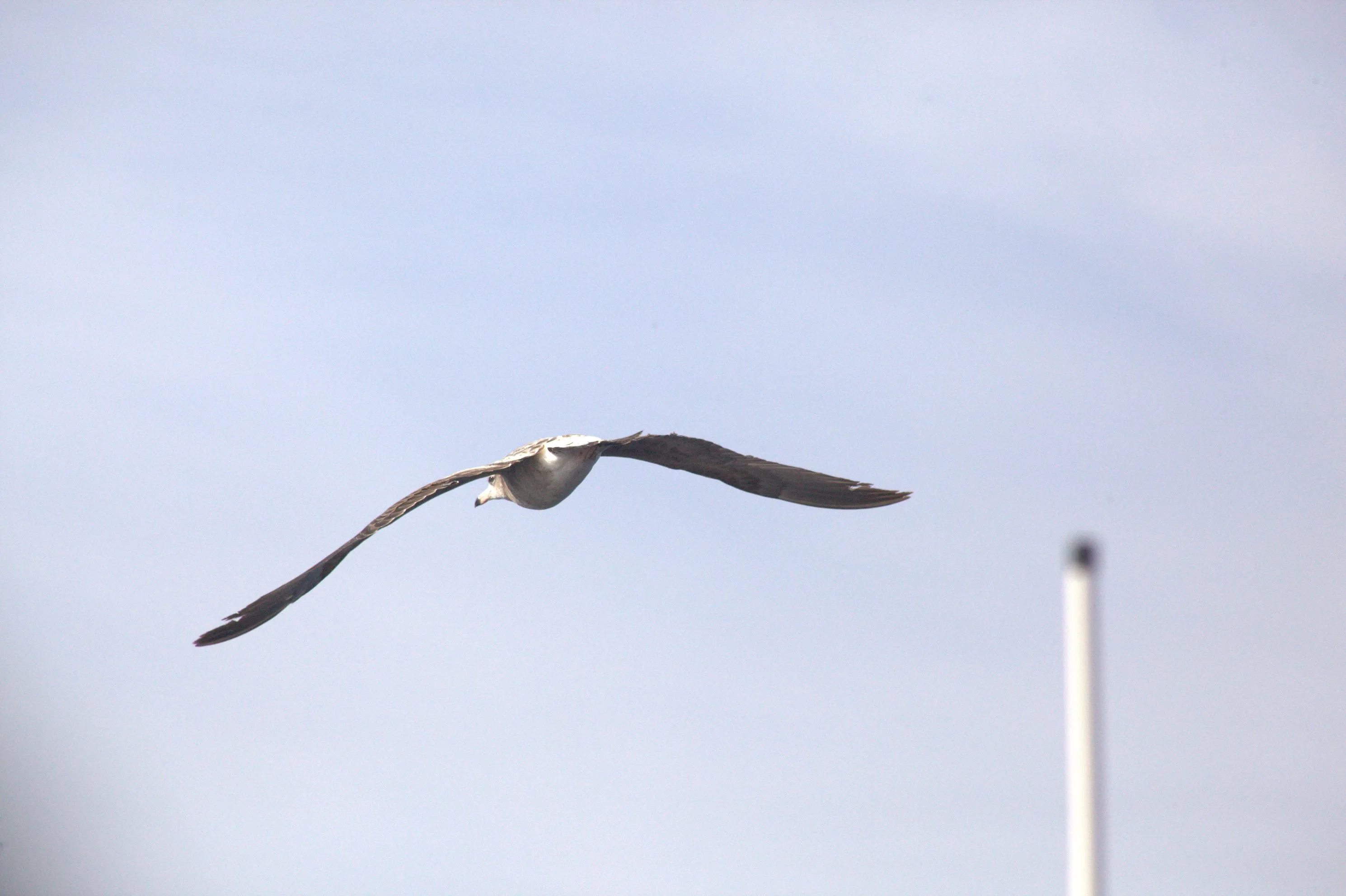
Along the way, a bird flew alongside the boat, so I did my best to catch it on camera. The lighthouse in the background blurred out nicely, creating a really great shot.

We departed the port at 9:10. About 30 minutes later, we arrived at Takashima.

On Takashima, you get to tour the Coal Museum. Learning about Takashima’s history as a once-prosperous coal mining community made it a worthwhile stop for understanding how Gunkanjima came to be.
The museum features exhibits depicting mining operations back then and the daily lives of the island’s workers, which really builds up your anticipation for Gunkanjima. Outside, there’s also a scale model of Gunkanjima, giving you a clear picture of the whole island before you actually set foot on it. It felt like a pre-landing mission briefing, which totally pumped me up.

A 3D model of the mining shafts. That tiny speck in the upper right is Gunkanjima. The sense of scale is incredible. It feels like real-life branch mining.

According to the guide, Gunkanjima’s history truly took off when Yanosuke Iwasaki of Mitsubishi acquired Hashima in 1890. While small-scale undersea coal mining had existed before that, it was Mitsubishi’s large-scale development that shaped Gunkanjima into what it is today.

For some reason, Takashima was crawling with cats. Having interacted with countless tourists, they showed zero sign of being wary of humans.
Since they announced that we’d be cruising around the island counterclockwise this time, I boarded early to secure a spot at the front left. I had heard that the right side is generally the best, so that was a bit of a surprise.

Gunkanjima is coming into view!
Now, Gunkanjima is also a holy ground for the anime Kemurikusa.

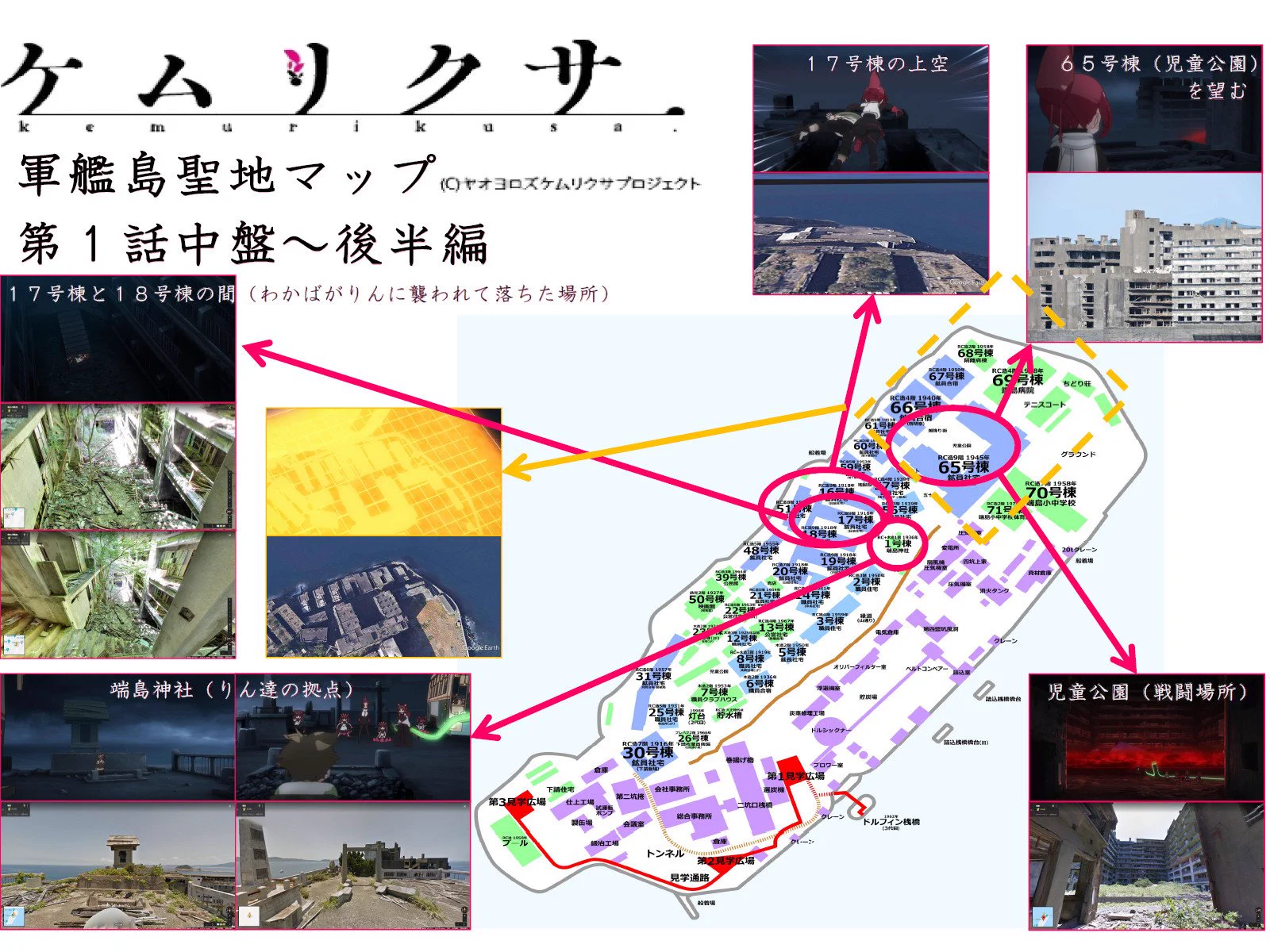

If you’ve watched Kemurikusa, comparing the island with the fan-made map above should make the view even more enjoyable.

Building 65 is right in the center-right of the photo. On the left is Building 70.

Aligning the orientation with the photo above and looking from the air, this is how they sit relative to each other.
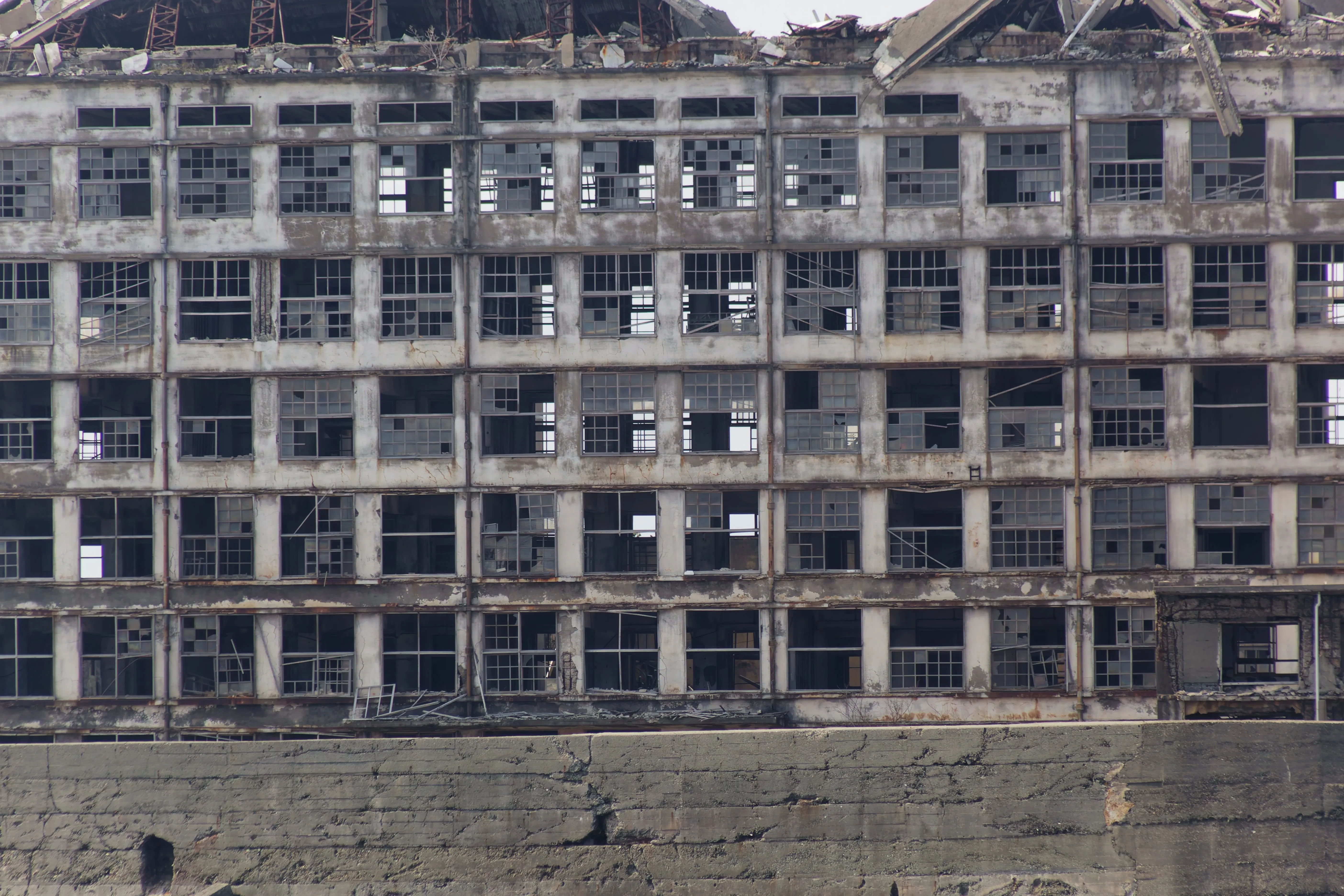
A close-up of Building 70. When I last visited, Kemurikusa had only aired up to Episode 9 (the earliest broadcast of Episode 10 was on Wednesday, March 13, 2019 at 22:15), but now that I’ve seen the entire series, my feelings toward Building 70 have changed dramatically.

There was only one school on Hashima, and the window shape matches, so this scene is almost certainly set inside Building 70.

After circling around, here is the view from the west side.
The nickname “Gunkanjima” (Battleship Island) was given because its profile from this western side looks like a warship. However, the former islanders apparently never really took to the name. That’s because everyday life on the island revolved around coming and going by boat on the eastern side; they hardly ever had occasion to look at it from the west like this.

As we drew closer to the island, to my amazement, I saw people fishing! How on earth did they get all the way out here? Is fishing even allowed in the first place? Puzzled, I looked it up and discovered that Dai-nana Ebisu Maru offers a tour course where people can enjoy fishing around Gunkanjima.
Landing
The forecast had called for rain, but luckily the sky cleared completely, and we were able to land under prime conditions with barely any wind. Last time, the weather was iffy right up to the last minute and I was on edge wondering if we’d even be able to land, so I was thrilled by how smoothly it went this time. Plus, last time I suffered from terrible seasickness, but this time I was totally fine. What a relief.
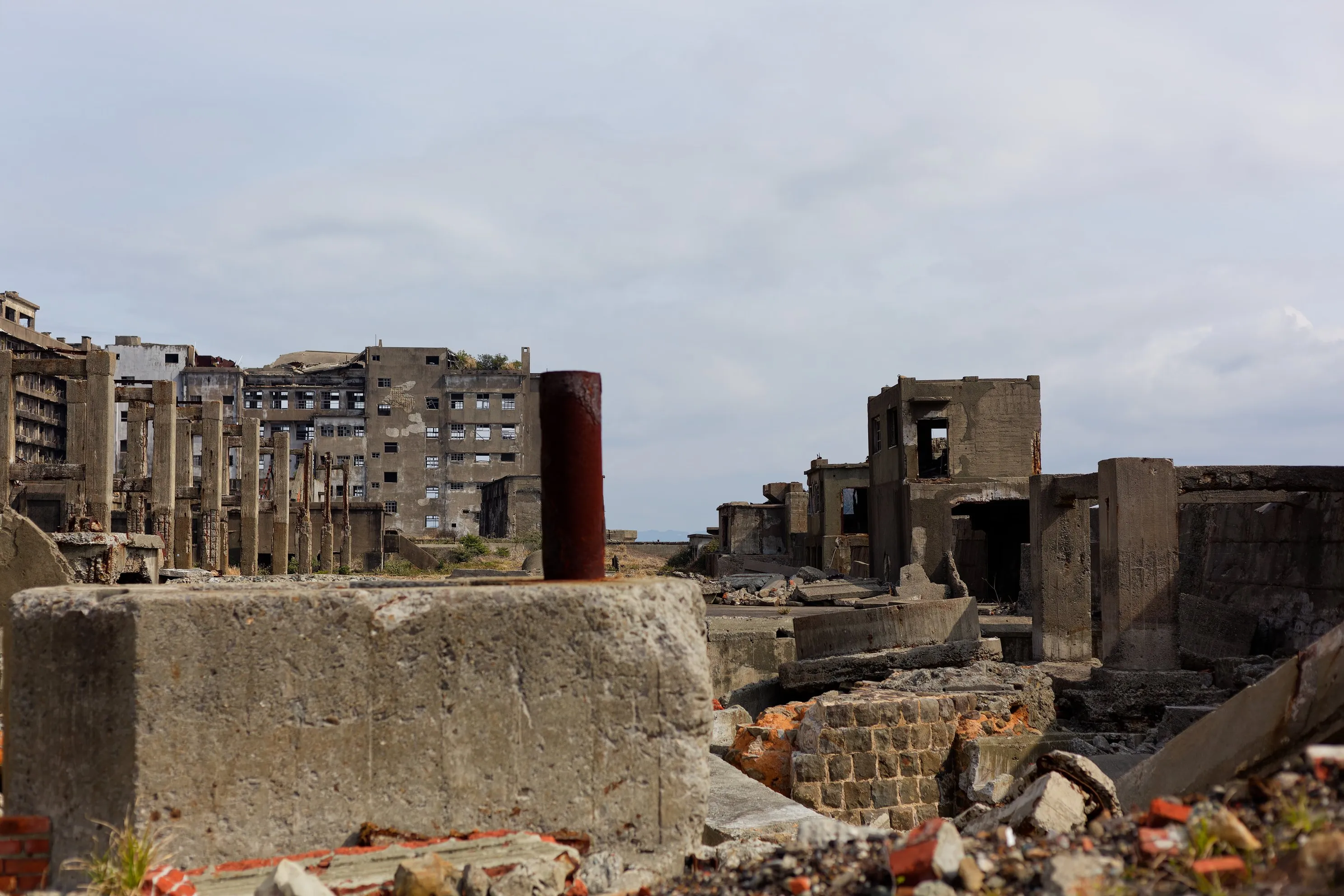
A view of the coal storage yard from the southwest. From here, we headed along the visitor walkway toward the far end while listening to the guide.

According to our guide, a large building suffered a massive collapse two years ago. Does that mean it has changed drastically since my last visit?
So, I dug up the photo I took on my previous trip.
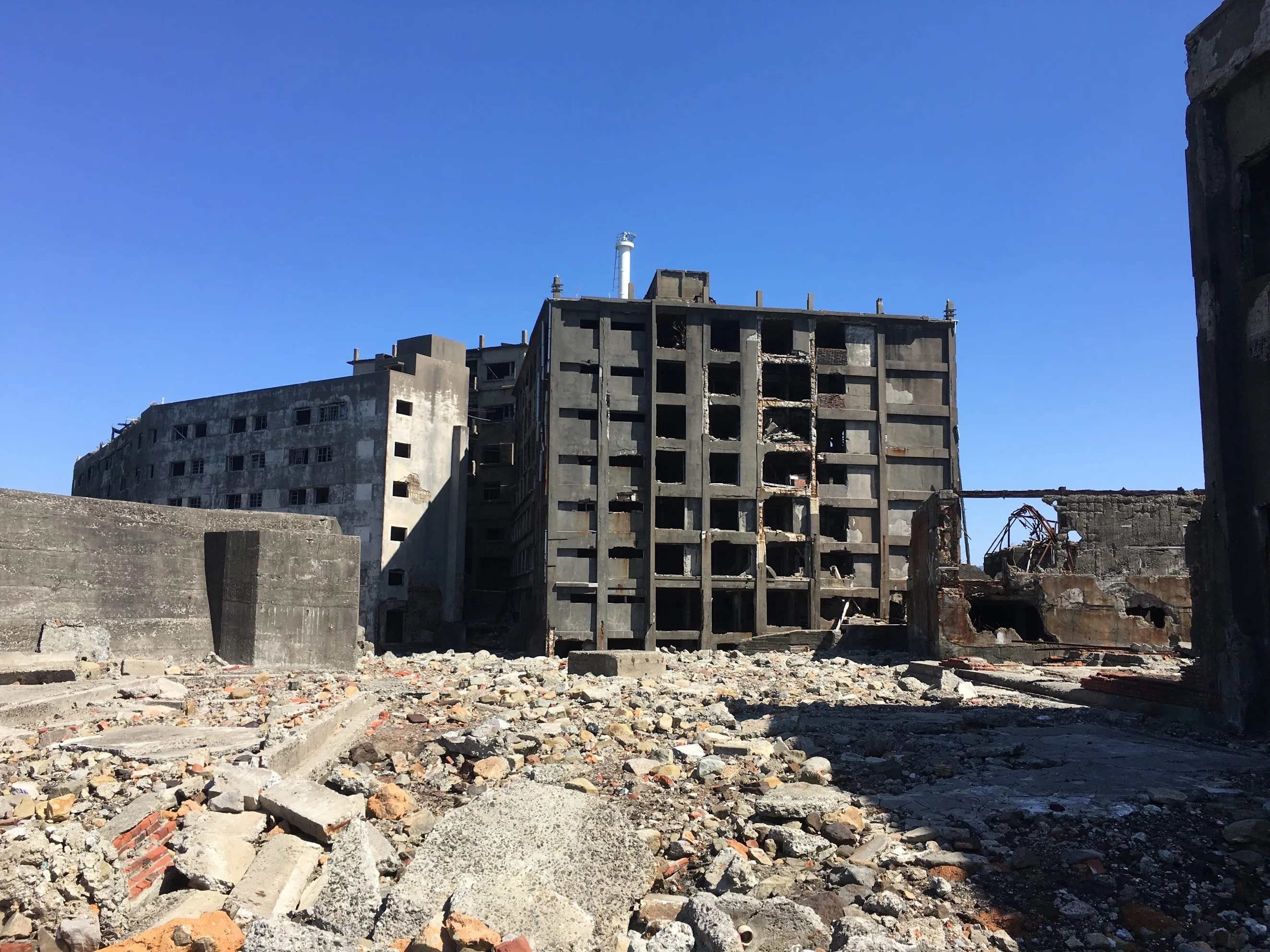
It had collapsed way more spectacularly than I imagined…! And indeed, the section that gave way was an area that already looked quite weathered six years ago.
I used to think the phrase “Gunkanjima keeps collapsing, so you’d better visit regularly” was just marketing spin to lure tourists, but this visit drove home the sobering reality of it.
Once we reached the end of the visitor walkway, we were given 15 minutes of free time on the walk back… but the guide’s extra trivia was so fascinating that I ended up listening the entire time.

Remains of the boarding pier for the No. 2 Vertical Shaft. Apparently, miners underwent a body check here before walking across the pier into the shaft entrance.

The lighthouse was built fairly recently. I really like how it creates a contrast between the new and the old.

A mountain of rubble. The red brick was apparently part of an old warehouse wall.
I boarded the boat just before departure, and on the ride back I chatted with another solo traveler. That kind of once-in-a-lifetime serendipity really captures the spirit of traveling, making it a wonderful time.

Back at port. Nagasaki is full of hills and slopes, making it fascinating to look at—though I imagine living here must be tough.
Summary
So that wraps up my thoughts on visiting Gunkanjima again after six years.
Revisiting Gunkanjima after six years showed me the same raw, rugged island as before, but it also made me realize just how relentlessly weathering is taking its toll. Witnessing the collapse of structures that had still retained their shape on my previous trip was a poignant reminder of the passage of time.
While I was blown away by its uncanny scenery on my first visit, having watched all of Kemurikusa beforehand gave me a completely different emotional connection this time around. When I laid eyes on Building 70 in particular, scenes from the anime flashed vividly in my mind, and I felt a genuine surge of emotion. Even though anime pilgrimage wasn’t the main purpose of my trip, as someone whose interest in Gunkanjima was sparked through that work, it was a deeply moving experience.
Tips
As for the tour itself, “Gunkanjima Concierge” from my previous visit was great, but “Takashima Kaiun” this time was deeply satisfying too. In particular, stopping by Takashima to visit the Coal Museum was immensely helpful for gaining a deeper understanding of Gunkanjima’s history. Between the relatively affordable fare and the convenient dock location, it turned out to be the right choice. Even if it came down to whatever had open slots, I’m glad I ended up with a great operator.
- If you want attentive support, a high landing rate, and to fully enjoy the Gunkanjima Digital Museum: “Gunkanjima Concierge”
- If not: “Takashima Kaiun”
I think choosing between those two comes down to that. Personally, I really liked Takashima Kaiun’s down-home, community-rooted feel.
Also, regardless of which operator you go with, it’s generally best to sit on the right side facing forward. The POIs before leaving port are almost all concentrated on the right. And when approaching Gunkanjima, due to the standard navigation route, the island usually comes into view off the front-right bow.
If you ever find yourself in Nagasaki, definitely join a Gunkanjima landing tour. Seeing it with your own eyes and feeling it in person delivers an overwhelming sense of presence and historical weight that photos or videos simply cannot convey. That said, the island is constantly exposed to wind and rain, and no one knows how long it can hold its shape. If you’re interested, I strongly recommend visiting sooner rather than later.
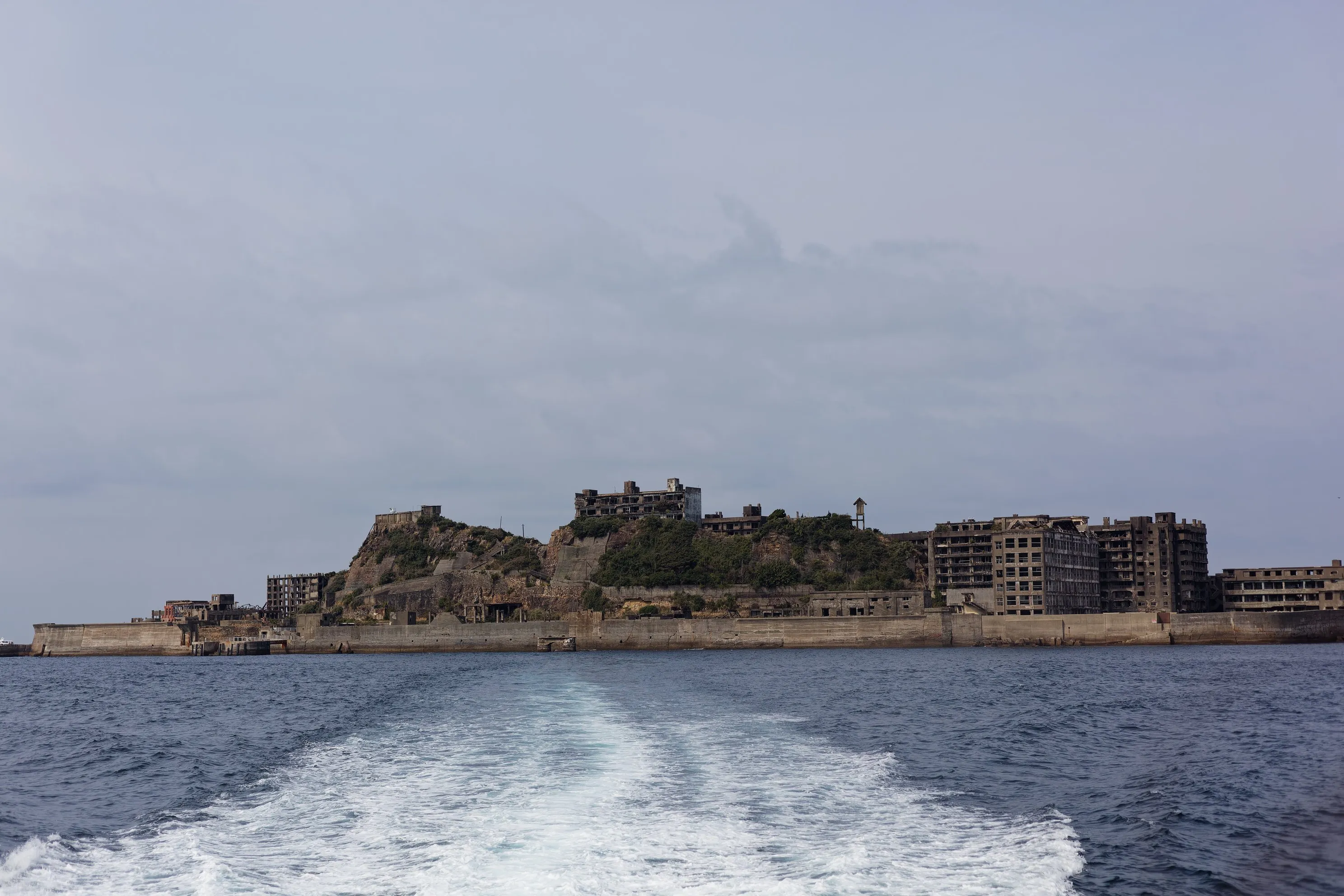
Farewell, Gunkanjima! Wonder when I’ll be able to come back next…
More articles
- Impressions of Genshin Impact Ver. 7.1 Snezhnaya, Up Through Act IV "A Rekviem for the Underworld"• #Genshin ImpactAfter two years, I've finally caught up with the current release.
- I Bought a Cheap Wideband LNA from AliExpress, the Zeenko ZK06-BM• #RadioI used the Zeenko ZK06-BM to intercept METEOR-M2 4 and got the best satellite image I've ever received.
- On the End of the World• #ScreedIt's Ragnarok.
- Thoughts on Genshin Impact's Nod-Krai Storyline• #Genshin ImpactI finished Nod-Krai.
Notes on games, radio and technology, translated from the Japanese blog.