[Internal Problems] and [External Problems]

Table of Contents
I have brought up what Vogler calls [Internal Problems] and [External Problems] several times before.
That is because, as far as I can tell right now, establishing [Internal Problems] and [External Problems] seems to be the single most important ingredient in crafting an engaging story. Among the various story arcs in The Demon Girl Next Door, the episodes I love most could often be cleanly dissected using this very framework.
Recently, though, the boundary between [Internal Problems] and [External Problems] started getting hazy for me. So I decided to re-read the book and sort it out properly.
What Vogler Says
TL;DR
- Definitions
- An [External Problem] meets the following criteria:
- Questions primarily related to the action or plot
- Things the protagonist wants (i.e., is consciously aware of)
- An [Internal Problem] meets the following criteria:
- Questions related to the protagonist’s emotions and personality
- Things the protagonist needs (i.e., was not consciously aware of)
- Theorems
- A great story requires not only an [External Problem], but also an [Internal Problem].
- As long as the [Internal Problem] is resolved, the [External Problem] does not necessarily have to be solved successfully.
“The protagonist wants to solve the [External Problem]. But what they truly needed was to resolve the [Internal Problem].”
The “Inner and Outer Problems” Section
To start with, let’s summarize how Vogler actually discusses [Internal Problems] and [External Problems].
Vogler’s explicit discussion of this concept makes its first appearance in the [Ordinary World] section, under a chapter titled “Inner and Outer Problems.”
Every hero needs both an inner and an outer problem.
(…)
But sometimes writers neglect to give the characters a compelling inner problem to solve as well.
Characters without inner challenges seem flat and uninvolving, however heroically they may act. They need an inner problem, a personality flaw or a moral dilemma to work out. They need to learn something in the course of the story: how to get along with others, how to trust themselves, how to see beyond outward appearances. Audience members want to see characters learn, grow, and cope with both inner and outer challenges of life.
p. 143
The “Raising the Dramatic Question” Section
Immediately preceding this section is one titled “Raising the Dramatic Question.”
Another important function of the [Ordinary World] [the first being to introduce the background, etc.] is to suggest the dramatic question of the story. Every good story poses a series of questions about the hero.
(…, see A below)
Some questions relate primarily to the action or plot.
(…, see B below)
Other questions have to do with the hero’s emotions and personality.
(…, see C below)
The action questions may propel the plot, but the dramatic questions hook the audience and involve them with the emotions of the characters.
p. 142
Specific examples are given in the omitted sections:
- Examples from A below:
- Will the protagonist achieve the goal?
- Overcome their flaw?
- Learn the lesson they need to learn?
- Examples from B below:
- Will Dorothy get home from Oz?
- Will E.T. get home to his planet?
- Will the protagonist get the gold?
- Win the game?
- Beat the villains?
- Examples from C below:
- Will Patrick Swayze’s character in Ghost learn to express love?
- In Pretty Woman, will the uptight businessman Edward learn from the prostitute Vivian how to relax and enjoy life?
Looking at this lineup:
- The examples given in B above—namely, the questions “primarily related to the action or plot”—are the [External Problem].
- The examples given in C above—namely, the questions “related to the hero’s emotions and personality”—are the [Internal Problem].
This seems to be the right way to understand it.
”Wants vs. Needs”
In the “Stories Are Alive” section, under “Wants vs. Needs,” there is a discussion that doesn’t explicitly mention [Internal Problems] or [External Problems], but seems closely related.
Through the trigger of a wish, stories like to arrange events so that the protagonist’s consciousness is raised to a higher level. At first, protagonists almost inevitably wish for what they “want,” but the story guides them to look beyond that and realize what they truly “need.”
(…)
In the process of granting that initial wish, the story serves up chillingly dangerous events, forcing the protagonist to correct flaws in their nature.
(…)
The story is delivering the moral lessons the protagonist needs, seeking to fill the deficiencies in their character and understanding of the world.
p. 463
Here, it seems reasonable to understand:
- “Want” = [External Problem]
- “Need” = [Internal Problem]
Vogler summarizes the structure of story in a single sentence here:
“So-and-so wants something and does something to get it, but there are unexpected consequences, forcing so-and-so to adapt or react in order to survive.”
Summary of Vogler’s Argument
If we summarize Vogler’s argument, it looks something like this:
- Definitions
- An [External Problem] meets the following criteria:
- Questions primarily related to the action or plot
- Things the protagonist wants (i.e., is consciously aware of)
- An [Internal Problem] meets the following criteria:
- Questions related to the protagonist’s emotions and personality
- Things the protagonist needs (i.e., was not consciously aware of)
- An [External Problem] meets the following criteria:
- Theorems
- A great story requires not only an [External Problem], but also an [Internal Problem].
- As long as the [Internal Problem] is resolved, the [External Problem] does not necessarily have to be solved successfully.
This makes total sense.
Case Study: Titanic
For instance, if you were writing a review of Titanic and explained it as “a story about Rose and Jack trying to survive a sinking ship,” people would probably react with, “Well, you’re not wrong, but you’re kind of missing the point.”
The issue with that summary is that it only addresses the [External Problem] faced by the two of them.
“Rose wants to survive the sinking. But what she truly needed was to meet Jack and have her life saved by his sacrifice. Through this, she escaped her everyday world where she lived like a prisoner, and spent a long, happy life putting into practice what she learned from him.”
“Jack wants to survive the sinking. But what he truly needed was to surrender the wooden door to Rose and save her. Through this, he won Rose’s singular love and became an existence that lives on forever in her heart.”
While that summary might not be perfectly phrased, it does a much better job of conveying what makes Titanic so magnificent (or at least, I’d be glad if you agree).
Testing the Theory
Episode 3 of Kemono Friends Season 1, “The Mountain” (Kōzan), is personally one of my top three favorite anime episodes of all time. Let’s analyze this episode through the lens of [Internal Problems] and [External Problems].
Kaban’s Problems
- [External Problem]
- Wants to recharge the Japari Bus’s battery
- [Internal Problem]
- Discovering what she is capable of (gaining self-confidence)
Please note that the [Internal Problem] I listed—“discovering what she is capable of”—is subtly yet fundamentally different from Kaban’s conscious goal of “finding out what kind of animal she is.”
If it were merely about solving the [External Problem], Kaban had zero reason to help bring in customers for the café in the first place.
“Kaban wants to know what kind of animal she is. But what she truly needed was to discover, through her own actions, what she was capable of doing.”
Put that way, wouldn’t you say that strikes right at the very heart of Kemono Friends?
Crested Ibis’s Problems
- [External Problems]
- Searching for companions (members of her own species)
- Improving her singing ability
- [Internal Problem]
- Overcoming loneliness
To understand the problems Crested Ibis faces, you have to adopt a somewhat stretched, poetic interpretation.
Her problem is distilled into “The Crested Ibis’s Song.”
I am Crested Ibis~♪
Searching for companions~♪
Where are my companions?♪
Companions of mine~♪
Please look for them~♪
Ah, companions…♪
When she sang this song, what did “companions” (nakama) refer to? At the very least, viewers who know that the Crested Ibis is an extinct-in-the-wild species would have understood “nakama = members of her own species.”
Yet she didn’t necessarily need companions of her own kind.
Think about the reverse: if Crested Ibis hadn’t run into Scarlet Ibis at the café, would she have kept on singing that song?
In Episode 12, while standing on stage with PPP, Crested Ibis sings:
Singing with companions~♪ Dancing with companions~♪
Here, “companions” (nakama) is clearly not intended to mean members of her own species.
“Crested Ibis is searching for companions of her own kind. But what she truly needed was friends.”
Summing it up like that definitely feels like another satisfying fit.
Suri Alpaca’s Problems
- [External Problem]
- Attracting customers to the café
- [Internal Problem]
- Overcoming loneliness
The [External Problem] is practically self-evident.
The [Internal Problem] is a bit trickier, but let’s follow the same line of reasoning as with Crested Ibis.
When she says “no customers are coming,” what kind of emotion is packed into that statement? There is no monetary economy in this world. She built a café here for this reason:
People pass through here all the time on their way to the next region, right? I just thought it’d be wonderful if they could take a little break around here.
Given that, if no customers show up, how would she feel? Ultimately, it all boils down to that feeling of being “lonely.”
Think about the reverse: even if no customers ever came other than Crested Ibis, would she still lament the lack of customers? Probably not.
“Alpaca wants customers to come to her café. But what she truly needed was a friend.”
Let’s sum it up that way.
Summary and Resolution
- Kaban
- [External Problem]
- Wants to recharge the Japari Bus’s battery
- [Internal Problem]
- Discovering what she is capable of (gaining self-confidence)
- [External Problem]
- Crested Ibis
- [External Problems]
- Searching for companions (her own kind)
- Improving her singing ability
- [Internal Problem]
- Overcoming loneliness
- [External Problems]
- Alpaca
- [External Problem]
- Attracting customers to the café
- [Internal Problem]
- Overcoming loneliness
- [External Problem]
With Kaban’s arrival at the mountain, every single [External Problem] and [Internal Problem] across all three characters is resolved magnificently.
- By traveling with them to the café, Crested Ibis drinks tea that soothes her throat, resolving her vocal troubles.
- By drawing a geoglyph marking the café’s location, Alpaca gains confidence that customers will surely come.
- By resolving Alpaca’s dilemma, Kaban gains self-confidence in her own abilities.
- By Crested Ibis becoming a café regular, both of their loneliness is resolved.
- While they were carrying out this series of tasks, the battery finished charging.
- Kaban’s geoglyph proved genuinely effective as advertising, and Scarlet Ibis arrived.
- (With the ropeway back in operation, non-flying Friends could now visit the café too—a fact subsequently proven by AraFene [Arai-san and Fennec].)
I believe this is the secret behind why Episode 3 feels so thoroughly satisfying.
In Closing
There seem to be other elements in Kemono Friends Episode 3 that can be discussed using the Hero’s Journey and related narrative frameworks.
For example, Japari Café and the mountain served the function of a [Watering Hole], giving Kaban a panoramic vantage point over the world she was about to explore.
The café might well be a reprisal of Hippo’s [Watering Hole] in Episode 1. Or perhaps it was a foreshadowing of the grand party in Episode 12, set to the tune of “Tea for Two.”
All this Vogler power makes me want to dive headfirst into analyzing Kemono Friends all over again. Forever Japari Park. Forever Kaban-chan.
References
The Writer’s Journey

The Writer’s Journey: Mythic Structure for Writers (Sakka no Tabiji: Writers Journey: Shinwa no Hosoku de Yomitoku Monogatari no Kozo)
By Christopher Vogler, translated into Japanese by Yumie Fukawa
Film Art, Inc., 2022
kemono-friends-dialogs

More articles
- Kemonomyth: Kemono Friends and the Monomyth (Japanese Translation & Transcript)• #Kemono FriendsFull Japanese translation and transcript of the legendary Kemono Friends video essay 'Kemonomyth'.

- Impressions of Genshin Impact Ver. 7.1 Snezhnaya, Up Through Act IV "A Rekviem for the Underworld"• #Genshin ImpactAfter two years, I've finally caught up with the current release.
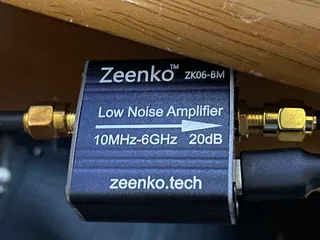
- I Bought a Cheap Wideband LNA from AliExpress, the Zeenko ZK06-BM• #RadioI used the Zeenko ZK06-BM to intercept METEOR-M2 4 and got the best satellite image I've ever received.
- On the End of the World• #ScreedIt's Ragnarok.
Notes on games, radio and technology, translated from the Japanese blog.