Titanic: Inner and Outer Problems

Table of Contents
The Titanic Example
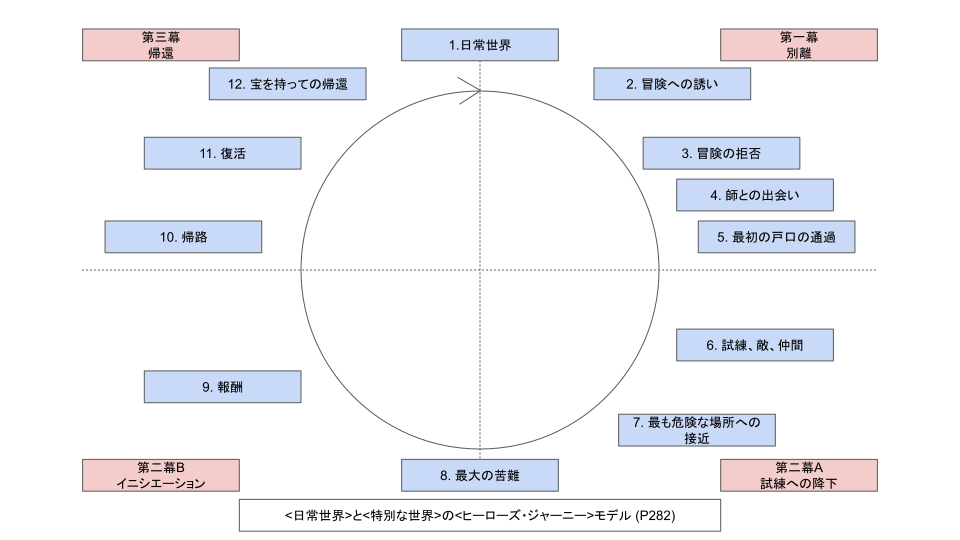
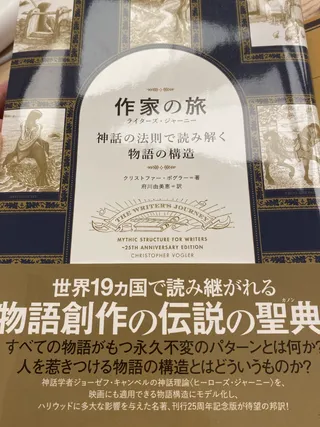
In The Writer’s Journey, there is a section titled “A Hero’s Journey Analysis of Titanic.” As the name suggests, it is a section that analyzes Titanic using the Hero’s Journey framework.
In this section, the following basic elements are extracted as a starting point for analyzing each hero in Titanic’s Hero’s Journey:
| Hero | Ordinary World | Outer Problem | Inner Problem | Notes |
|---|---|---|---|---|
| Lovett | Scientific adventure | Treasure hunting | Finding genuine insight and a better system of values | |
| Rose (Present) | Elderly yet active artist | How to make others understand her Titanic experience | Dredging up intense memories that have floated in her unconscious for decades | |
| Rose (Past) | Oppression and tyranny by Cal | Survival / Putting what she learned into practice over a long, happy life | Escaping an Ordinary World where she is like a prisoner | |
| Jack | Wandering and adventure | Entering high society / Survival | Finding and winning a singular love | Jack is a [Catalyst Hero]—he is already sufficiently mature and does not change much. |
Couldn’t we analyze The Demon Girl Next Door in the same way?
Vogler’s View
On the subject of inner and outer problems, Vogler writes:
Every hero needs both an inner and an outer problem.
(…)
Yet sometimes writers neglect to give the characters a compelling inner problem to solve as well.
Characters without inner challenges seem flat and uninvolving, however heroically they may act. They need an inner problem, a personality flaw or a moral dilemma to work out.
(…)
Audiences love to see characters learning, growing, and dealing with both the inner and outer challenges of life.
p. 143
He also states, regarding the [elixir] brought back in the final stage:
Like every stage of the Hero’s Journey, Returning with the Elixir can be literal or metaphoric. The best elixir brings higher awareness to the hero and the audience.
p. 325
Typo spotted in the Japanese translation: “文字どおりの意味になることもあれは” (areha instead of areba)
First edition, p. 331
Side note: Isn’t translating “Keep it simple stupid” as “make it simple and stupid” (単純に、馬鹿馬鹿しくする) a mistranslation? Normally it should mean something like “Keep it simple, stupid” (単純にしろ馬鹿野郎). Even contextually, I can’t find any reason for this translation. If it were “Keep it stupid simple,” this translation would make sense, but without checking the original book I can’t be sure.
First edition, p. 331
This makes sense if you picture an ending like The Blue Bird of Happiness.
More articles
- The Demon Girl Next Door Commentary: A More Detailed Analysis Through Season 2 Episode 6 Using the Hero's Journey• #The Demon Girl Next DoorHaving read about halfway through The Writer's Journey, I'm going to do a more detailed analysis of the first half of The Demon Girl Next Door Season 2.
- The Writer's Journey and The Demon Girl Next Door Vol. 3 (Season 2)• #The Demon Girl Next DoorAn early draft analysis of The Demon Girl Next Door Vol. 3 (Season 2) using the Hero's Journey framework from The Writer's Journey.
- The Time Has Come to Face Kitaro Nishida• #Hero's JourneyWhen I looked into Kitaro Nishida, I found that his thought seems to have quite a close connection with Joseph Campbell's ideas.

- Kemonomyth: Kemono Friends and the Monomyth (Japanese Translation & Transcript)• #Kemono FriendsFull Japanese translation and transcript of the legendary Kemono Friends video essay 'Kemonomyth'.


Notes on games, radio and technology, translated from the Japanese blog.